
What Causes Septic Tank Odor?
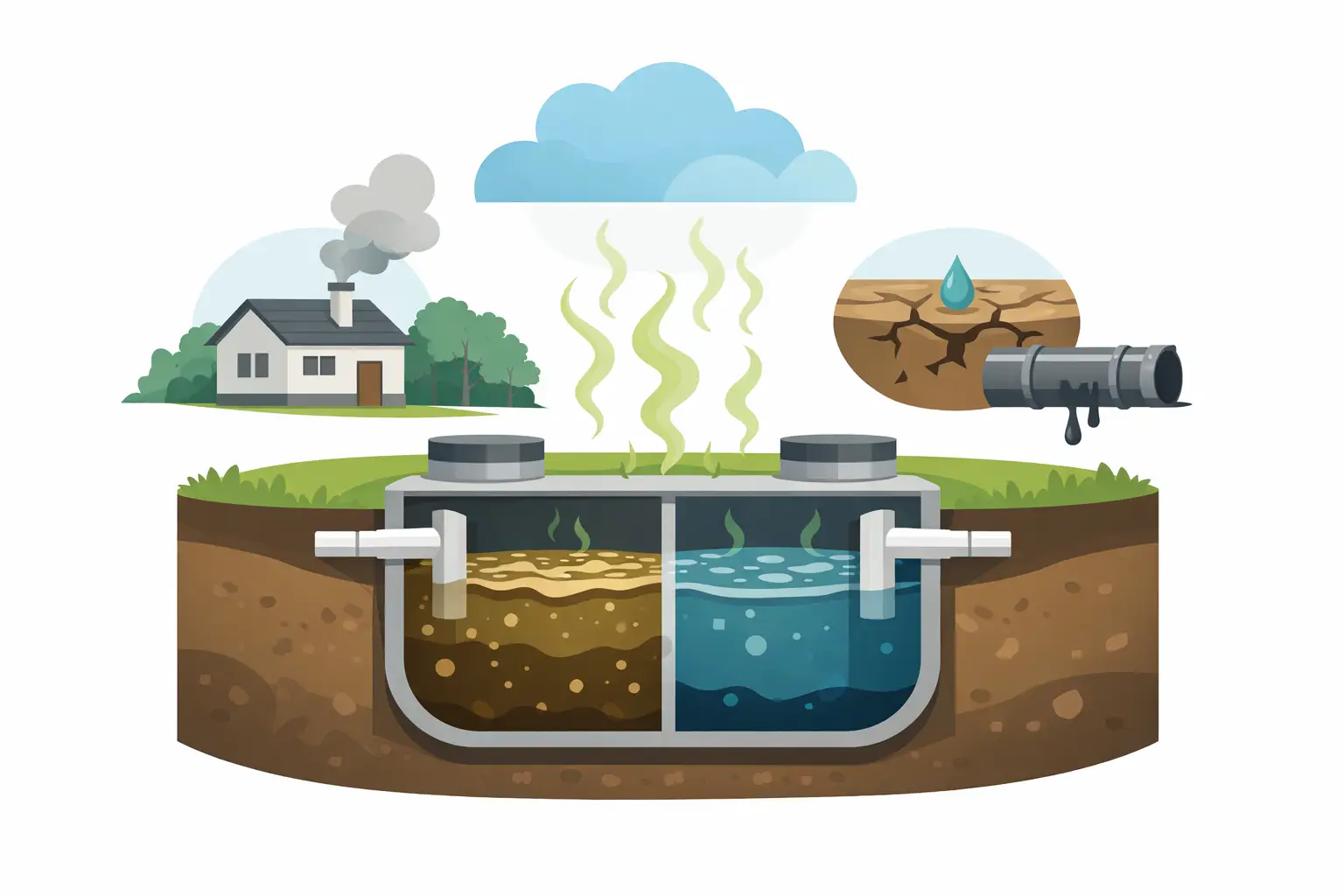
A septic smell is rarely just a nuisance. If you are asking what causes septic tank odor, there is usually a system issue behind it – sometimes minor, sometimes urgent. The key is figuring out whether the odor is coming from normal biological activity, a maintenance problem, or a failing component that needs repair.
Septic systems are designed to contain wastewater gases and move effluent safely through the tank, pump chamber, and drain field. When that process is interrupted, odors escape. That can happen inside the house, around the tank lids, near the drain field, or by vents and alarms. Where the smell shows up matters.
What causes septic tank odor in the first place?
Every septic system produces gases as waste breaks down. That part is normal. What is not normal is smelling those gases regularly around your property or inside your building. A healthy system keeps those odors contained and vented properly.
When odor becomes noticeable, the cause is usually one of a few things. The tank may be overdue for pumping. A lid, riser, or access point may not be sealed correctly. Effluent may not be moving through the system as it should. In pumped systems, a float, pump, control panel, or alarm issue may be preventing proper dosing. In other cases, the drain field is overloaded, saturated, or beginning to fail.
Odor is a symptom, not a diagnosis. That is why guessing can waste time.
Common septic odor causes outside the home
If the smell is strongest in the yard, the problem is often tied to the tank, pump chamber, or drain field area. A full septic tank is one of the most common causes. As solids build up, the system has less working volume, and wastewater does not separate and flow the way it should. That can increase gas release and raise the risk of backups or field stress.
Damaged or poorly fitted lids are another frequent issue. Cracked concrete lids, warped plastic lids, missing fasteners, and improperly installed risers can all let gases escape near the surface. This is especially common after landscaping, mowing damage, or older system modifications.
Wet spots or sewage odors near the drain field often point to hydraulic overload. That could mean too much water is entering the system, the soil is saturated from weather, or the field is no longer accepting effluent properly. A failing drain field does not always start with standing sewage. Sometimes the first clue is persistent odor.
For systems with pumps, septic odor can also show up when the pump is not cycling correctly. If wastewater sits too long in a chamber because of a failed pump, stuck float, or control problem, odor can intensify quickly. If there is an alarm and odor at the same time, do not wait.
What causes septic tank odor inside the house?
Indoor septic odor is usually more urgent because it may involve plumbing traps, venting, or wastewater backing up where it should not. Sometimes the issue is simple. A floor drain that has dried out can allow sewer gas into a basement, utility room, or mechanical space. Running water into that drain may restore the trap seal.
But not every indoor odor is a dry trap. A blocked or undersized vent stack can push gases back into the building. So can poor vent termination, especially in certain wind conditions. If the smell appears when fixtures drain, flush, or the washing machine runs, venting should be considered.
A more serious possibility is that the septic system is holding too much wastewater because of a downstream blockage, pump failure, or field problem. In that case, odor may show up before a full backup happens. Gurgling drains, slow fixtures, or intermittent alarms alongside odor are all signs that the problem may be more than plumbing.
Weather and site conditions can make odor worse
Septic odors are not always constant. Heat, humidity, rain, and low wind can make a borderline problem much more noticeable. Heavy rain can saturate soil and reduce how well the drain field handles effluent. Hot weather can increase biological activity and intensify smells around lids and vents.
Wind direction also changes what you notice. A vent that never bothered you before may suddenly seem like a major issue after a roof change, addition, or tree removal. That does not always mean the vent is wrong, but it does mean the system should be evaluated in context.
This is where septic work differs from general plumbing. The same odor complaint can come from a venting issue, a hydraulic problem, a failed electrical component, or a structural defect in the tank or chamber. It depends on the system design and where the odor is coming from.
Maintenance issues that lead to septic odor
Lack of maintenance is one of the biggest drivers of septic odor. Tanks that are not pumped on schedule can accumulate solids to the point that normal settling stops working. Filters can clog. Pumps can work harder than they should. Drain fields can receive solids they were never meant to handle.
Neglected alarms are another problem. If a high-water alarm sounds and no one responds, odor may be the next sign. The same goes for aging control panels, damaged floats, and old pump components that are no longer cycling consistently.
Routine inspections catch many of these issues early. That includes checking liquid levels, baffles, lids, risers, filters, floats, alarm function, and pump performance. Septic odors often start as a small warning before they become an expensive failure.
When odor means you should call a septic specialist
Some odor issues can wait a day or two for scheduling. Some should be treated as a service call right away. If you smell sewage indoors, have a septic alarm, notice wet ground near the system, or see multiple symptoms at once, the situation needs prompt diagnosis.
The same applies if the odor is new and persistent. Septic systems do not usually start smelling for no reason. Even when the cause is relatively straightforward, such as a bad lid seal or overdue pumping, you still want the full system checked. Fixing the smell without fixing the underlying problem just delays the real repair.
A septic specialist should also be the first call if the system includes pumps, controls, or electrical components. Those systems require more than basic drain cleaning or guesswork. Proper diagnosis means checking how wastewater moves through the whole system, not just treating the odor itself.
What not to do when you notice septic odor
Do not pour additives, degreasers, or chemical treatments into the system hoping the smell will disappear. They rarely solve the root cause and can disrupt system performance. Do not open lids or tanks yourself to “air it out.” That creates serious safety risks and does not correct the failure.
Do not assume the problem is minor because the drains still work. Many septic failures start gradually. Odor can be the first warning that the system is overloaded, under-maintained, or mechanically compromised.
If the odor is around a real estate transaction, renovation, or insurance claim, documentation matters as much as repair. A proper inspection can identify whether the issue is maintenance-related, component failure, or a larger replacement concern.
When septic odor shows up, treat it like the warning sign it is. The faster the source is identified, the better the chance of avoiding backups, property damage, and unnecessary system stress. If the smell keeps returning, call a septic specialist who can diagnose the system properly and fix the cause, not just the symptom.