
Septic Alarm Going Off? What to Do Now
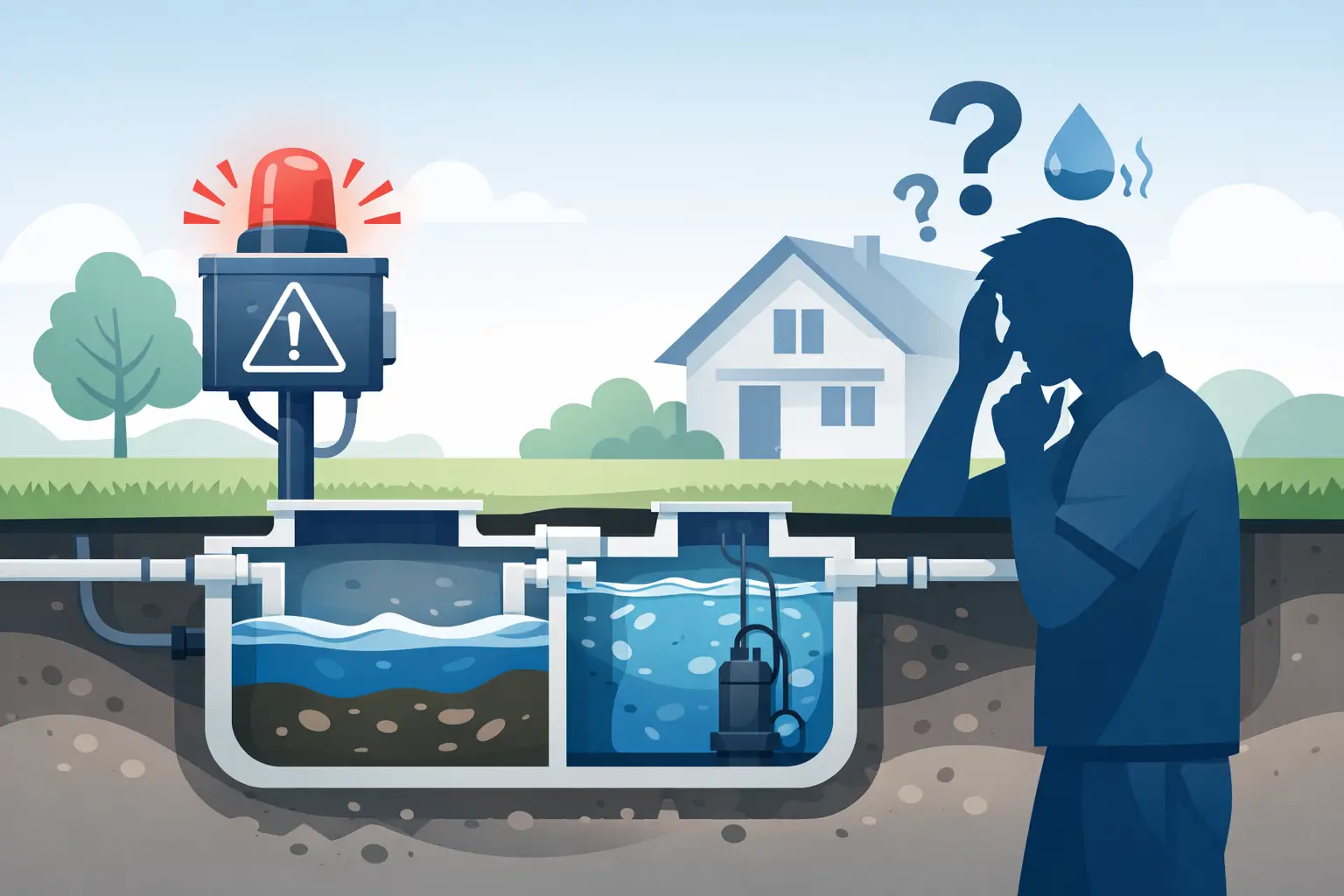
That alarm usually starts at the worst possible time – late at night, during a storm, or right before guests arrive. If your septic alarm going off has you scrambling, treat it as a real system warning, not a nuisance. The alarm is there to tell you that wastewater is not moving through the system the way it should, and waiting can turn a manageable repair into a backup, overflow, or pump failure.
What a septic alarm going off usually means
In most homes, a septic alarm is connected to a pump tank, lift station, or other component that relies on electrical controls to move wastewater. When the alarm sounds or the light comes on, it usually means the water level in that tank is too high. That can happen because the pump is not running, the float is stuck, the breaker is tripped, the control panel has failed, or the system is receiving more water than it can handle.
The alarm does not always mean the septic tank itself is full. It means there is a problem with level, pumping, controls, or flow. That distinction matters, because pumping the tank is not always the fix.
Some systems trigger an alarm for high water. Others can signal low pressure, aerator trouble, or component failure. The exact meaning depends on the design of your system, but the response should be the same at the start: reduce risk, check the obvious items, and get a septic specialist involved if the cause is not immediately clear.
First steps when the septic alarm is going off
Start by cutting back water use right away. Avoid showers, laundry, dishwasher cycles, and long sink use until you know what the system is doing. Every gallon you send into the system can raise the tank level further if the pump is not moving wastewater out.
Next, look at the alarm panel. Many panels have a silence button that will stop the buzzer while leaving the warning light on. Silencing the horn is fine. Ignoring the alarm is not.
Check whether the breaker has tripped. Septic pumps and control panels are often on dedicated electrical circuits. If a breaker is off, reset it once. If it trips again, stop there. Repeated resets can damage equipment or create a safety issue, especially if the pump motor is shorted or the panel has an electrical fault.
If your panel has a hand-off-auto switch, make sure it is in auto. Sometimes a switch gets bumped during service or by accident. If it is in off, the pump will not run. If it is in hand, the pump may run only while manually forced, which is not a normal long-term setting.
Listen carefully near the tank or control panel if it is safe to do so. A humming pump that is not moving water points to one kind of problem. Total silence points to another. That said, homeowners should not open electrical components or enter any tank area. Septic systems contain dangerous gases, contaminated water, and live electrical equipment.
Common causes behind a septic alarm going off
Pump failure
This is one of the most common causes. Effluent pumps wear out over time, especially in systems with heavy use, age, poor maintenance, or electrical stress. When the pump stops working, water rises in the chamber until the float triggers the alarm.
Stuck or failed floats
Floats tell the system when to turn the pump on and when to trigger the alarm. If a float gets tangled, coated, damaged, or waterlogged, the pump may not cycle correctly. In some cases the pump is fine, but the float is sending the wrong signal.
Control panel or electrical issues
A bad contactor, failed relay, blown fuse, corroded terminal, damaged wire, or moisture in the panel can all prevent normal pump operation. This is where septic work crosses into electrical diagnostics, which is why general plumbing service often misses the actual fault.
Tripped breaker or power loss
Storms, surges, and circuit overloads can shut the system down. If the power issue is brief and the pump recovers, the system may catch up. If the alarm returns, there is likely an underlying fault that still needs repair.
Excess water entering the system
Heavy water use, running toilets, leaking fixtures, and stormwater entering damaged risers or lids can overload a pump chamber. This does not always mean a component has failed. Sometimes the system is being asked to handle more than it was designed for, or water is getting in from the outside.
Drain field or discharge problems
If the pump is running but has nowhere to send the water because of a blocked line, failed discharge component, or downstream field issue, the tank level may still rise and trigger the alarm. This is one reason the alarm should be diagnosed, not guessed at.
When you can wait a little, and when you should call immediately
If you reset a tripped breaker once, the alarm clears, and the system returns to normal with no odors, slow drains, or repeat warning, you may have had a temporary electrical event. Even then, keep an eye on it.
If the alarm comes back, if you hear gurgling drains, if toilets stop flushing normally, if wastewater is surfacing outdoors, or if the pump breaker trips again, call right away. Those signs suggest the problem is active and worsening.
Commercial properties, shared systems, and homes with high occupancy should move faster. A small delay in a low-use home might stay contained for a few hours. The same delay in a restaurant, shop, office, or large household can turn into a shutdown or contamination issue much sooner.
What not to do
Do not keep using water as usual because the house still seems to drain. Septic systems can store a limited amount before they stop cooperating, and by then the cleanup is more expensive.
Do not repeatedly reset breakers or force the pump on if you do not know why it stopped. Electrical faults and failing motors can get worse quickly.
Do not climb into, lean over, or enter a septic tank, pump chamber, or riser opening. Toxic gases and oxygen-deficient atmospheres can be fatal within minutes.
Do not assume pumping the tank is the solution. Sometimes pumping buys time, but if the real issue is a failed float, dead pump, blocked line, or bad panel, the alarm will return.
Why specialist diagnosis matters
A septic alarm going off is often a crossover problem. It can involve wastewater levels, pump mechanics, electrical controls, float function, discharge lines, and downstream field performance. That is why the right first call is a septic specialist who works on both the mechanical and electrical sides of these systems.
A proper service visit should verify tank levels, test float operation, confirm pump amperage and response, inspect the control panel, check alarms and circuit protection, and determine whether the issue is isolated to a component or tied to a larger system failure. If you only replace the obvious part without testing the rest, you risk paying for the same service twice.
This is also where documentation matters. If the property is part of a sale, claim, renovation, or compliance review, you need a clear finding, not guesswork. Companies like Aquamatic are built for that kind of work because septic failures are not side jobs – they are the core service.
How to reduce the chance of future alarms
Most alarm calls are not random. They tend to come from aging pumps, neglected maintenance, uninspected controls, or systems under more demand than they were designed to carry.
Routine inspection helps catch early signs of trouble, including float wear, panel corrosion, loose terminals, failing check valves, and pump performance changes. If your system is older, if the alarm has happened before, or if you recently bought the property and do not know the service history, an assessment is worth doing before the next emergency.
It also helps to be realistic about water use. Spread out laundry, fix leaking toilets, direct surface water away from lids and risers, and know where your control panel and breakers are before something goes wrong. None of that replaces service, but it can keep a minor issue from becoming a major one.
When the alarm sounds, the best response is simple: reduce water use, check the safe basics, and get qualified help if the cause is not obvious. Fast action protects the system, the property, and everyone using it.