
Septic Maintenance Plans That Prevent Failures
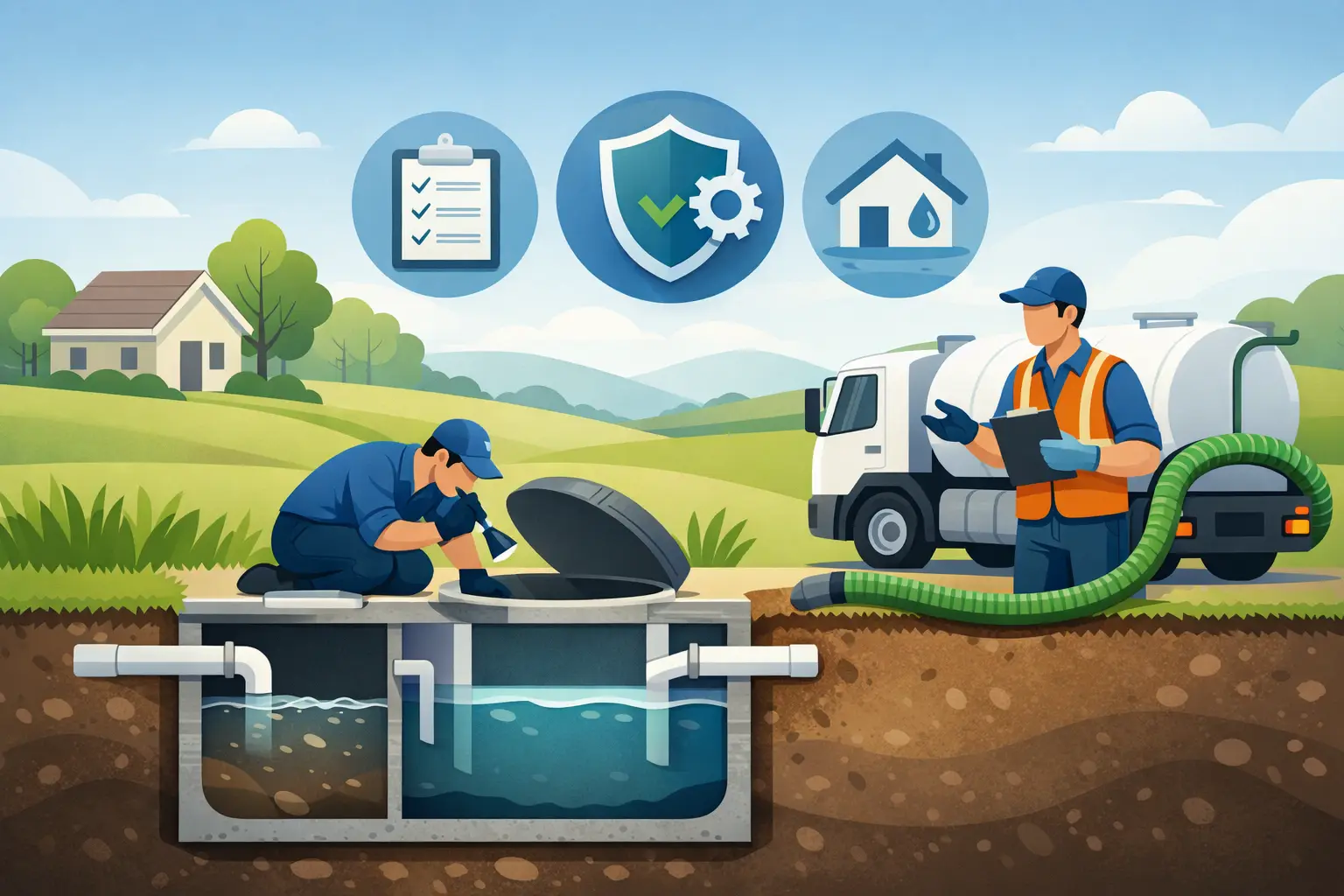
A septic alarm at 2 a.m. is not the time to learn how your system works. Most major failures start small – a drifting float, a worn pump, sludge buildup, a lid that was never made accessible. Septic maintenance plans are built to catch those issues before they turn into backups, property damage, or a no-use emergency.
For homeowners and commercial property operators, the value is simple. A plan gives your system regular attention from a septic specialist, not a guess when something starts smelling wrong. That matters because wastewater systems fail in specific ways, and those early warning signs are easy to miss until the problem gets expensive.
What septic maintenance plans actually cover
A good plan is not just a reminder to pump the tank. Pumping is one part of maintenance, but it is not the whole job. Real septic maintenance plans are structured around inspection, testing, cleaning, adjustment, and documentation.
On a typical visit, a technician may check tank levels, inspect pumps and floats, test alarms, verify control panel function, inspect electrical components, and look for signs of drain field stress or hydraulic overload. If the system has filters, they may be cleaned. If risers and lids are missing or unsafe, that gets flagged because access matters for both service speed and safety.
The right scope depends on the system. A gravity system with no mechanical components has different needs than a pressure distribution system, a pump chamber, or a commercial wastewater setup with heavier use. That is why one-size-fits-all maintenance usually falls short.
Why septic maintenance plans save money
Septic failures are rarely cheap. Once sewage backs up into a building, or effluent surfaces in the yard, the job moves beyond routine service. Now you may be dealing with emergency pumping, diagnostics, pump replacement, electrical repair, excavation, cleanup, and possible damage to flooring, walls, or operations.
A maintenance plan lowers that risk by shortening the gap between inspections. It also creates a service history. That record helps identify patterns like frequent pump cycling, recurring alarm conditions, or solids carrying over where they should not. When a specialist can compare today’s readings to prior visits, small changes become visible.
There is also a planning benefit. If a pump is wearing out or a control panel is failing intermittently, replacement can often be scheduled before it becomes an after-hours emergency. Planned work is almost always less disruptive than failure response.
The biggest problems a maintenance plan can catch early
Most owners call after the symptom appears. The sinks drain slowly. The alarm sounds. The lawn gets soggy near the tank or field. There is odor around the lids. Toilets gurgle. In commercial settings, restrooms become unreliable and business operations get affected fast.
Routine service is designed to catch the causes behind those symptoms. That can include sludge and scum levels getting too high, effluent filters restricting flow, floats sticking, pumps pulling high amps, corroded wiring, damaged lids, or a tank that has not been evaluated in years. It can also reveal misuse issues, like wipes, grease, or water loading from leaks that are pushing the system past normal operating conditions.
Not every issue can be prevented. Drain fields can age out. Tanks can crack. Components can fail without much warning. But many of the most disruptive calls start with conditions that were detectable earlier.
Who needs septic maintenance plans most
Any property with a septic system benefits from scheduled service, but some properties need it more than others. Homes with pumps, alarms, advanced treatment components, or older infrastructure should not be left to occasional pumping alone. The same applies to seasonal occupancy changes, large households, rental properties, and buildings where water use is inconsistent or heavy.
Commercial properties have even less room for delay. A septic issue at a restaurant, office, event venue, or multi-use site can interrupt operations immediately. For those properties, maintenance is not just about equipment life. It is about avoiding downtime, health concerns, and customer disruption.
Buyers and property managers also benefit from documented service. If a system has been maintained on schedule, that history gives a clearer picture than guesswork. It does not guarantee perfection, but it does reduce unknowns.
What to look for in septic maintenance plans
The best plans are specific. They should define what is being inspected, how often service happens, what components are included, and what gets documented after each visit. Vague “checkups” are not enough when mechanical and electrical parts are involved.
Look for a provider that specializes in wastewater systems, not one that treats septic work as a side service. Septic equipment has failure points that general plumbing or electrical contractors may not recognize in time. Pumps, floats, controls, alarms, tanks, and fields all interact. Maintenance should reflect that.
You also want a plan that matches actual usage. A small residence may need a different schedule than a large family home or a commercial site. More frequent service is not always necessary, but too little oversight can cost more later. This is one of those areas where it depends on the system design, the age of the equipment, and how the property is used.
Septic maintenance plans vs. reactive repairs
Reactive service has its place. Equipment does fail, and emergency response matters when it does. But relying on repairs alone means the system only gets attention after something has already gone wrong.
That approach usually costs more over time because the failure happens on its own schedule, not yours. It also limits options. A pump that is showing signs of wear during a routine inspection can often be replaced in a controlled visit. A pump that dies on a holiday weekend can become a building shutdown.
Maintenance plans shift the approach from crisis response to system management. That is a better fit for equipment that handles wastewater every day and is mostly buried out of sight.
Records matter more than most owners think
A strong maintenance plan should produce written records. Those records help track pumping intervals, component condition, alarm history, and recommendations for repair or upgrade. For homeowners, that means fewer surprises. For commercial operators, it supports internal maintenance planning and accountability.
Documentation can also be useful when dealing with inspections, insurance questions, property transfers, or disputes about system condition. If your provider has been servicing the system consistently, there is a paper trail showing what was observed and when.
That alone can save time when a problem develops and decisions need to be made quickly.
When to start a maintenance plan
The best time is before there is a problem. If your system has a pump, alarm, control panel, or any history of backup, ponding, or odor, delaying service usually adds risk. If you just bought a septic-dependent property and do not know the system’s condition, that is also a strong reason to start.
If you are already seeing warning signs, a maintenance plan may still help, but it should start with a proper assessment. Maintenance is not a substitute for diagnosis when a system is actively failing. The first step is figuring out whether you are dealing with deferred service, a broken component, hydraulic overload, or a larger structural issue.
Aquamatic works with residential and commercial septic systems where reliability matters and failure costs real money. The right plan is not about doing more for the sake of it. It is about doing the right checks at the right intervals, with clear findings and a fast path to repair when needed.
If your septic system only gets attention when something goes wrong, you are letting the equipment set the schedule. A maintenance plan puts that decision back in your hands.