
Septic Inspection for Insurance: What Matters
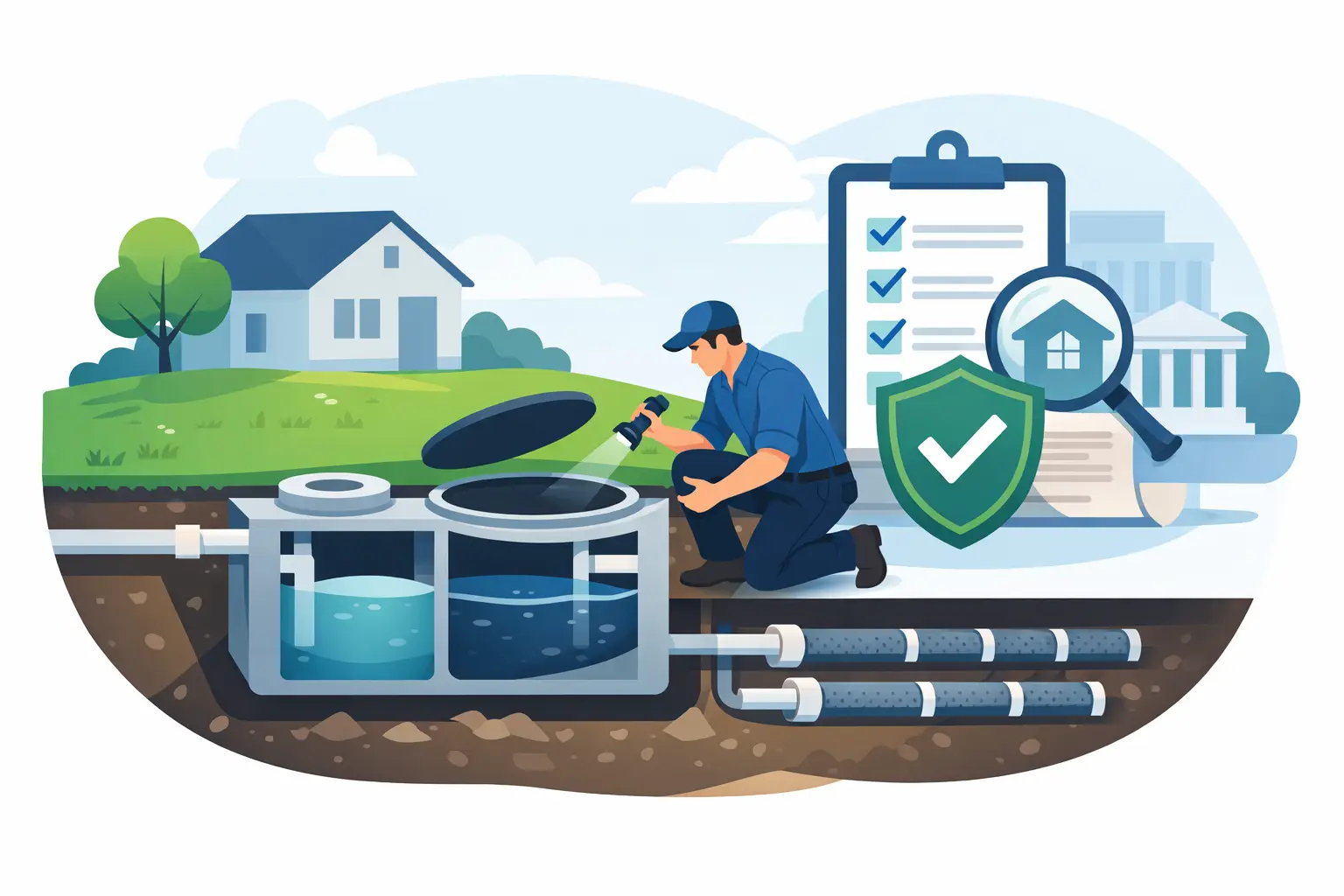
When an insurer asks for a septic inspection for insurance, they are not looking for a casual opinion. They want documented condition, visible risk, and enough detail to decide whether the property is insurable as-is, needs repairs, or carries added exposure. For homeowners and property managers, that means the inspection needs to be done by someone who understands septic systems in the field, not someone guessing from the surface.
A septic system can appear fine from the yard and still have serious problems underground. A pump can be failing. A control panel can be compromised. A tank can be overdue for service, structurally damaged, or taking on groundwater. A drain field can be overloaded long before wastewater shows up indoors. Insurance carriers know this. That is why they may ask for a formal inspection and written findings before binding, renewing, or adjusting coverage.
Why a septic inspection for insurance gets requested
Insurance companies ask for septic documentation when they see elevated risk. That often happens with older homes, vacant properties, homes with a claim history, commercial sites with private wastewater systems, or properties being written under stricter underwriting rules. In some cases, the request comes after visible warning signs such as ponding, odor complaints, backups, or evidence of deferred maintenance.
The insurer is trying to answer a practical question: is this system likely to cause property damage, contamination, or a liability issue? Septic failures are expensive. They can damage structures, disrupt occupancy, create health hazards, and trigger environmental concerns. From an underwriting standpoint, a private wastewater system is not a box to check. It is a risk source that needs to be understood.
That is also why a basic home inspection usually is not enough. A general inspector may note that a property is on septic, but that does not provide the level of condition reporting an insurer may require. A proper septic inspection focuses on the actual components, operation, and warning signs tied to failure risk.
What insurers usually want documented
The exact scope depends on the carrier, the property type, and local requirements. But most insurance-related septic inspections are built around the same core issue: condition and functionality.
A useful report typically identifies the type of system, the age if known, and the location of major components. It should document the condition of the tank, risers, lids, pumps, floats, alarms, control components, and any visible distribution or drain field concerns. It should also note signs of improper discharge, leakage, structural damage, electrical issues, overload, or poor maintenance.
If records are available, service history matters. So does whether the tank has been pumped on schedule and whether prior repairs were done correctly. An insurer may also want to know if the system appears sized appropriately for the building use. A residential system being pushed beyond its intended load is a very different risk than a well-maintained system operating within design limits.
Photos, field notes, and a clear statement of findings are often just as important as the inspection itself. Insurance decisions are made from documentation. If the report is vague, incomplete, or written by someone outside the septic trade, it may not answer the underwriter’s concerns.
What a specialist looks at during the inspection
A real septic inspection for insurance should go beyond whether the toilets flush. Surface-level function can hide mechanical and structural problems.
The inspection usually starts with locating and accessing the system. That sounds simple, but many systems have buried lids, limited access, outdated components, or missing records. Once the system is opened and identified, the inspector can assess tank condition, liquid levels, baffles where accessible, and evidence of backflow or infiltration.
If the system includes pumps or controls, those components need attention. Pump stations, floats, alarms, and control panels are common failure points. A pump may still run but be near the end of its service life. Alarms may be disconnected or inoperative. Corrosion, damaged wiring, and improvised repairs are red flags because they increase the chance of a sudden failure.
The drain field is another critical piece. No one can promise full long-term performance from a visual site visit alone, but experienced septic contractors know what warning signs matter. Saturated soil, lush strips of growth, standing water, effluent breakout, or persistent odor all suggest trouble. So do occupancy patterns that exceed what the system was likely designed to handle.
Usage matters too. A vacant property can have one set of risks, including dried seals or deferred service. A heavily occupied home or commercial property may have another. The same system condition can be low risk in one setting and high risk in another.
Common issues that affect insurance decisions
Insurers are not all using the same threshold, but certain findings almost always create concern. Active sewage backup risk is a major one. So is evidence of leakage or discharge to the surface. Structural tank damage, unsafe lids, failed alarms, nonworking pumps, and visible drain field failure can all trigger repair requirements before coverage moves forward.
Deferred maintenance is another problem. A neglected system does not always fail immediately, but it tells the insurer the property may have avoidable exposure. Missing risers, inaccessible lids, undocumented modifications, and patchwork electrical work also raise questions. These issues do not always make a property uninsurable, but they often lead to more underwriting scrutiny.
Age alone is not automatic failure. There are older systems still working acceptably and newer systems already in trouble due to poor installation, overload, or lack of service. That is why the inspection needs to focus on current condition, not assumptions.
Why the right inspector matters
This is where many property owners lose time. They get a general inspection, send it to the insurer, and then learn it does not address the actual septic risk. Now they need a second inspection, often under a deadline.
A septic specialist understands how these systems fail in the real world. They know where to look for hidden mechanical issues, how to evaluate alarms and controls, and how to write findings that are useful to insurance carriers. They also know the difference between a maintenance item, a repair issue, and a condition that points to broader system failure.
That matters because insurance questions are rarely academic. If a report says the pump is weak, the control panel is compromised, and the tank access is unsafe, the next step is not theory. The next step is repair planning. Companies like Aquamatic handle both the inspection side and the corrective work, which helps owners move faster when an insurer needs action.
How to prepare for a septic inspection for insurance
If you know the inspection is coming, gather whatever records you have. Pumping receipts, past repair invoices, as-built drawings, permits, and prior inspection reports can all help establish system history. Make sure access points are reachable if known, and let the inspector know about any alarms, backups, odors, slow drains, or wet areas on the property.
Be honest about occupancy and use. If a property has added bedrooms, expanded commercial use, or periods of vacancy, say so. Those details affect how the findings are interpreted. Hiding symptoms only delays the real answer.
It is also smart to expect that some systems will need follow-up work. An insurance inspection is not always a pass-fail event. Sometimes it identifies manageable issues like riser installation, alarm replacement, control updates, pumping, or repairs that reduce risk and satisfy underwriting requirements.
What happens after the inspection
Once the inspection is complete, the report should tell you where things stand. In the best case, the system shows acceptable condition with no major red flags. In other cases, the report may recommend maintenance, repairs, or further evaluation before the insurer is comfortable.
That is not bad news by itself. A clear report gives you something to act on. It shows what is wrong, what is urgent, and what may be monitored. For homeowners, that is better than finding out about a failing system after a backup, a denied claim dispute, or a stalled property transaction.
If you have been asked for a septic inspection for insurance, treat it like what it is – a technical review of a critical system. The faster you get a qualified septic specialist involved, the faster you get real answers and a path forward.