
Drain Field Repair Options That Make Sense
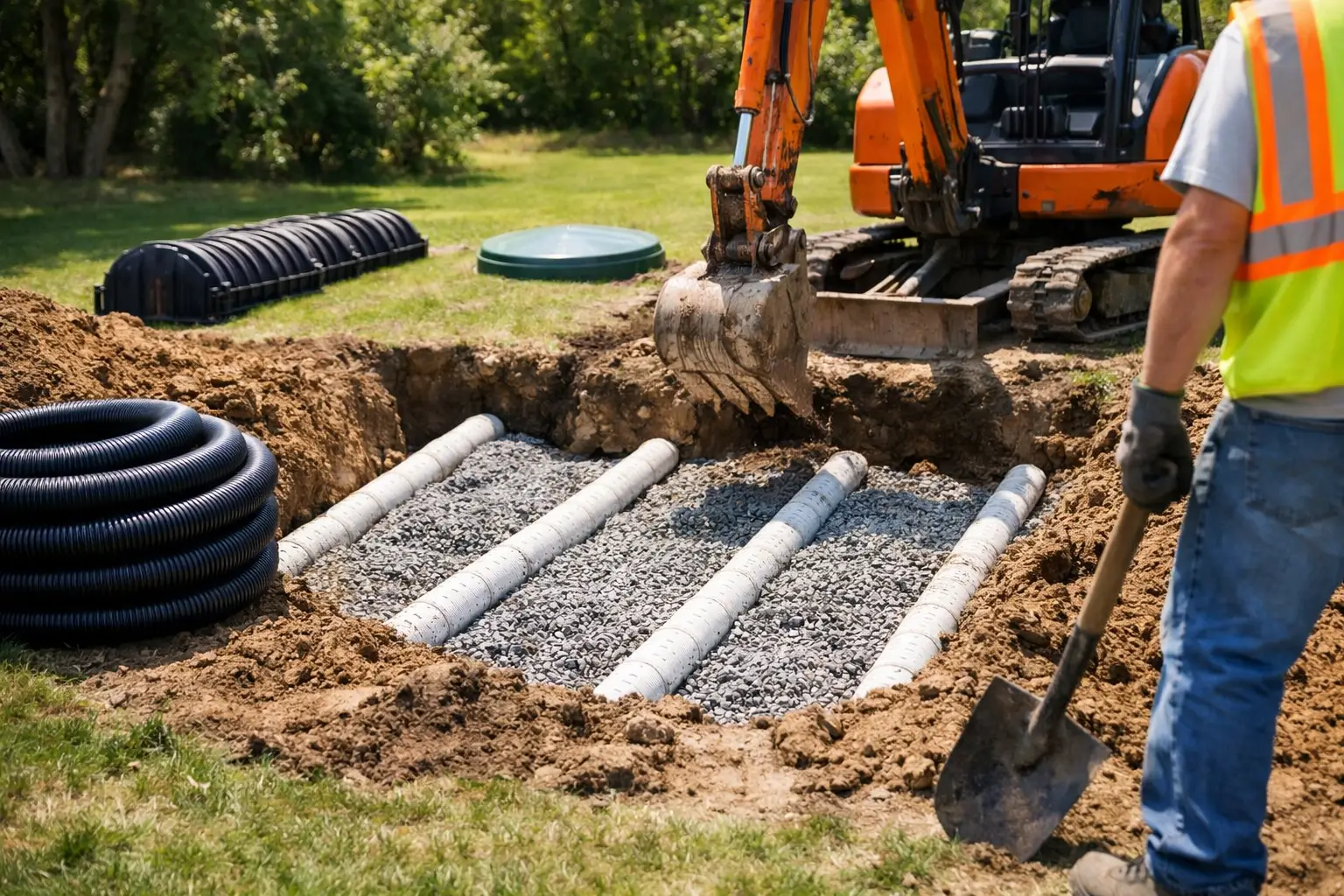
A wet patch over the yard, slow drains in the house, septic odors near the tank, or a high-water alarm going off usually means one thing – you do not have time to guess. When homeowners start looking into drain field repair options, the real question is not just what can be fixed. It is what failed, how far the damage has spread, and whether a repair will actually hold.
A drain field is where septic effluent disperses into the soil for final treatment. When it stops doing that job properly, the problem can show up at the surface, inside the building, or in the performance of pumps and controls upstream. Some failures are localized and repairable. Others point to a system that is overloaded, improperly installed, or at the end of its service life.
Not every drain field problem means full replacement
This is where many property owners lose time and money. A failing septic system does not always mean the entire drain field is ruined. It may be a damaged line, a distribution issue, root intrusion, biomat buildup, soil compaction, or hydraulic overloading from another part of the system.
The only responsible way to choose among drain field repair options is to start with diagnosis. That means looking at the tank condition, liquid levels, pump performance if present, distribution box function, field line integrity, signs of surfacing effluent, and the loading history of the site. If that step gets skipped, repairs turn into guesswork.
Common causes behind drain field failure
Drain fields fail for different reasons, and the repair depends on the cause. A field that is clogged with solids because the tank was not maintained is different from a field that has been crushed by vehicle traffic. A field that is too small for the current occupancy is different from one with a broken outlet baffle or failed pump.
In residential systems, the most common causes include lack of septic pumping, excessive water use, damaged laterals, root intrusion, grease and solids carryover, and saturated soil conditions. In commercial settings, higher flow volumes, poor maintenance intervals, and changes in building use can push a marginal system past its limit very quickly.
That is why the symptom alone does not tell the full story. Ponding water may come from a blocked line, but it may also mean the soil can no longer accept effluent. Both look bad from the surface. The repair path is very different.
Drain field repair options based on actual failure type
Distribution box and line repairs
Sometimes the drain field itself is still usable, but the effluent is not being delivered evenly. A tipped or clogged distribution box can overload one section of the field while the rest sits underused. Crushed or separated lines can do the same thing.
In that case, repair may involve re-leveling or replacing the distribution box, clearing blockages, or repairing damaged piping between the tank and field. This is one of the better-case scenarios because the soil treatment area may still be functional once flow is restored properly.
Drain field line cleaning
If field lines are obstructed by sludge, roots, or mineral buildup, cleaning may help restore partial function. This is not a cure-all. It only makes sense when the structure of the field is intact and the surrounding soil has not failed.
Line cleaning can buy time and improve performance, but it has limits. If a heavy biomat has formed around the trench bottom or the soil is chronically saturated, cleaning the inside of the pipe will not solve the larger problem.
Targeted section repair
Some systems fail in one area first. A section of trench may collapse, a portion of piping may break, or one area may become unusable because of compaction or root damage. If the remaining field is sound and code allows it, a targeted repair or partial replacement may be possible.
This approach can make sense when the damage is clearly isolated and the rest of the system tests well. It is less useful when the entire field is undersized, aged out, or showing widespread hydraulic failure.
Soil restoration or rejuvenation attempts
You may hear about drain field rejuvenation services that claim to restore percolation and extend field life. In limited situations, these methods can help reduce clogging and improve short-term acceptance rates. But they are not a substitute for correcting the underlying cause.
If solids are reaching the field because of a failed tank component, if water use is far above design, or if the native soil is no longer suitable, rejuvenation alone is not a durable answer. It should be considered case by case, not sold as a blanket fix.
Pressure distribution or pump system repair
On systems that rely on pumps, timers, floats, or pressure distribution, the drain field may appear to be failing when the real issue is mechanical or electrical. A bad float, control panel fault, pump failure, or damaged manifold can disrupt dosing and overload the field.
This matters because a field that receives too much water too fast can look like a soil failure even when it is a delivery problem. Restoring proper dosing may relieve stress on the field and prevent unnecessary excavation.
Partial drain field replacement
When one portion of the field has failed beyond repair, a partial replacement may be an option if there is room on site and the rest of the system remains compliant and functional. This usually involves removing and replacing a damaged or exhausted section while tying the new work into the existing layout.
The trade-off is simple. Partial replacement costs less upfront than a full rebuild, but it only makes sense if the older sections still have reliable life left. If the entire field is close to failure, replacing one portion may only delay a larger project.
Full drain field replacement
Some drain fields are past repair. If the soil treatment area is broadly saturated, the trenches are failing throughout, or the system no longer meets current demand, full replacement is often the right call. That may also be the case when the original installation was undersized, poorly located, or not built to current code requirements.
Full replacement is a bigger project, but it gives you the chance to correct long-term issues instead of chasing repeat failures. On some properties, that may include redesigning the field, adding treatment components, or relocating the disposal area based on site conditions.
What determines which repair makes sense
The right choice depends on five things: cause of failure, age of system, available space, local code requirements, and whether the issue is confined or system-wide.
Age matters because older systems often have more than one problem at the same time. Available space matters because some sites do not allow easy expansion or relocation. Code matters because even a practical repair may not be permitted if setbacks, loading rates, or construction standards are not met.
Most of all, it depends on whether the field has a fixable delivery problem or a true soil acceptance failure. That distinction changes everything.
When to repair and when to stop investing in patches
A repair usually makes sense when the problem is isolated, the system has remaining useful life, and the corrected condition is likely to hold. If the tank is sound, the field is mostly functional, and the failure is tied to a specific component or section, repair can be the most cost-effective path.
It is harder to justify repeated patchwork when backups keep returning, wet areas are expanding, or the property has a long history of septic issues. At that point, continued repairs often cost more than they save. A specialist assessment can tell you whether you are fixing a problem or just postponing replacement.
Why specialist diagnosis matters
Drain field work is not general plumbing. It involves wastewater flow, soil treatment, code compliance, excavation judgment, and in many systems, mechanical and electrical components that affect dosing and performance. A rushed answer can lead to the wrong repair, more property disruption, and a faster failure.
That is why companies that specialize in septic infrastructure matter. Aquamatic approaches these problems from the full system level – not just the visible symptom in the yard. That leads to better repair decisions and fewer expensive surprises.
If your yard is ponding, drains are slowing down, or alarms are going off, the next step is not to wait for it to get worse. The right repair starts with finding the real failure point, then choosing the option that solves the problem for more than one season.