
How Does a Septic Control Panel Work?
A septic alarm going off at 2 a.m. gets your attention fast. So does a pump that stops cycling, a tank that starts backing up, or a panel light that suddenly changes. If you are asking how does a septic control panel work, you are usually not asking out of curiosity alone. You are trying to figure out whether your system is operating normally, failing, or heading toward an expensive mess.
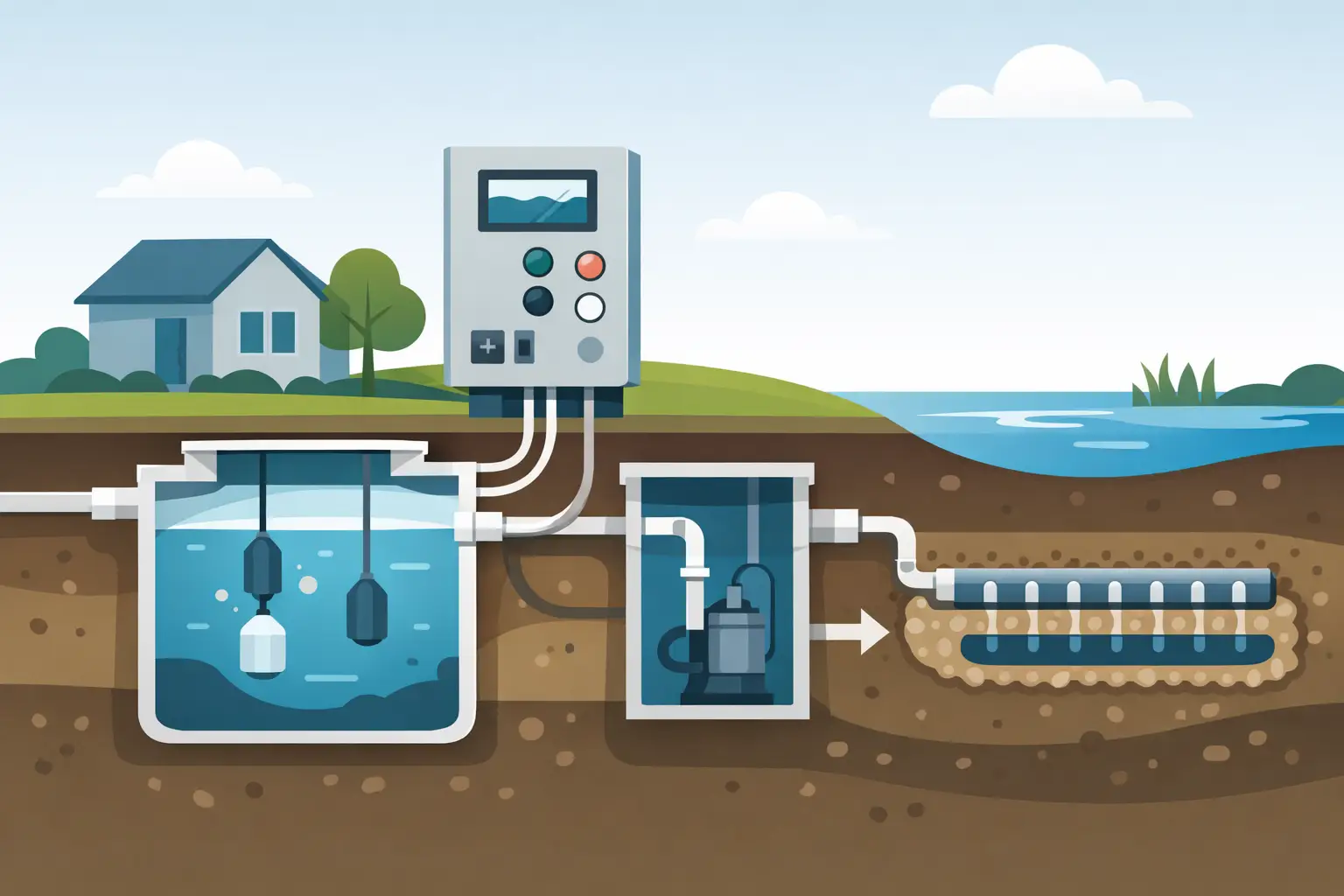
A septic control panel is the electrical brain of a pump system. It receives signals from floats inside the tank, turns the pump on and off at the right times, and activates visual or audible alarms when water levels or equipment conditions move outside normal limits. In many systems, it also helps protect the pump from damage caused by overload, short cycling, or running dry.
That sounds simple on paper, but the details matter. Not every septic system has a control panel, and not every panel does the same job. A gravity system may rely mostly on the layout of the piping and tank elevations. A pressure system, mound system, lift station, or commercial wastewater setup usually depends on a control panel to manage timed dosing, pump cycles, and alarms. When that panel stops doing its job, the rest of the system can fail quickly.
How does a septic control panel work in a real system?
The panel sits between the power source, the pump, and the control devices in the tank. Inside the tank, you typically have float switches that rise and fall with the wastewater level. Those floats send signals back to the panel. Based on those signals, the panel either energizes the pump, keeps it off, or triggers an alarm.
In a basic pump chamber, one float may signal the pump to start when the water rises to a set level. Another float may tell the pump to stop once the level drops. A separate high-water float may trigger an alarm if the pump does not keep up or if something in the system fails. In more advanced systems, the panel may use a timer to control when and how long the pump runs. That is common in systems designed to dose the drain field gradually rather than dump large volumes all at once.
This is why the panel matters. It is not just a switch box. It manages sequence, timing, and protection. Without it, the pump would have no reliable way to know when to run, when to stop, or when to warn you that conditions are unsafe.
The main parts inside a septic control panel
Most residential septic control panels include a disconnect or breaker, motor contactor or relay, alarm circuit, terminal blocks, and indicator lights. Many also include a hand-off-auto switch. That switch lets a technician place the pump in manual mode for testing, turn it off for service, or leave it in automatic mode for normal operation.
You may also see a pump run light, power light, alarm light, elapsed time meter, cycle counter, or timer controls. Commercial panels often go further, with duplex pump alternation, seal failure monitoring, high-level logging, and other controls tied to larger wastewater equipment.
The components vary by system design, but the job stays the same. The panel receives input, applies control logic, and sends power where it needs to go. If one part of that chain fails, you can end up with nuisance alarms, a dead pump, or an overflowing tank.
What the floats actually do
Floats are often the first thing people hear about, but they are only part of the control system. Each float is basically a level sensor. As wastewater rises, the float changes position and opens or closes an electrical circuit.
In a standard setup, the lowest float may serve as the off point, the middle float as the on point, and the highest float as the alarm point. Some systems use tethered floats. Others use vertical floats or pressure sensors. The design depends on tank space, pump chamber layout, and local code requirements.
Float problems are common because they work in a harsh environment. Grease, debris, corrosion, or tangled cords can keep them from moving freely. A float issue can look like a panel problem even when the panel itself is fine. That is one reason septic electrical diagnosis needs to be done by someone who understands both wastewater mechanics and control circuits.
Why some panels use timers instead of simple on-off control
Not every septic pump should run the moment the water reaches a certain height. In many engineered systems, especially mound and pressure distribution systems, timed dosing is part of the design. The panel allows the pump to run during set intervals and for a controlled duration.
That protects the drain field. Sending wastewater in measured doses gives the soil time to absorb and treat effluent properly. If the pump sends too much too fast, the field can become overloaded. If it sends too little, the system may not work as intended. The control panel keeps dosing within the design range.
This is where do-it-yourself adjustments can create serious problems. Changing timer settings without understanding the hydraulic design can shorten pump life, flood the field, or push the system out of compliance.
What happens when the alarm goes off
A septic panel alarm usually means the wastewater level is too high in the pump chamber, but the reason can vary. The pump may have failed. A breaker may have tripped. A float may be stuck. The discharge line may be blocked. The panel itself may have a bad relay, failed fuse, or damaged circuit component.
The alarm is not the failure. It is the warning that the control system sees a problem. In that sense, the alarm is doing exactly what it should do.
Some homeowners silence the buzzer and assume the issue is handled. It is not. Silencing the alarm only stops the sound. It does not lower the water, restore the pump, or fix the control fault. If the red light stays on or comes back, the system still needs attention.
Common septic control panel failures
Panels fail for predictable reasons. Moisture intrusion is high on the list, especially in older enclosures or poorly sealed installations. Corroded terminals, burned contacts, failed capacitors, damaged relays, and breaker issues are also common. Power surges can damage sensitive components, and age takes its toll on every electrical assembly.
Then there are the failures around the panel rather than inside it. A pump drawing too many amps can trip protection devices and make the panel look like the problem. A compromised float switch can send bad signals. Rodent damage, wire breaks, and poor splices can interrupt communication between the tank and the panel.
That is why proper troubleshooting starts with testing, not guessing. Replacing a panel because an alarm is active may solve nothing if the real issue is a locked pump or failed float. On the other hand, repeatedly replacing floats when the panel relay is sticking wastes time and money.
How does a septic control panel work with one pump versus two?
A single-pump panel controls one pump and usually handles basic start, stop, and alarm functions. A duplex panel controls two pumps. In commercial or higher-demand settings, duplex systems alternate the lead pump so wear is shared more evenly. If one pump fails or cannot keep up, the second pump may come on as backup.
That added redundancy is valuable, but it also adds complexity. There are more floats, more logic, and more components that need to be wired and tested correctly. For businesses, multi-unit properties, and larger wastewater systems, that complexity is often necessary. For a typical home, a single-pump setup may be all that is required. It depends on flow demand, site design, and code requirements.
Signs your panel needs service now
A panel does not have to be completely dead to be failing. Warning signs include frequent alarms, a pump that runs continuously, a pump that never turns on, lights that behave inconsistently, tripped breakers, buzzing contactors, or signs of heat and corrosion inside the enclosure.
Water around the panel, loose conduit, insect nests, and cracked housings also deserve attention. Septic electrical components live outdoors and near moisture. Small enclosure problems become larger control failures if they are ignored.
If your system is backing up, the yard is ponding, or sewage odors are getting stronger, that is not the time to keep resetting breakers and hoping for the best. The control panel may be part of the issue, but the system needs full diagnosis.
Why specialist service matters
A septic control panel sits at the intersection of electrical work and wastewater system design. General electrical knowledge is not enough by itself. Neither is general plumbing experience. The technician needs to understand pump curves, float elevations, timed dosing, motor protection, tank conditions, and how the whole septic system is supposed to operate under load.
That is where a specialist makes the difference. Companies like Aquamatic work on these systems every day, which means faster diagnosis, safer repairs, and fewer expensive guesses.
If your panel is alarming, your pump is not cycling correctly, or you are seeing signs of septic failure, treat it like the warning it is. The right fix starts with finding the actual fault before wastewater finds its way where it should not.