
When Septic Inspections Matter Most
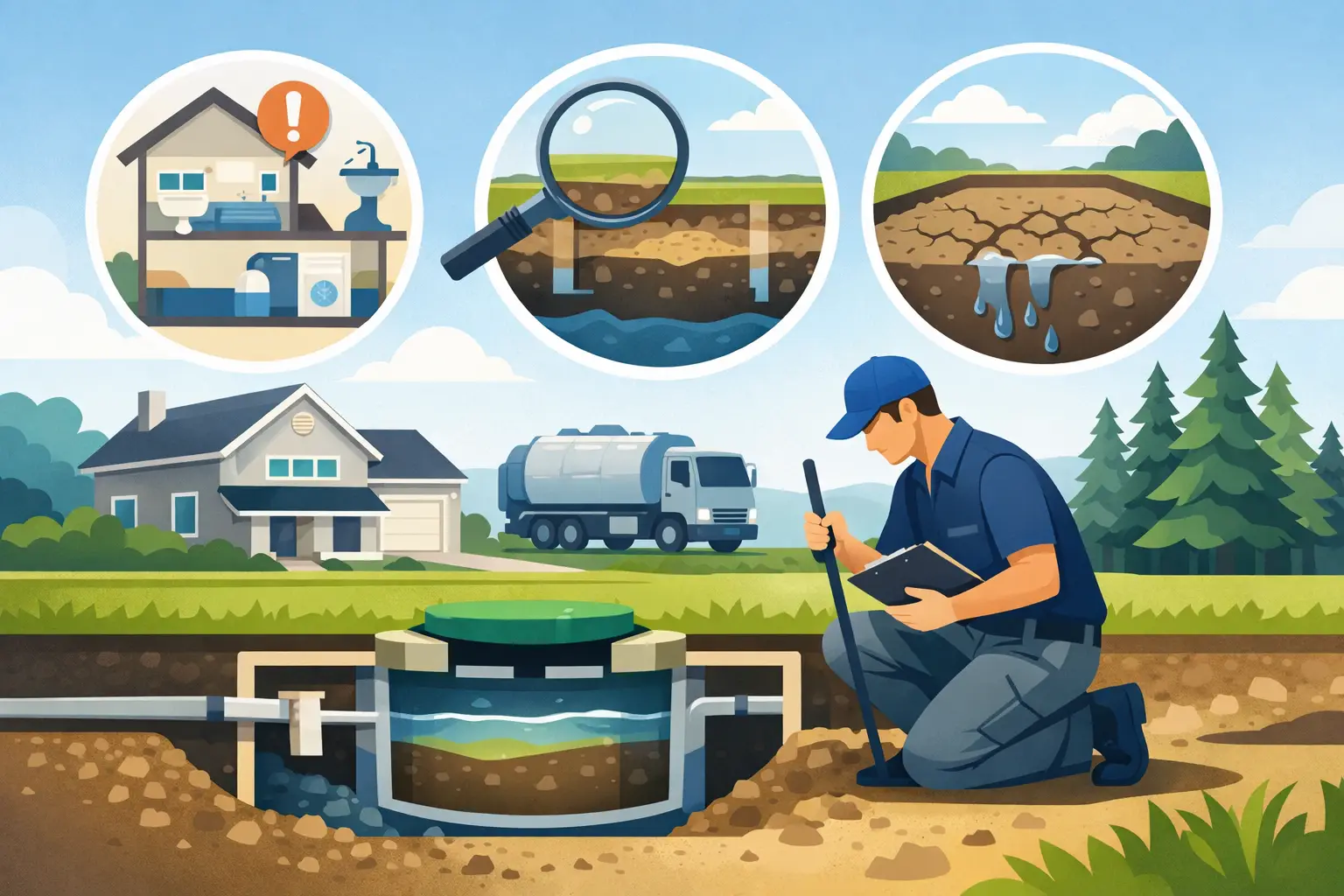
A septic system can look fine from the surface while failing underground. That is why septic inspections matter. If you are buying property, dealing with alarms or slow drains, planning a renovation, or responding to an insurance request, an inspection gives you facts before a small issue turns into a major repair.
What septic inspections actually tell you
A proper septic inspection is not a quick glance at a tank lid. It is a focused assessment of how the system is built, how it is performing, and whether there are signs of failure, damage, overload, or neglected maintenance.
For a homeowner, that can mean confirming whether a pump is operating, whether floats and controls are responding correctly, whether the tank condition appears sound, and whether the drain field is showing stress. For a buyer or insurer, it can also mean getting documentation that identifies system type, visible defects, and concerns that may affect safety, compliance, or future cost.
This matters because septic problems do not stay contained for long. A failing pump can back sewage into a home. A damaged lid can create a safety hazard. A saturated drain field can lead to ponding, odors, and environmental risk. The sooner those conditions are identified, the more options you usually have.
When septic inspections should be scheduled
Some inspections are planned. Others happen because something is already going wrong. The timing affects what the inspection needs to cover.
Real estate and property transfer septic inspections
In a sale, septic inspections help buyers understand what they are taking on. A house can pass a general home inspection and still have serious wastewater issues. Septic systems are specialized infrastructure. They need a specialist review.
The goal is not just to say whether the toilet flushes today. The goal is to identify the condition of the tank, pumps, controls, access points, and disposal area based on what is accessible and observable. If there are missing records, buried lids, signs of improper repairs, or evidence the system is undersized for the property use, that should be part of the conversation.
For sellers, an inspection can also prevent surprises late in the deal. It is easier to address known issues early than to negotiate around them after a buyer discovers a problem.
Problem-based septic inspections
If you notice slow drains, wet areas in the yard, sewage odors, alarms, gurgling fixtures, or backups, do not wait. Those are not minor inconveniences. They are warning signs.
An inspection in this situation is more diagnostic. The purpose is to identify the source of failure and decide whether the next step is repair, pumping, component replacement, or deeper system work. Sometimes the issue is a failed effluent pump or control panel. Sometimes it is a blocked line, a cracked riser, or a drain field under stress. It depends on the system design and the symptoms.
Insurance, renovation, and compliance inspections
Insurance carriers, lenders, and local authorities may require documentation about septic condition. Renovations can also trigger the need for an assessment, especially if property use is changing. Adding bedrooms, expanding occupancy, or changing building layout can affect whether the current system is suitable.
This is where documentation matters as much as field observations. A clear written report helps owners make decisions and helps outside parties understand the condition of the system without guesswork.
What happens during septic inspections
The exact scope depends on the property, the system type, access conditions, and the reason for the inspection. Still, there are a few core areas that matter almost every time.
The inspector first needs to identify the system components and how they are configured. That includes locating tanks, access points, pumps, alarms, control panels, and the disposal area where possible. If the system has risers and accessible lids, the work is more efficient. If components are buried or records are incomplete, the process can take longer and some findings may be limited by access.
From there, the inspection focuses on condition and performance indicators. Tank levels, pump operation, float function, visible structural condition, electrical components, and signs of leakage or infiltration all matter. Outside, the inspector looks for ponding, surfacing effluent, settlement, root intrusion, or other evidence that the system is not dispersing wastewater properly.
What an inspection cannot do is promise that every buried component is perfect or that a system will never fail. Septic work is based on observed conditions, available access, records, and testing where appropriate. Anyone promising certainty from a five-minute visit is overselling it.
Why specialization matters in septic inspections
A septic system is not just plumbing, and it is not just excavation. Many systems include pumps, floats, alarms, control panels, and electrical components that interact with tanks and drain fields. If one part fails, the whole system can be affected.
That is why septic inspections should be handled by a company that works in septic infrastructure every day. A general contractor may spot obvious damage, but subtle control issues, pump failures, or warning signs in wastewater movement can be missed without hands-on septic experience.
This is especially true for commercial properties or larger residential systems with advanced treatment, dosing components, or multiple tanks. The more moving parts involved, the more important technical familiarity becomes.
Common findings and what they usually mean
Some inspection findings are straightforward. A missing lid, failed alarm, or damaged riser points to a defined repair. Others require more judgment.
A high liquid level in the tank might mean overdue pumping, a failed pump, a blocked discharge line, or a disposal area that is no longer accepting effluent properly. Wet ground over a drain field may point to hydraulic overload, system damage, or a long-term failure condition. Strong odors near the tank or field can suggest venting issues, leaks, or surfacing wastewater.
Not every issue means full replacement is next. That is one of the biggest misconceptions owners have. In some cases, replacing a pump, repairing controls, installing proper access risers, or correcting a localized defect can restore reliable operation. In other cases, the inspection shows that the system has reached the point where major repair or replacement is the practical option. The right answer comes from the actual condition of the system, not from guesswork.
How owners can get more value from septic inspections
If you want a more useful inspection, make access easier. If you have records, maintenance history, pump-out dates, permits, or previous repair documents, have them available. Share the symptoms clearly. Tell the inspector if alarms have gone off, if backups happen during heavy water use, or if wet spots appear seasonally.
It also helps to be realistic about what the inspection is for. If you need a formal report for a transaction or insurer, say that up front. If you are trying to solve an active failure, that changes the approach. A good inspection is not one-size-fits-all.
For owners who have never had the system checked outside of pumping visits, this is also a good time to think beyond the immediate issue. Accessibility upgrades like risers and lids, alarm repairs, and maintenance planning can make future service faster, safer, and less expensive.
The cost of waiting
The most expensive septic jobs often start with delays. An ignored alarm becomes a backup. A neglected lid issue becomes a safety risk. A wet area in the yard turns into a failed drain field. Septic systems usually give warning signs, but they do not fix themselves.
A practical inspection gives you a starting point. It tells you whether the system is operating as it should, where the weak points are, and what needs attention now versus later. For property owners, buyers, and managers, that clarity is worth more than assumptions.
If your system is showing signs of trouble or you need documentation you can rely on, get septic inspections done before the situation gets more expensive. When wastewater infrastructure is involved, clear answers early are almost always the cheaper path.