
Best Septic Tank Risers for Reliable Access
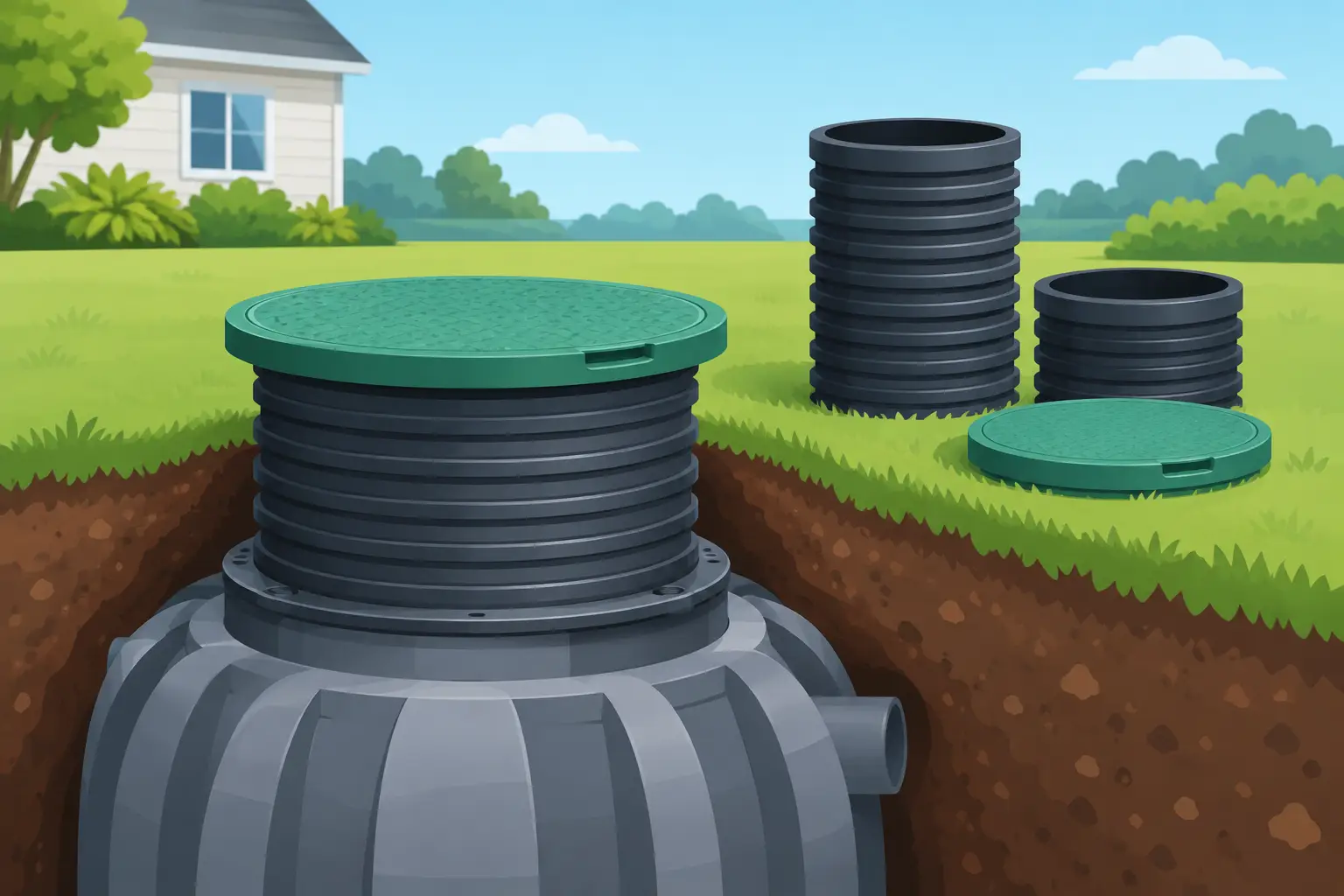
A buried septic lid may look tidy, but it creates a problem every time the system needs pumping, inspection, or repair. The best septic tank risers bring tank access to grade level, allowing qualified technicians to reach the system without unnecessary digging, lawn damage, or delays during a failure.
A riser is not just a plastic extension pipe with a lid. It is part of the tank access assembly. It must fit the existing opening, remain sealed against surface water, support the lid it carries, and hold up under the conditions above it. A poorly selected or poorly installed riser can allow groundwater into the tank, create a safety hazard, or fail when a service crew needs access most.
What Makes the Best Septic Tank Risers Different
The right riser depends on the tank, its depth, its location, and what equipment is inside. Many properties have separate access points for the septic tank inlet, outlet, filter, pump chamber, or control floats. One riser may be enough for routine pumping, while another may be needed to service a pump or inspect an effluent filter.
Material is the first decision. PVC riser systems are common because they are durable, widely available, and available in several diameters. Polyethylene systems are lightweight and resist corrosion, while fiberglass risers can be a strong option for certain tank configurations. Concrete risers are also used, especially where matching existing concrete components makes sense, but they are heavier and require careful handling and sealing.
There is no single best material for every site. The priority is a compatible, watertight assembly installed for the actual service needs of the system. A riser that works well on a shallow gravity tank may not be appropriate for a deep pump tank with electrical components and float switches below the lid.
Diameter matters as much as material. A narrow riser may provide basic visual access, but it can restrict pumping, filter maintenance, or pump removal. Most service access points need enough room for hoses, tools, and safe technician access from above. Before installation, measure the tank opening and verify what must be removed or serviced through it.
Select a Lid for the Location, Not Just the Price
The riser lid is the part people see, step on, mow over, and occasionally drive near. It needs a secure fit and a rating appropriate for its location. A standard pedestrian lid may be suitable in a lawn or landscaped area. It is not suitable for a driveway, parking area, or any place subject to vehicle loads.
If access is located in a traffic area, the entire assembly needs an engineered traffic-rated solution. That includes the riser, lid, frame, and surrounding installation method. Placing a standard plastic lid in a driveway is not a shortcut. It is a preventable safety and property damage risk.
A quality lid should also be secured with screws or bolts where required. Septic tanks contain dangerous gases, and an unsecured lid can create a serious hazard for children, pets, maintenance workers, and anyone walking the property. The lid should sit flush, remain easy for a technician to open, and resist shifting as the ground settles.
Watertight Connections Protect the Whole System
A riser that leaks inward can add thousands of gallons of unnecessary water to the tank during heavy rain or seasonal groundwater conditions. That water can overwhelm pumps, shorten the time between pump-outs, and send excess flow toward the drain field. On a pump system, it can also cause high-water alarms and unnecessary pump run time.
The connection between the riser and tank must be properly prepared and sealed. Depending on the tank type and riser system, this may involve a manufacturer-approved adapter ring, gasket, butyl sealant, mechanical fasteners, or concrete repair materials. The correct method depends on whether the tank is concrete, fiberglass, plastic, or another material.
Surface drainage also matters. Finished grade should direct water away from the lid rather than toward it. A lid installed in a low spot may remain wet, collect debris, and make leaks harder to identify. Raising the access point slightly above surrounding grade is often practical, provided it does not interfere with drainage, mowing, or site requirements.
Plan Risers Around Future Service
The best time to install risers is often during a pump-out, repair, tank inspection, or system upgrade. The tank is already exposed, the access locations can be confirmed, and any damaged baffles, filters, fittings, or lids can be addressed at the same time.
For a standard septic tank, access over both the inlet and outlet areas may be needed. The outlet side is especially important where an effluent filter is installed. Filters require routine cleaning, and burying that access point forces excavation for a maintenance task that should be straightforward.
Pump tanks need additional attention. A technician may need access to the pump, guide rail, discharge connection, floats, and electrical junctions. The riser must be sized and positioned to allow that work without damaging wires or removing unnecessary tank components. An access lid should never be treated as an electrical junction box unless the system was designed and rated for that use.
Common Mistakes That Create Expensive Problems
The lowest-cost riser installation is not always the least expensive over time. Problems usually come from mismatched parts, weak sealing, undersized access, or a lid selected without considering where it will be located.
Avoid these common issues:
- Installing a riser over only one tank opening when the filter, pump, or outlet baffle is under another opening.
- Using a pedestrian-rated lid where vehicles, trailers, or equipment may cross.
- Leaving lids unsecured or covering them with heavy landscaping features that delay emergency access.
- Sealing the assembly with incompatible materials that crack, separate, or leak over time.
- Assuming every round tank opening uses the same diameter, adapter, and lid system.
Another mistake is covering the riser completely with soil, mulch, pavers, or decorative features after installation. A discreet lid is fine. A hidden lid defeats the purpose. Service crews should be able to locate and open access points quickly, particularly when a pump alarm is active or sewage is backing up.
When a Riser Upgrade Is Worth It
If technicians must dig to pump your tank, clean your effluent filter, inspect a suspected issue, or access a pump chamber, risers are usually a practical upgrade. They are particularly useful for homes with deep tanks, landscaped yards, high groundwater, recurring filter maintenance, or pumped wastewater systems.
They also help commercial property operators who need predictable maintenance access and documented service. For real estate inspections, visible and accessible tank lids can reduce uncertainty when the system needs to be evaluated. Access does not prove the tank is in good condition, but it allows a proper inspection to begin without excavation.
Local code requirements may affect riser height, lid security, setback locations, and traffic ratings. A septic specialist should confirm the tank layout before cutting, drilling, or attaching anything to the tank. This is especially important with older systems, where access openings, tank condition, and component locations may not match current standards.
Aquamatic installs risers and lids as part of broader septic maintenance, repair, and inspection work. The goal is not simply to put a lid at ground level. It is to create safe, durable access that supports pumping, diagnostics, and future repairs without creating a leak path or structural concern.
If your septic system has buried lids, recurring pump alarms, a hard-to-reach filter, or an upcoming pump-out, ask for the access points to be evaluated while the work is underway. A properly installed riser can turn the next service visit from a digging job into a routine appointment.
Leave a Reply