
Lift Station Failures: Causes and Warning Signs
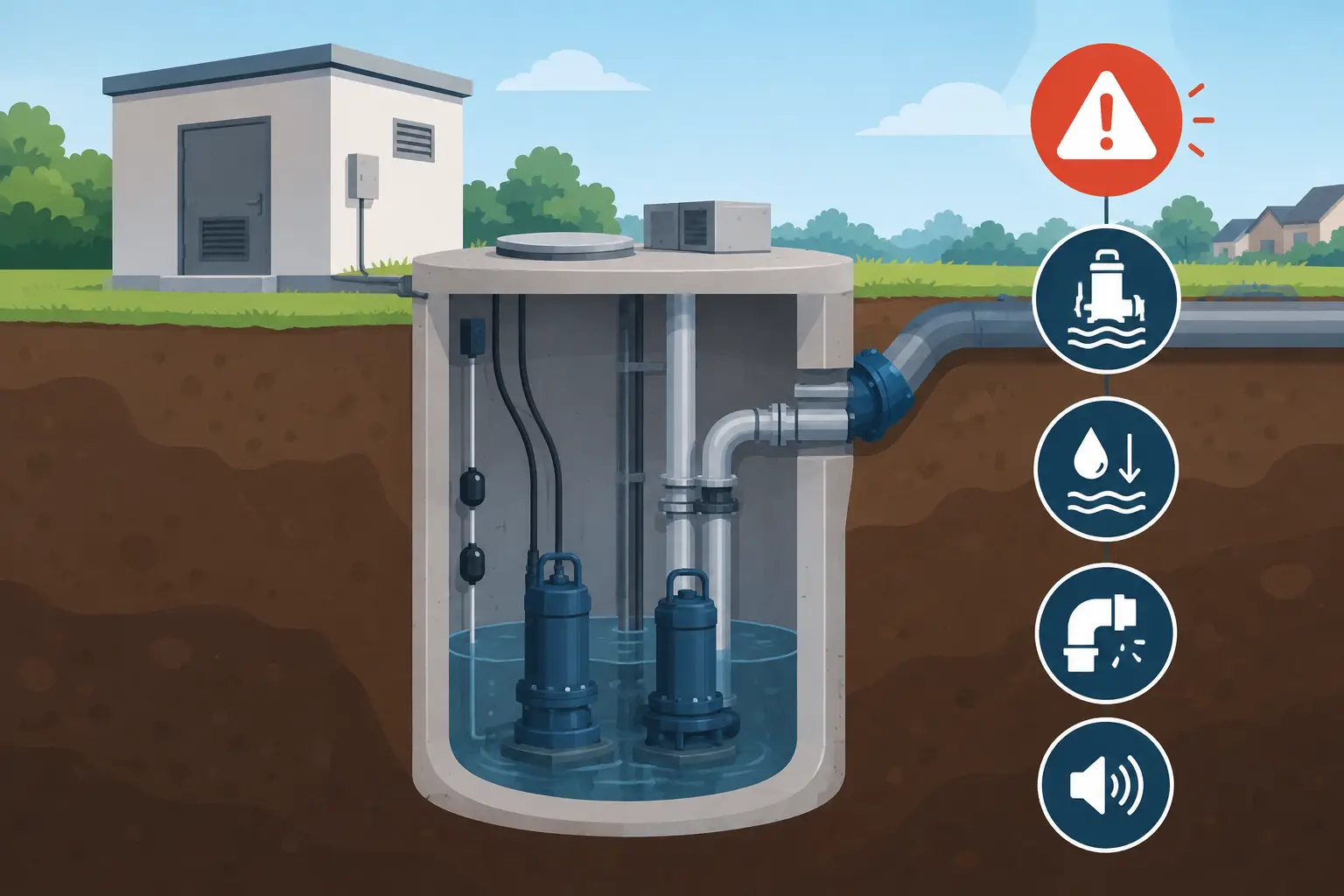
A lift station alarm is not a minor maintenance reminder. It means wastewater may not be moving where it needs to go. Lift station failures can turn into sewage backups, overflowing tanks, strong odors, damaged equipment, and interrupted operations if the cause is not addressed quickly.
A lift station uses pumps, floats, controls, and electrical components to move wastewater from a lower point to a higher elevation. These systems are common where gravity alone cannot carry wastewater to a septic tank, treatment area, or municipal connection. When one component fails, the entire system can be affected.
What Lift Station Failure Looks Like
The first sign is often a high-water alarm at the control panel. The alarm indicates that the wet well or pump chamber has reached a level above normal operating range. The pump may still be running, may be unable to keep up, or may not be running at all.
Other warning signs include slow drains throughout the building, toilets that gurgle, wastewater backing up into low fixtures, wet or soft ground near the tank, and sewage odors around the lift station. Commercial properties may notice restroom closures, floor drain backups, or an alarm that repeatedly activates during peak use.
Do not silence an alarm and assume the problem is resolved. The alarm can be muted, but the cause remains. A recurring alarm requires diagnosis by a wastewater system specialist.
Common Causes of Lift Station Failures
Pump Failure
The pump is the working component that moves wastewater out of the chamber. A pump can fail because of age, worn impellers, failed seals, overheating, electrical damage, or a blocked intake. Pumps can also become jammed by materials that should never enter a wastewater system, including wipes, feminine hygiene products, rags, paper towels, grease, and stringy debris.
A pump that hums but does not move water may be jammed or damaged. A pump that does not run at all may have a control, float, breaker, wiring, or motor issue. The correct repair depends on testing the pump and its electrical supply rather than guessing.
Float Switch Problems
Float switches tell the system when to turn the pump on, off, or activate the high-water alarm. If a float is tangled, coated with debris, stuck against a chamber wall, or worn out, the pump may not cycle correctly.
A failed “on” float can allow wastewater to rise until the high-water float activates. A failed “off” float can cause the pump to run longer than it should, increasing wear and the risk of motor damage. Float issues are common, but they should not be treated as a simple replacement without inspecting the chamber, pump operation, and control settings.
Control Panel and Electrical Faults
A lift station control panel manages pump operation and alarms. Corroded terminals, failing relays, damaged contactors, power surges, loose connections, water intrusion, and aged components can all create intermittent or complete system failure.
Electrical faults can be difficult to identify because the pump may work during one test and fail later under load. A qualified technician should inspect voltage, amperage, panel components, float signals, pump performance, and alarm operation. Replacing a pump will not solve a failed control panel, and replacing a panel will not solve a failing pump.
Power Loss and Tripped Breakers
Storms, utility outages, tripped breakers, and damaged underground wiring can stop a lift station immediately. If the station has lost power, wastewater will continue entering the chamber even though it cannot be pumped out.
Property owners can safely check whether the breaker has tripped, but a breaker that trips again should not be repeatedly reset. That can indicate a short circuit, motor failure, or wiring issue. Repeated resets can create further equipment damage and safety risks.
High Flow or System Overload
Sometimes the equipment is functional, but incoming flow exceeds the lift station’s capacity. Heavy water use, leaking fixtures, groundwater infiltration, stormwater entering the system, or an undersized pump can overwhelm the chamber.
This is especially relevant for commercial properties, additions, remodeled homes, and buildings with changed occupancy. A lift station sized for a small residence may not perform reliably after a major renovation or increased wastewater demand. The solution may involve pump replacement, control upgrades, basin modifications, or a broader wastewater system assessment.
What to Do When the Alarm Activates
Reduce water use immediately. Avoid showers, laundry, dishwashers, and unnecessary flushing until the system has been checked. Every gallon sent down a drain enters the wastewater system and can raise the level in the pump chamber.
Next, confirm whether the control panel has power. Check for a tripped breaker only if it can be done safely. Do not open electrical panels, enter a pump chamber, or attempt to pull a pump without proper equipment and training. Lift stations contain electrical hazards, confined-space risks, and potentially dangerous gases.
If there is visible sewage backup, keep people and pets away from the area. Do not use bleach or chemical drain cleaners in an attempt to correct a pump station problem. Those products do not repair mechanical or electrical failures and can interfere with wastewater treatment.
Call a septic and wastewater specialist promptly. A proper service visit should identify whether the issue is the pump, floats, discharge line, check valve, control panel, electrical supply, or system capacity. The goal is not just to clear the alarm. It is to restore reliable operation and prevent the same failure from returning.
Preventing Lift Station Failures
Lift stations need scheduled maintenance, particularly on properties with older equipment, frequent alarms, high wastewater use, or commercial demand. Maintenance provides an opportunity to test floats, verify alarm operation, inspect control panels, check pump amperage, clean components, and identify wear before a backup occurs.
Pump replacement timing depends on equipment condition, usage, wastewater characteristics, and maintenance history. There is no single replacement schedule that fits every property. A lightly used residential system may operate for years, while a commercial lift station handling higher volumes may need more frequent service and earlier equipment upgrades.
Property owners also play a role. Keep wipes, grease, hygiene products, paper towels, and other non-flushable materials out of drains and toilets. Protect the control panel from physical damage, keep access lids secure, and make sure the alarm is audible or otherwise monitored. If an alarm activates once, document when it happened and what water use was occurring at the time. That information can help identify an overload or intermittent fault.
When Repair Is Not Enough
Some lift station failures are best handled with repair. A damaged float, failed relay, worn check valve, or isolated wiring issue can often be corrected without replacing the entire system. Other situations point to a larger problem, such as repeated pump burnouts, an undersized basin, obsolete controls, severe corrosion, or a station that cannot handle the property’s current demand.
Upgrading the pump or control panel can improve reliability, but only when the equipment is properly matched to the site. Pump selection must account for flow, lift height, pipe size, run time, solids handling requirements, and electrical capacity. Installing a more powerful pump without evaluating the full system can create short cycling, pipe stress, or premature equipment wear.
Lift station problems rarely improve on their own. When an alarm sounds, reduce water use and get the system evaluated before a manageable equipment issue becomes a wastewater emergency.
Leave a Reply