
Pump Control Panels Keep Septic Systems Safe
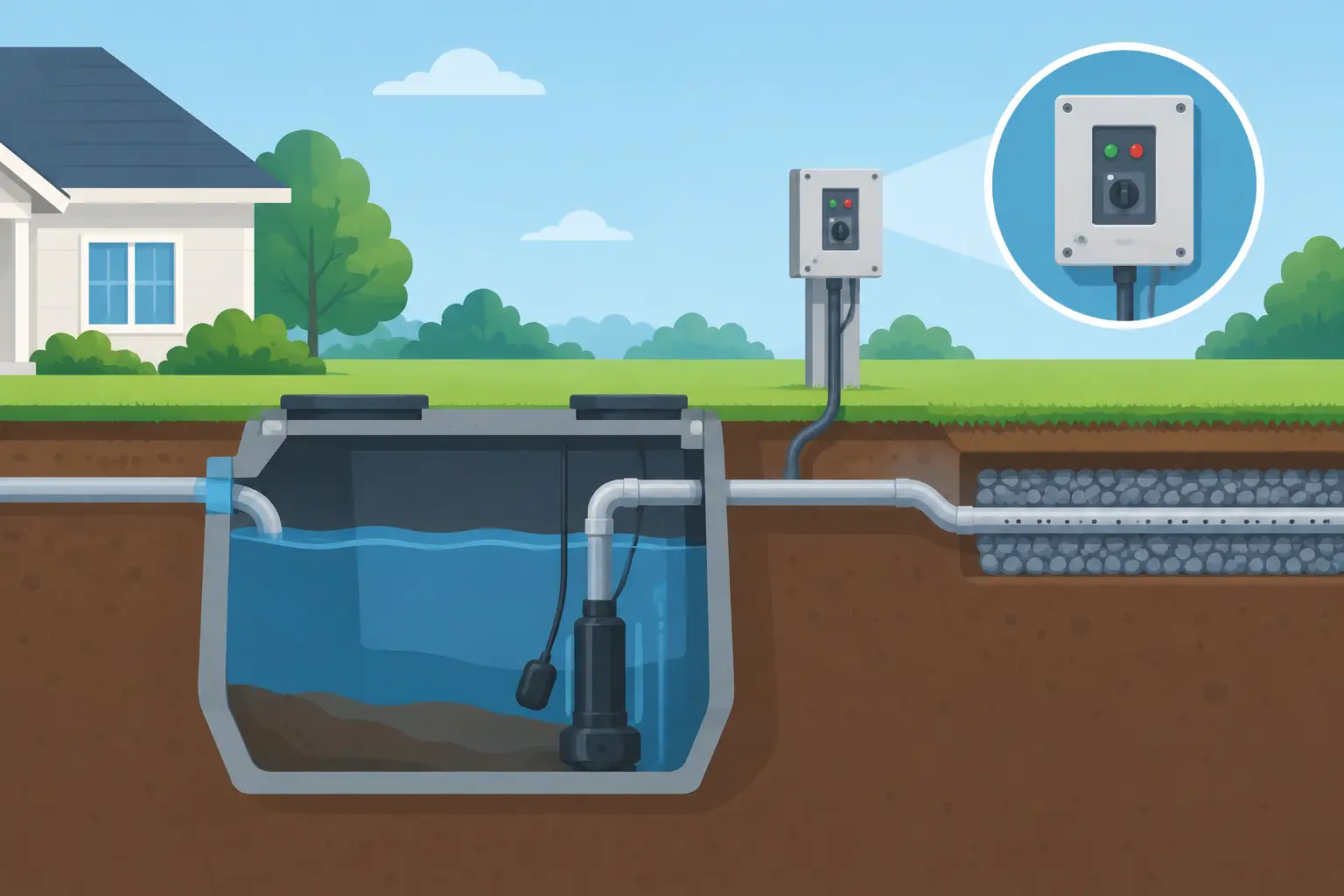
A septic pump can be working perfectly while the system is still one alarm away from failure. Pump control panels tell the pump when to run, protect it from damaging conditions, and alert you when wastewater levels rise too high. When the panel fails, the result can be a backup, an overflowing tank, property damage, or a system that stops treating wastewater as designed.
For homes and commercial properties with pump tanks, lift stations, or advanced treatment components, the control panel is not an optional accessory. It is the operating center of the system.
What Pump Control Panels Do
A pump control panel receives signals from floats or level sensors inside the pump tank. Based on those signals, it starts and stops the pump at the correct water levels. In a typical septic system, wastewater enters the pump chamber after passing through the septic tank. When the liquid reaches the preset “on” level, the panel starts the pump and moves effluent to the drain field or treatment area.
The panel also monitors high-water conditions. If the water rises above the normal operating level because of a pump problem, electrical issue, blocked discharge line, or excessive water use, the alarm should activate before wastewater escapes the tank.
A properly configured panel can also provide timed dosing. Rather than sending a large volume of effluent to the drain field all at once, timed dosing sends smaller, controlled doses. This protects the soil treatment area and is often required for pressure distribution and advanced septic systems.
Inside a Septic Pump Control Panel
The exact design depends on the system, but most panels contain a circuit breaker or disconnect, pump controls, alarm controls, a relay or contactor, and terminals for incoming power and float switches. Some include a timer, elapsed-time meter, alternator for duplex pumps, surge protection, or remote monitoring equipment.
The floats are especially important. A common setup uses three floats: one to turn the pump off at the low level, one to turn it on at the normal level, and a third to activate the high-water alarm. A duplex system may have additional floats and controls to alternate two pumps or start both pumps during unusually high flow.
Each component must be selected and wired for the pump, voltage, amperage, float configuration, and application. A panel that is technically powered but incorrectly matched to the pump can create repeat failures. That is why septic electrical work should be handled by a specialist who understands the complete wastewater system, not only the wiring.
Manual and Automatic Settings
Most pump control panels have Hand, Off, and Auto settings. Auto is the normal operating position. The panel responds to the float switches and runs the pump only when needed.
Hand mode can run the pump continuously for testing or service. It should not be left on. If the pump runs dry, is unable to move water, or is operating against a blockage, it can overheat or suffer premature wear. Off mode prevents the pump from running, but it also allows the tank level to rise. Homeowners should not use these switches as a workaround for an alarm without professional direction.
Warning Signs That Need Fast Attention
A red light, audible alarm, or flashing panel indicator means the system needs attention. The alarm does not always mean the pump has failed, but it does mean the water level is higher than it should be. Treat it as an early warning, not an inconvenience to silence.
Other signs of a pump panel or pump-tank problem include slow drains throughout the building, sewage odors near the tank or drain field, wet ground or ponding water, a tripped breaker, or a pump that seems to run constantly. Commercial properties may notice restroom backups, alarms during busy operating hours, or repeated circuit trips.
If the alarm sounds, reduce water use immediately. Avoid laundry, long showers, dishwashers, and unnecessary flushing until the cause is identified. Check whether a breaker has tripped, but do not repeatedly reset it. A breaker that trips again may indicate a failing pump, damaged wiring, moisture intrusion, or a short circuit.
Do not open a septic tank or enter a pump chamber. Septic gases and confined spaces are dangerous. Keep the alarm active if possible so the condition remains visible, then arrange for a qualified septic technician to diagnose the system.
Common Pump Control Panel Failures
Control panels operate outdoors and around moisture, corrosive gases, temperature swings, insects, and power surges. Even quality equipment needs inspection over time.
Float switches can tangle, become coated with grease or solids, wear out internally, or fail because of damaged cords. A failed float may prevent the pump from starting, keep it running too long, or trigger a false alarm. The problem may be in the float, but it can also be caused by poor float placement or insufficient cable length inside the tank.
Electrical connections can corrode or loosen. A relay may fail to send power to the pump. A worn breaker, damaged conduit, water intrusion, or rodent damage can interrupt power. Lightning and utility fluctuations can also damage timers, boards, and alarm components.
The panel may be working correctly while the actual pump is not. A seized pump, clogged intake, failed check valve, blocked force main, or broken discharge fitting can all raise the water level and trigger the alarm. Proper diagnosis means testing the panel, floats, pump amperage, discharge line, and tank conditions together.
Repair, Upgrade, or Replace?
A minor panel issue may only require a new float, relay, alarm buzzer, fuse, or weatherproof repair to the enclosure. If the existing panel is correctly sized, in good condition, and compliant with the system design, repair is often the practical choice.
Replacement makes more sense when the enclosure is badly corroded, the controls are obsolete, repeated electrical failures are occurring, or the system is being upgraded. A new pump with an old, undersized panel is not a complete repair. The pump and controls must work as a matched system.
An upgrade may also be needed when adding bedrooms, expanding a commercial building, changing water use, replacing a drain field, or installing a pressure distribution system. Duplex panels can provide backup pumping capacity for locations where a single pump failure would cause serious disruption. Timed-dose controls may help protect a sensitive or heavily used drain field.
The right choice depends on the tank layout, pump specifications, available electrical service, local requirements, and the condition of the rest of the septic system. Replacing parts without identifying the root cause can turn one alarm into a cycle of repeat service calls.
Maintenance That Prevents Emergencies
Pump control panels should be checked as part of routine septic maintenance, not only after an alarm. A technician can test the alarm, inspect floats, verify pump operation, measure electrical draw, inspect wiring and connections, and confirm that the pump is delivering effluent properly.
Keep the area around the panel accessible. Do not cover it with landscaping, stack materials against it, or allow irrigation to spray directly onto the enclosure. Make sure tank risers and lids are secure and accessible as well. Service is faster and safer when the technician can reach the panel and pump tank without excavation.
For properties with rental units, commercial kitchens, high occupancy, or seasonal heavy use, scheduled inspections are especially valuable. These systems can experience higher flows and less predictable loading than a typical household system.
A septic alarm is a warning with a limited window to act. If your panel is alarming, your pump is not cycling normally, or wastewater is surfacing, reduce water use and call a septic specialist. Fast diagnosis can protect your pump, drain field, property, and the people who depend on the system.