
Who Repairs Septic Control Panels and Why It Matters
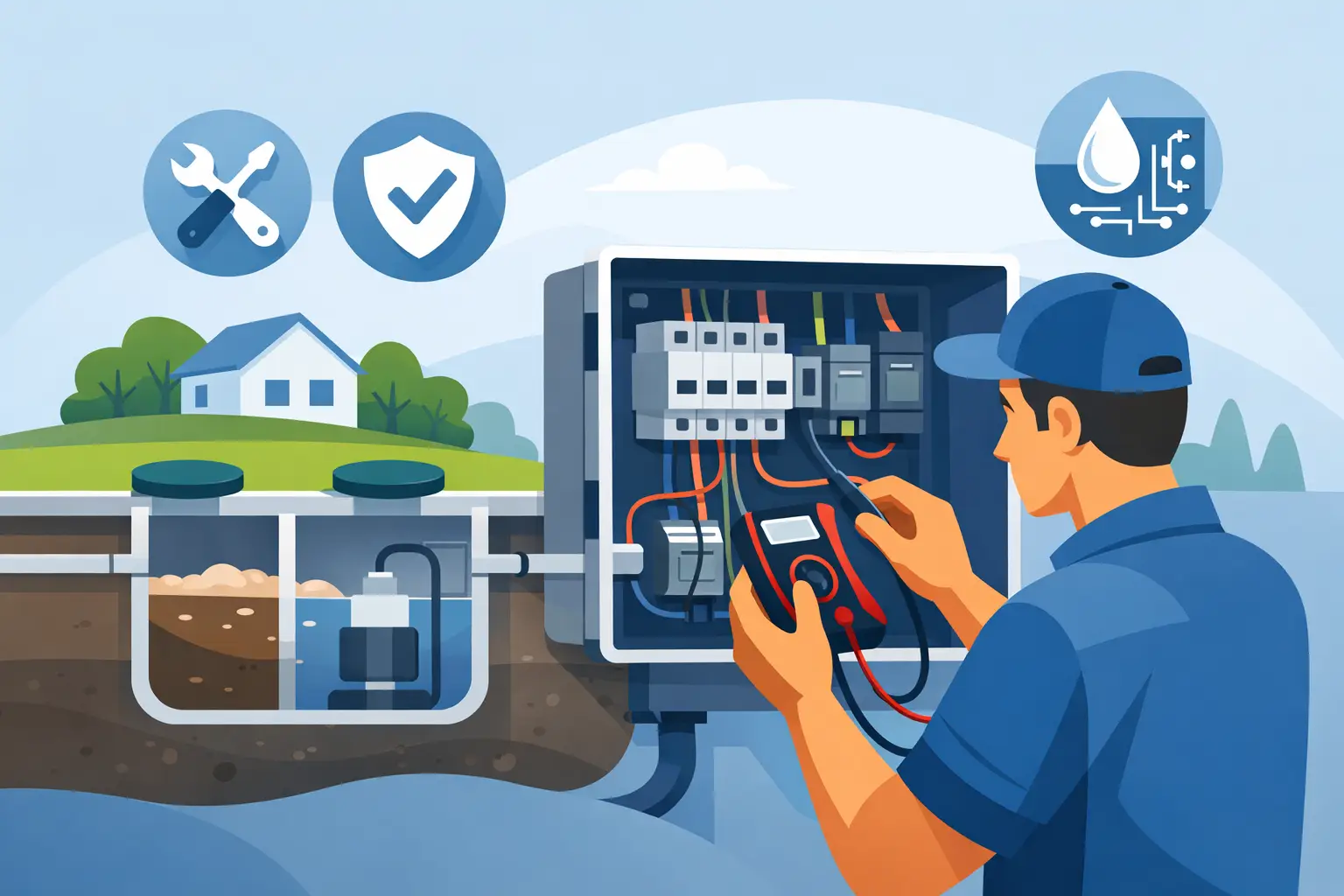
A septic alarm is sounding, the pump is not running, or wastewater levels are rising in the tank. The immediate question is: who repairs septic control panels? The right answer is a septic and wastewater system specialist who understands the panel, pump, floats, tank conditions, and drain field as one operating system.
A control panel is not just an electrical box. It directs critical wastewater equipment. A bad repair, incorrect setting, or overlooked pump issue can lead to a backup, tank overflow, property damage, or premature drain field failure. This is not the time to guess or reset breakers until the alarm stops.
Who repairs septic control panels?
Septic control panels are best repaired by qualified septic service technicians with electrical troubleshooting capability. These specialists diagnose the entire pump system, including the panel, circuit protection, alarm, floats, pump, wiring, and discharge line. They can determine whether the panel is the actual problem or whether it is correctly warning you about a problem elsewhere in the system.
A licensed electrician may be needed when the issue involves the building service, a dedicated circuit, damaged underground power supply, or code-related electrical work. But an electrician who does not work on septic systems may not be equipped to diagnose pump controls, float sequencing, high-water alarms, or wastewater-rated equipment.
Likewise, a general plumber may be able to address indoor drainage, but septic pump control work requires more specialized knowledge. A general excavation contractor may access tanks and lines, but panel troubleshooting is not primarily an excavation problem. For a failing pump system, start with a septic specialist. They can coordinate any additional electrical or excavation work if the diagnosis calls for it.
Why the panel may not be the real failure
The control panel is often blamed because it is visible and because it alarms. In many cases, however, the alarm is doing exactly what it should do: warning that water has reached an unsafe level in the pump tank.
A septic technician needs to identify why the level rose. The pump may have failed. A float may be stuck, damaged, or set incorrectly. The discharge line may be blocked or frozen. A breaker, fuse, relay, timer, or wiring connection may have failed. In some systems, excessive water use or a drain field problem can keep the pump from lowering the tank level as expected.
Replacing a panel without testing these connected components can waste money and leave the original failure in place. Proper service begins with diagnosis, not a parts swap.
Common signs you need control panel service
Call for service promptly if you have a steady or flashing alarm light, an audible alarm, a pump that runs continuously, or a pump that will not run at all. Other warning signs include wet ground near the tank or drain field, sewage odors, slow drains throughout the building, wastewater backing up, or breakers that repeatedly trip.
Do not assume the alarm is a minor nuisance. It may indicate limited reserve capacity in the tank. Continued water use can quickly turn a manageable repair into an emergency. Reduce water use immediately. Avoid laundry, long showers, dishwasher cycles, and other high-volume water use until the system is assessed.
What a septic control panel repair should include
A competent service visit goes beyond opening the panel door. The technician should inspect the pump tank safely, verify liquid levels, test the alarm function, check float operation, confirm incoming voltage, and evaluate the pump’s electrical load and performance.
The panel itself may need a new fuse, relay, timer, switch, alarm component, terminal connection, enclosure seal, or circuit protection device. In older panels, corrosion, water intrusion, insect damage, overheated connections, and outdated components are common concerns. A damaged enclosure can allow moisture into controls and create repeat failures.
The technician should also test whether the pump starts and stops at the correct levels. Float settings matter. If the pump activates too late, the high-water alarm may sound too often. If it runs too long or too frequently, it can shorten pump life. If floats tangle or bind inside the tank, the system may fail without warning.
For commercial properties, the assessment may also include duplex pump alternation, lead-lag controls, run-time counters, emergency settings, and alarm notification equipment. These systems often have higher flow demands and less room for missed maintenance.
Repair, upgrade, or replace?
Not every bad panel needs replacement. A relatively new panel with one failed relay, float, fuse, or alarm component can often be repaired efficiently. Repair is usually the practical choice when the enclosure is sound, the controls meet current needs, and replacement parts are available.
Replacement becomes more sensible when a panel has severe corrosion, repeated electrical failures, obsolete components, inadequate capacity, or poor weather protection. It may also be time to upgrade when replacing a pump with different electrical requirements, adding an alarm, installing a second pump, or improving monitoring for a commercial or high-use property.
A modern panel can provide clearer alarm indication, better pump protection, timed dosing, alternating pump operation, and easier service access. The right choice depends on the system design, local requirements, the condition of the existing equipment, and the cost of repeated repairs. A specialist should explain those trade-offs clearly before work begins.
Safety matters around septic electrical equipment
Never enter a septic tank, pump chamber, or confined space to inspect floats or a pump. Septic gases can be deadly, and tanks can have unsafe oxygen levels even when they appear open and quiet. Keep children, pets, and untrained individuals away from open lids and pump tanks.
Do not reach into a panel with wet hands or bypass alarm and pump controls. Turning off an alarm without correcting the high-water condition removes your warning system, not the problem. If a breaker has tripped, resetting it once may help identify a temporary event, but repeated trips require professional diagnosis. Repeated resetting can damage equipment or create a safety hazard.
If wastewater is backing up into the building or surfacing outside, minimize water use and call for urgent septic service. Protecting the property starts with stopping additional flow into an already stressed system.
Preventing the next panel problem
Most control panel failures are easier and less expensive to address during routine maintenance than during a backup. Regular septic inspections allow a technician to check pump cycles, float condition, alarm operation, wiring, seals, and tank levels before a weak component becomes a system shutdown.
Keep the panel accessible and visible. Do not bury it behind storage, landscaping, or locked structures that delay emergency service. Maintain secure risers and lids over pump tanks so technicians can inspect the equipment safely without damaging the yard or digging for access.
Property owners should also know where the panel is, which breaker serves it, and whether the alarm is powered. If you purchase a septic-dependent property, a documented system assessment can identify aging controls, unsupported equipment, and maintenance needs before they become your emergency.
Aquamatic repairs and upgrades septic control panels as part of a complete wastewater system diagnosis. When the alarm sounds or the pump stops, get a specialist to test the full system and give you a clear path forward. Fast, correct action can protect the pump, the drain field, and the property you rely on.