
Top Septic Failure Causes and How to Stop Them
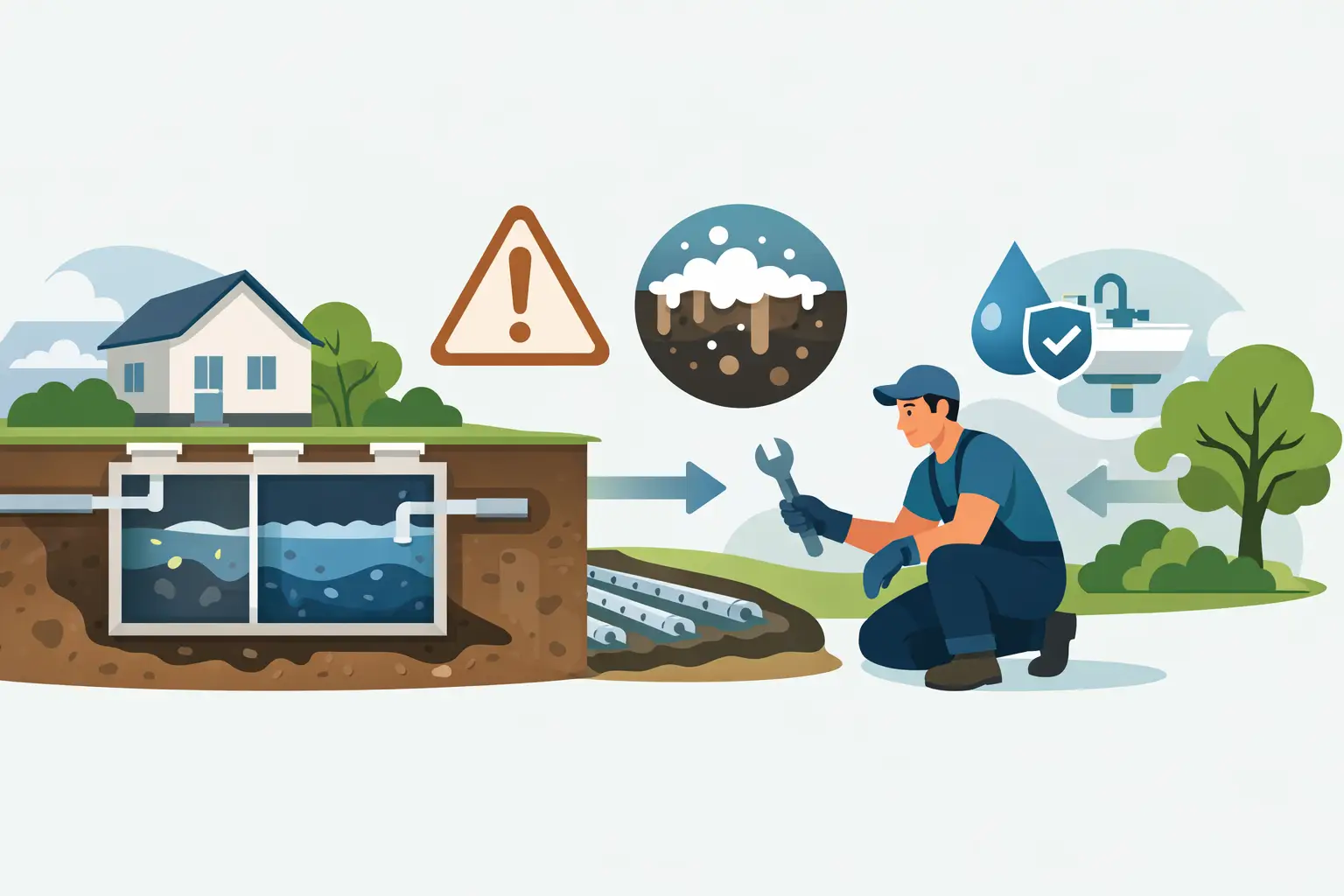
A septic system rarely fails without giving clues first. Slow drains, sewage odors, wet ground near the drain field, alarms, and backups are all warnings that demand attention. The top septic failure causes usually come down to overload, missed maintenance, equipment problems, or damage to the system’s treatment area. Waiting for a full backup turns a manageable repair into a health hazard and a more expensive project.
Top Septic Failure Causes Homeowners Should Know
1. Skipping routine pumping and maintenance
A septic tank is designed to separate solids, grease, and wastewater. Solids settle at the bottom as sludge, while lighter materials form a scum layer at the top. Over time, both layers build up. If the tank is not pumped on schedule, solids can move out to the drain field and clog the soil where wastewater is supposed to filter.
This is one of the most preventable causes of drain field failure. Pumping frequency depends on tank size, household size, water use, garbage disposal use, and the type of system you have. A small tank serving a busy home needs attention sooner than a larger tank serving one or two people. Do not rely on a fixed calendar alone. Use a maintenance plan based on your actual system and usage.
Pumping is also the best time to inspect baffles, filters, lids, risers, pumps, floats, alarms, and visible tank conditions. It catches small defects before they become an emergency.
2. Sending the wrong materials down the drain
Your septic system is not a trash can. Wipes, paper towels, feminine hygiene products, diapers, dental floss, cat litter, and grease do not belong in the toilet or sink. Even products labeled “flushable” can create clogs or interfere with pumps and filters.
Grease is especially damaging. It may leave the kitchen as a warm liquid, but it cools and hardens inside pipes and tanks. That buildup restricts flow and adds to the scum layer. Excessive household chemicals, paint, solvents, pesticides, and antibacterial products can also disrupt the natural biological process inside the tank.
Use the toilet for waste and toilet paper only. Put cooking grease in a container for disposal. If a drain backs up repeatedly, do not keep using chemical drain cleaners. They may damage components, create a safety issue for technicians, and do nothing to solve a septic system problem.
3. Hydraulic overload from too much water
A drain field can only accept and treat a certain amount of wastewater each day. Long showers, multiple loads of laundry, leaking toilets, dripping faucets, and high-volume fixtures can push more water through the system than it can handle. Heavy rain can make the situation worse when surface water is directed toward the tank or drain field.
Overloading does not always cause an immediate backup. It often starts with slow drains, gurgling fixtures, or soft, wet ground over the treatment area. If the system relies on a pump, frequent cycling may also signal unusually high flow.
Spread laundry loads across the week instead of doing them all in one day. Repair leaks promptly. Keep roof runoff, sump pump discharge, and landscape drainage away from the septic tank and drain field. A properly operating septic system should treat wastewater, not groundwater or stormwater.
4. Pump, float, alarm, or control panel failure
Many modern septic systems depend on electrical and mechanical equipment. Pump systems, aerobic treatment units, pressure distribution systems, and advanced treatment systems need functioning pumps, floats, alarms, and control panels to move or treat wastewater correctly.
A failed pump can allow effluent to rise in a pump tank until it triggers an alarm or backs up into the building. A stuck float may prevent the pump from turning on, or cause it to run too often. Electrical faults, damaged wiring, tripped breakers, failed control components, and worn pump motors can all create the same urgent result: wastewater has nowhere to go.
Never ignore a septic alarm. Reduce water use immediately and call a septic specialist. Do not silence the alarm and assume the problem is resolved. The alarm is telling you the system needs diagnosis. Continued water use can cause an overflow, equipment damage, or sewage backup.
5. Damaging the drain field
The drain field is the part of the system that finishes treatment by distributing wastewater into suitable soil. It needs open soil pores, proper drainage, and protection from compaction. Driving vehicles, parking equipment, building structures, installing pools, or storing heavy materials over the drain field can crush pipes and compact soil.
Tree and shrub roots can also invade septic lines and distribution components. Roots seek moisture and nutrients, then grow into joints, cracked pipes, and weakened areas. The result may be restricted flow, broken lines, or uneven distribution across the field.
Keep the drain field clear and accessible. Grass is usually the right cover because it limits erosion without deep roots. Avoid deep-rooted trees, shrubs, gardens requiring heavy tilling, and any activity that adds weight to the field. Know where your tank, pump chamber, and drain field are before beginning landscaping or construction.
6. Poor design, aging components, or improper repairs
Some failures begin long before the first backup. An undersized system, poor soil conditions, incorrect installation depth, damaged distribution lines, or a system that was never designed for an addition or increased occupancy can eventually reach its limit.
Older systems may have deteriorated concrete, corroded lids, broken baffles, aging pumps, or outdated electrical controls. A renovation that adds bedrooms, bathrooms, or commercial use can increase wastewater volume beyond what the existing system was approved to handle.
Not every problem requires full replacement. A specialist assessment can identify whether the issue is a repairable tank component, a pump or control failure, a blocked line, a distribution problem, or a drain field that has reached the end of its service life. The right repair depends on the system design, site conditions, local requirements, and documented condition of the equipment.
Warning Signs That Need Fast Action
A septic failure can create health risks, contaminate nearby areas, damage flooring and walls, and interrupt business operations. Call for professional service when you notice sewage backing up into tubs or toilets, wastewater surfacing in the yard, persistent sewer odors, a high-water alarm, unusually green or wet drain field areas, or drains that remain slow throughout the building.
If sewage is backing up, stop using water wherever possible. Do not run the dishwasher, washing machine, or additional showers. Keep people and pets away from standing wastewater. Avoid opening electrical control panels or entering tank areas yourself. Septic tanks can contain dangerous gases, and electrical equipment near wastewater requires trained handling.
Prevent Failure Before It Becomes an Emergency
The most effective prevention is straightforward: pump and inspect the system on schedule, conserve water, protect the drain field, and respond quickly to alarms or changes in drainage. Keep service records, inspection reports, and system drawings if available. Those records matter when selling a property, filing an insurance claim, planning a renovation, or diagnosing a recurring problem.
For properties with pumps, alarms, advanced treatment equipment, or commercial wastewater demands, regular professional maintenance is not optional. Mechanical and electrical components need testing before they fail under load.
Aquamatic works exclusively on septic and wastewater infrastructure, including diagnosis, pump and control repairs, drain field concerns, inspections, and system upgrades. When warning signs appear, a targeted assessment can identify the cause before wastewater reaches the wrong place. Protect the system early, and you protect the property around it.