
What a Septic System Assessment Report Shows
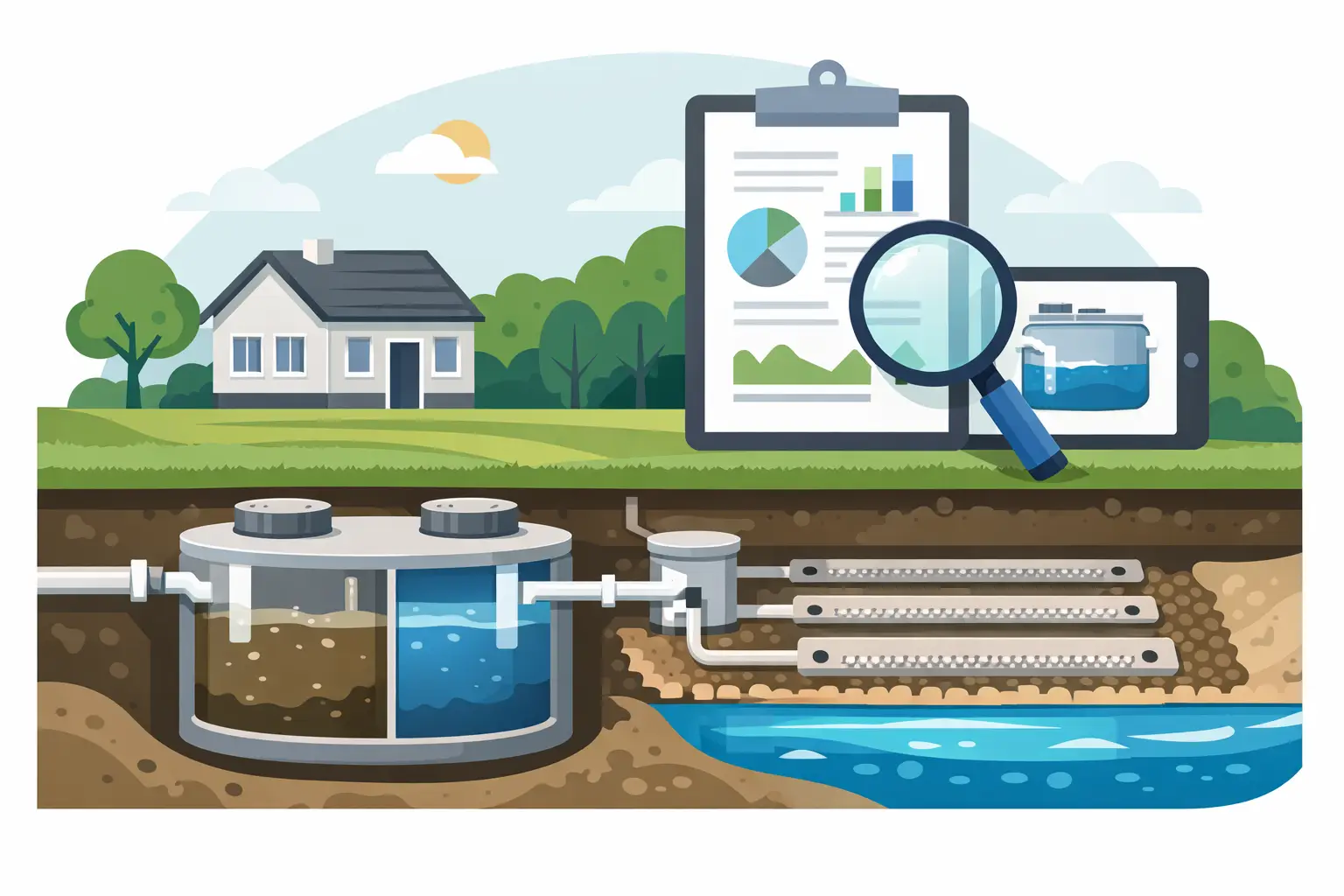
A septic problem rarely starts with a full failure. It starts with a pump alarm that keeps coming back, slow drains after heavy use, wet ground near the tank, or odors that were not there before. A septic system assessment report turns those warning signs into clear facts. It documents what is working, what is failing, what needs attention now, and what could become a much bigger repair if ignored.
For homeowners, buyers, property managers, and insurers, that clarity matters. A septic system is buried infrastructure. You cannot judge it from the yard surface alone. A proper report gives you a usable picture of the tank, pump equipment, controls, drain field performance, and any visible signs of system stress.
What is a septic system assessment report?
A septic system assessment report is a written evaluation of the condition and operation of a septic or onsite wastewater system. It is typically used when there is a suspected issue, a real estate transaction, an insurance question, a renovation plan, or a need to document system condition for maintenance or compliance purposes.
This is not the same as a quick visual glance. A real assessment is built around field findings. The report should explain the system components that were accessed, the symptoms observed, the tests or checks performed, and the technician’s professional opinion on overall condition and next steps.
In plain terms, the report answers four questions. What system is on the property, what condition is it in, what problems are present, and what should happen next.
What a septic system assessment report usually includes
The exact scope depends on the property and the reason for the assessment. A house sale assessment may focus on functionality and visible defects. A problem call may go deeper into pumps, controls, electrical components, or drain field behavior. Still, most reports should cover the same core areas.
System identification
The report should identify the type of system serving the property. That may include a conventional gravity system, pressure distribution system, mound system, pump chamber, aerobic treatment unit, or commercial wastewater setup. If records are available, tank size, component location, and installation details may also be noted.
This matters because the right repair path depends on the system design. A control issue on a pumped system is very different from a drain field loading issue on a gravity system.
Accessible component condition
A technician should document the condition of accessible components such as the septic tank, pump tank, risers, lids, filters, floats, alarms, control panels, and visible piping. If lids are damaged, risers are missing, wiring is unsafe, or components show corrosion or wear, that belongs in the report.
A good report does not pretend to see what could not be accessed. It clearly states what was opened, what was visible, and what was outside the scope.
Signs of failure or stress
This is where the report becomes especially valuable. It should note ponding, surfacing effluent, strong sewage odors, backups, slow drainage, high liquid levels, pump cycling issues, alarm conditions, or evidence that wastewater is not moving through the system as intended.
Not every issue means total failure. Some findings point to maintenance needs. Others point to immediate repair. The report should make that distinction instead of lumping everything together.
Operational findings
If pumps, alarms, floats, and controls are part of the system, the report should document whether they respond correctly at the time of assessment. A pump may run but still be nearing failure. An alarm may be disconnected. A float may be sticking. These are practical findings that affect reliability.
For many properties, mechanical and electrical issues are the difference between a manageable repair and a wastewater emergency.
Recommendations
The strongest part of any septic system assessment report is the recommendation section. It should be direct. If the system needs pumping, filter cleaning, pump replacement, lid repair, drain field evaluation, electrical repair, or full replacement planning, the report should say so plainly.
Vague language helps no one. Property owners need to know what is urgent, what is advisable, and what should be monitored over time.
When you should get a septic system assessment report
The most obvious time is when something is wrong. If you are hearing alarms, seeing wet spots, noticing odors, or dealing with repeated drainage problems, a written assessment gives you a technical basis for action.
It is also smart before a property purchase. A standard home inspection usually does not go deep enough on private wastewater systems. Septic issues can be expensive, and the cost does not always show up until after closing. A dedicated assessment helps reduce that risk.
Insurance claims and property damage situations are another common reason. If a backup, flood event, or equipment failure has affected the system, documentation matters. The same goes for planned additions, renovations, or changes in occupancy. If system demand is about to increase, the current condition and capacity need to be understood first.
Commercial properties should take this even more seriously. A septic issue at a business can disrupt operations, create health concerns, and lead to compliance problems. Written assessments are not just helpful in that setting. They are part of responsible risk management.
What the report does not tell you
A septic system assessment report is useful, but it has limits. It reflects the condition of the system at the time of inspection, based on what was accessible and observable. Buried components may not be fully visible. Weather conditions can affect what shows up on site. A lightly used vacation property may present differently than a fully occupied home.
That is why experience matters. A specialist knows how to read clues that a general contractor or basic inspector may miss. They also know when a report should recommend further testing, repair exposure, or replacement planning instead of overstating certainty.
A careful report should avoid false reassurance. If a system is functioning today but shows clear age, wear, or warning signs, that should be documented honestly.
How to read the findings without guessing
Many property owners make the same mistake. They look for one word like pass or fail. Septic systems are not always that simple. Some systems are functional but overdue for service. Some have isolated component failures that can be repaired without replacing the full system. Others show enough evidence of hydraulic or structural failure that short-term fixes will only delay the real cost.
Read the report in layers. Start with current operation. Is the system working as intended right now? Then look at defects. Are they maintenance items, repair items, or replacement-level concerns? Finally, look at consequences. Could delay lead to sewage backup, property damage, drain field failure, or unsafe exposure?
If those distinctions are not clear, the report is not doing its job.
Why specialist assessment matters
Septic systems sit at the intersection of wastewater flow, soil performance, mechanical equipment, and electrical controls. That is why this is specialist work. A general plumber may handle indoor drainage. An electrician may solve a circuit issue. An excavator may expose components. But diagnosing the full system correctly requires someone who understands how all of it works together.
That is where companies like Aquamatic bring value. The goal is not just to identify a symptom. It is to determine the actual failure point, document it clearly, and recommend the right fix without guesswork.
A rushed inspection can cost you twice. First in missed problems, then in the wrong repair.
What to do after you receive the report
If the report shows an urgent issue, act on it quickly. Wastewater problems do not improve with time. Pump failures can turn into backups. Damaged lids create safety risks. Drain field stress can spread and become harder to correct.
If the findings are moderate, use the report as a planning tool. Schedule maintenance, budget for repairs, and keep the document with your property records. If you are buying or selling, share it with the parties who need clear documentation.
Most of all, treat the report as the start of a decision, not the end of one. A good septic system assessment report gives you the facts. The next step is making sure those facts lead to the right repair, the right timing, and fewer surprises underground.