
Why Is Septic Backing Up? Causes and Next Steps
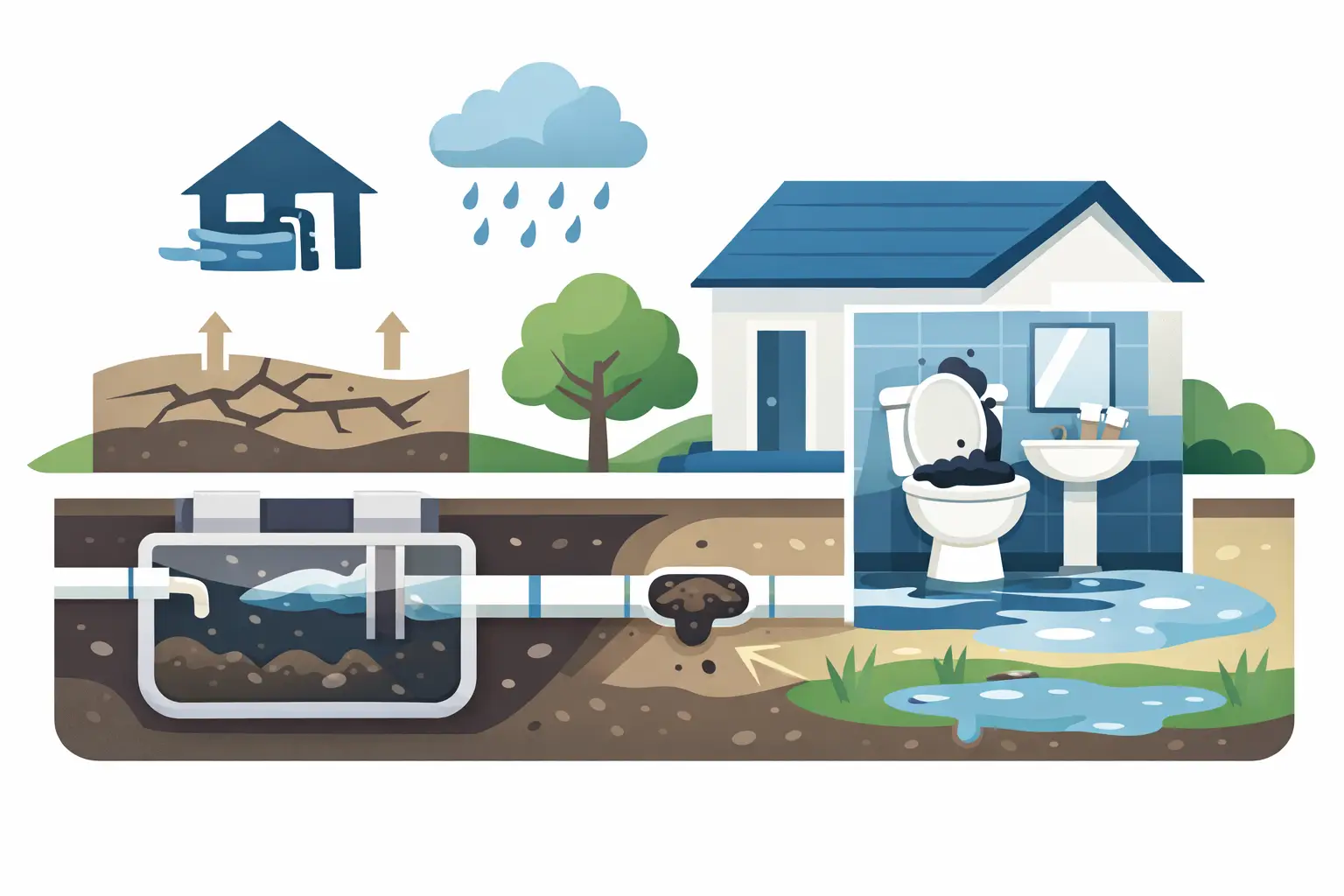
A toilet that will not flush, water rising in a shower drain, or a septic alarm sounding are not problems to wait out. If you are asking, why is septic backing up, the system is telling you wastewater is no longer moving where it should. Continued use can turn a repair into contaminated indoor flooding, property damage, or a failed drain field.
Stop adding water to the system. Do not run laundry, take long showers, or keep flushing to see whether the problem clears. A septic specialist can determine whether the issue is inside the building, at the tank, in the pump system, or in the drain field.
Why Is Septic Backing Up Into the House?
A backup occurs when wastewater cannot leave the plumbing or cannot move through the septic system at the required rate. The exact cause matters. Pumping a tank may provide temporary relief in some cases, but it will not repair a failed pump, blocked discharge line, damaged control panel, or saturated drain field.
The location and timing of the backup provide useful clues. If only one fixture is slow, the issue may be a local drain blockage. If several fixtures are gurgling, draining slowly, or backing up at the lowest drain in the building, the problem is more likely in the main building sewer or septic system.
A Full Septic Tank
Every septic tank fills with solids over time. When routine pumping is delayed, sludge and floating scum can reduce the available treatment volume. Solids may also move beyond the tank and into the drain field, where they can restrict soil absorption.
A full tank is a common reason for a backup, especially in homes with increased occupancy, frequent guests, or high water use. However, a tank that appears full during an inspection is not automatically the root cause. Septic tanks normally hold liquid. The technician needs to assess liquid levels, solids levels, inlet and outlet conditions, and whether wastewater is leaving the tank properly.
Pump or Electrical Failure
Many residential and commercial systems rely on a pump to move effluent from a pump chamber to a drain field, mound, treatment unit, or elevated discharge area. When that pump fails, wastewater has nowhere to go. The chamber fills, an alarm may sound, and a backup can follow.
The failure may be mechanical, such as a seized pump or blocked impeller. It may also be electrical: a tripped breaker, failed float switch, damaged wiring, bad relay, or malfunctioning control panel can prevent the pump from operating. Do not enter a pump chamber or attempt electrical repairs yourself. Septic tanks and pump stations contain hazardous gases and present serious safety risks.
A Clogged or Damaged Effluent Line
The pipe carrying wastewater from the tank or pump chamber can become blocked by roots, settled solids, grease, wipes, or damaged pipe. Older systems may have cracked, shifted, or collapsed lines. In cold climates, shallow or poorly protected lines can freeze.
This issue often requires more than a standard plumbing drain snake. A septic contractor may need to inspect the line, verify pump performance, identify the blockage, and determine whether repair or replacement is necessary.
A Saturated or Failing Drain Field
The drain field is where treated effluent disperses into the soil. When the soil cannot accept additional wastewater, the system backs up. Heavy rain, high groundwater, compacted soil, poor grading, excessive water use, and age can all contribute.
Warning signs of drain field trouble include wet or soft ground near the field, sewage odors outdoors, unusually green strips of grass, or ponding water. These symptoms require prompt attention. Driving vehicles over the field, adding fill, or directing roof runoff onto it can make the condition worse.
A drain field can also fail because solids escaped from an overloaded or neglected tank. That is why regular maintenance and outlet filter service matter. A failed field may require repair, restoration options where appropriate, or replacement based on site conditions and local requirements.
What to Do When Your Septic System Backs Up
First, reduce water use immediately. Every gallon sent down a sink, toilet, shower, or washing machine adds pressure to an already overloaded system. If sewage has entered the building, keep people and pets away from the affected area. Wastewater can carry harmful bacteria and pathogens.
Do not use chemical drain cleaners, septic additives, or large amounts of bleach as a response to a whole-house backup. These products rarely solve a septic system failure and may disrupt the treatment process or create additional hazards for technicians.
If the alarm is sounding, silence it only if your panel has a silence function, but do not shut off the breaker unless instructed by a qualified technician. The alarm is a warning that needs diagnosis. It may indicate a high liquid level caused by pump, float, control, or discharge problems.
Document what you see before service arrives. Note when the backup began, which fixtures are affected, whether the alarm is on, recent heavy rain, recent pumping, and any changes in water use. For commercial properties, note occupancy levels and whether kitchens, restrooms, or process water use changed. This information helps isolate the failure faster.
Why Pumping Alone May Not Fix the Problem
Emergency pumping is often necessary when a tank or pump chamber is at a high level. It can reduce the immediate risk of indoor sewage backup. But pumping is a relief measure, not always a repair.
If the pump is failed, the chamber will refill after pumping. If the drain field is saturated, the tank may remain high because effluent has nowhere to disperse. If a line is blocked, wastewater still cannot move through the system. A proper service call includes diagnosis of the full septic infrastructure, including tanks, pumps, floats, control panels, alarms, filters, lines, and drain field conditions.
This is especially important for systems with advanced treatment components or commercial wastewater demands. Those systems require a technician who understands both the mechanical and electrical side of septic operation.
Preventing Another Backup
The best prevention is a maintenance schedule matched to the actual system and property use. Tank pumping intervals vary based on household size, tank capacity, water use, garbage disposal use, and the type of system installed. Pump systems also need periodic functional checks, including floats, alarms, controls, and pump performance.
Protect the drain field by keeping vehicles, heavy equipment, livestock, and construction materials off it. Direct roof runoff and surface water away from septic components. Repair leaking toilets and fixtures promptly, since constant water flow can overload a system without obvious warning.
Only wastewater and toilet paper belong in the system. Wipes, feminine hygiene products, paper towels, grease, coffee grounds, medication, and harsh chemicals can create blockages or interfere with treatment. Products labeled flushable still do not belong in a septic system.
A septic backup is not a plumbing inconvenience. It is a wastewater failure that needs the right diagnosis before the wrong repair costs more. Shut down water use, protect the area, and get a qualified septic specialist involved before wastewater has a chance to spread.