
Grinder Pump vs Effluent Pump: Which One?
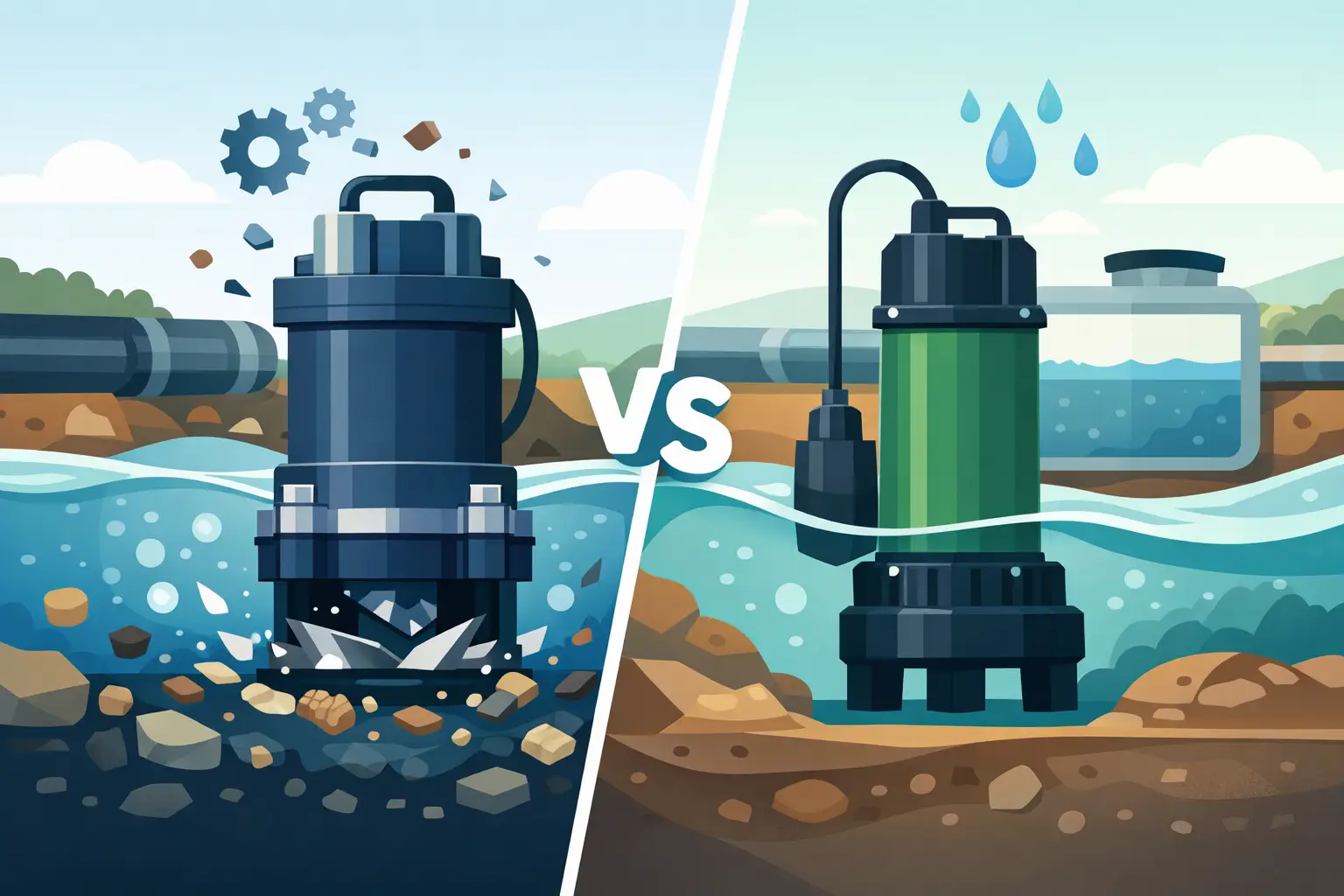
If your alarm is on, the basin is full, or a contractor tells you that you need a new pump, the grinder pump vs effluent pump question matters fast. These pumps are not interchangeable. They move different kinds of wastewater, handle solids differently, and fail for different reasons. Choosing the wrong one can lead to recurring backups, short pump life, and unnecessary replacement costs.
Most property owners do not need to know every pump specification. They do need to know what type of system they have, what the pump is supposed to move, and when a recommendation does not make sense. That is where a clear comparison helps.
Grinder pump vs effluent pump: the core difference
A grinder pump handles raw sewage. That means wastewater from toilets, sinks, showers, laundry, and other fixtures enters the basin with solids still in it. The pump grinds those solids into a slurry and then pushes the waste under pressure to a sewer main or septic system.
An effluent pump does not grind solids. It is designed to move clarified wastewater, usually from a septic tank after solids have already settled out. In a typical septic system, the tank separates heavy solids and floating scum from the liquid in the middle. That liquid, called effluent, is what the effluent pump moves to a drain field, mound system, sand filter, or treatment component.
That difference drives everything else. If the pump sees raw sewage, it is usually a grinder pump or a sewage ejector, depending on the application. If the pump sees filtered or settled liquid with limited solids, it is usually an effluent pump.
Where each pump is used
A grinder pump is common where a building sits lower than the municipal sewer connection or where wastewater has to travel uphill through a force main. You will often find these pumps in low-lying homes, lake properties, commercial buildings, and pressure sewer systems. They are built for tougher waste streams and higher pressure conditions.
An effluent pump is common in septic systems. It is typically installed in a pump chamber after the septic tank, or in the second compartment of a properly designed tank, depending on the system layout. Its job is to dose partially treated wastewater to the next part of the system in controlled volumes.
This is why pump identification matters. Two pumps can sit in buried tanks and both can trigger alarms, but they are doing very different jobs.
What a grinder pump is built to handle
A grinder pump is made for wastewater that still contains solids. That includes toilet paper and organic waste, but even grinder pumps have limits. They are not built for wipes, feminine products, paper towels, grease buildup, or stringy materials. Those items are a leading cause of jams and motor overload.
Because grinder pumps reduce solids and pump under pressure, they are usually more complex and more expensive than effluent pumps. They also tend to draw more power.
What an effluent pump is built to handle
An effluent pump is designed for smaller suspended particles in relatively clear wastewater. In a properly functioning septic system, solids should stay in the septic tank and not reach the effluent pump in large amounts. If they do, the problem may not be the pump alone. It may point to a missing filter, lack of tank maintenance, damaged baffles, or a system that is overdue for service.
Effluent pumps are generally not meant to shred or pass large solids. If raw sewage reaches an effluent pump, clogging and premature failure are likely.
Why the wrong pump causes expensive problems
Installing an effluent pump where a grinder pump is required is a fast way to create repeat service calls. The pump can clog, overheat, trip alarms, or fail outright because it is seeing material it was never designed to move.
Going the other direction is not always right either. A grinder pump is not automatically a better upgrade for an effluent application. It may be more pump than the system needs, with higher equipment cost, different control requirements, and unnecessary operating expense. It also does not fix underlying septic tank or drain field problems.
In short, the right pump depends on the wastewater source, pipe run, elevation change, basin design, and the system it serves.
How to tell which pump you likely have
Start with where the wastewater comes from. If the basin receives direct discharge from toilets and household drains before the waste reaches a septic tank or sewer connection, that points toward a grinder pump or sewage pump application. If the basin receives liquid after a septic tank has already done the separation work, that points toward an effluent pump.
The discharge line can also offer clues. Grinder pump systems often pump into pressurized sewer lines and may be associated with municipal pressure sewer service. Effluent pumps often send wastewater from the septic tank area to a drain field or advanced treatment component.
Still, guessing is risky. Tank configuration, controls, pump curve requirements, and local code all matter. We see many cases where property owners were told the wrong pump type because someone focused only on horsepower or pipe size.
Common failure signs
The warning signs can look similar even when the pump type is different. An alarm panel may activate. Fixtures may drain slowly. Wet areas may develop around the tank or pump chamber. You may hear the pump run continuously, or not hear it run at all.
With grinder pumps, common failures include jammed cutters, worn seals, float switch problems, motor burnout, and control issues. Abuse from non-flushable items is common.
With effluent pumps, the failures often involve float problems, clogged intake screens, electrical faults, worn motors, or solids reaching the pump because the septic tank is not separating waste properly. In those cases, replacing the pump without addressing the upstream issue only buys time.
Repair or replace?
That depends on age, condition, and what failed. A control float or alarm component may be repairable. A seized motor, compromised seals, or repeated clogging in an undersized or misapplied pump usually points toward replacement.
The bigger question is whether the existing pump was correct for the system in the first place. If not, replacing it with the same model may repeat the same problem. A proper diagnosis should include the tank setup, incoming waste source, discharge requirements, electrical components, and any signs of septic system distress beyond the pump itself.
Choosing the right pump for a new install or upgrade
If you are building, renovating, or replacing a failed unit, do not choose based on price alone. Pump selection should match the actual system design. That includes total dynamic head, flow rate, basin dimensions, control settings, pipe size, solids handling, and code requirements.
For septic systems, an effluent pump is often the correct choice when liquid has already been separated in the tank and needs to be dosed to the next treatment stage. For pressure sewer or raw sewage transfer applications, a grinder pump may be necessary.
The right answer is sometimes obvious, but not always. Mixed-use properties, commercial sites, and altered systems can create conditions where assumptions cause trouble.
When to call a septic and wastewater specialist
A pump problem is rarely just a pump problem until it is inspected. Alarms can come from float failure, panel issues, blocked lines, high water, or drain field trouble. If a property has frequent resets, recurring backups, or unexplained wet areas, the goal should be diagnosis first, replacement second.
That is especially true with the grinder pump vs effluent pump question. General plumbing experience does not always translate to septic and wastewater system design. A specialist should be able to identify the pump type, confirm what the chamber receives, test controls, inspect tank function, and explain why a specific replacement is correct.
Aquamatic handles these calls every day. When a system is backing up or an alarm is active, fast answers matter, but accurate answers matter more.
If you are not sure which pump your property uses, do not wait for the next failure to find out. The right pump keeps wastewater moving. The wrong one keeps creating the same emergency.