
Pre Purchase Septic Inspection Basics
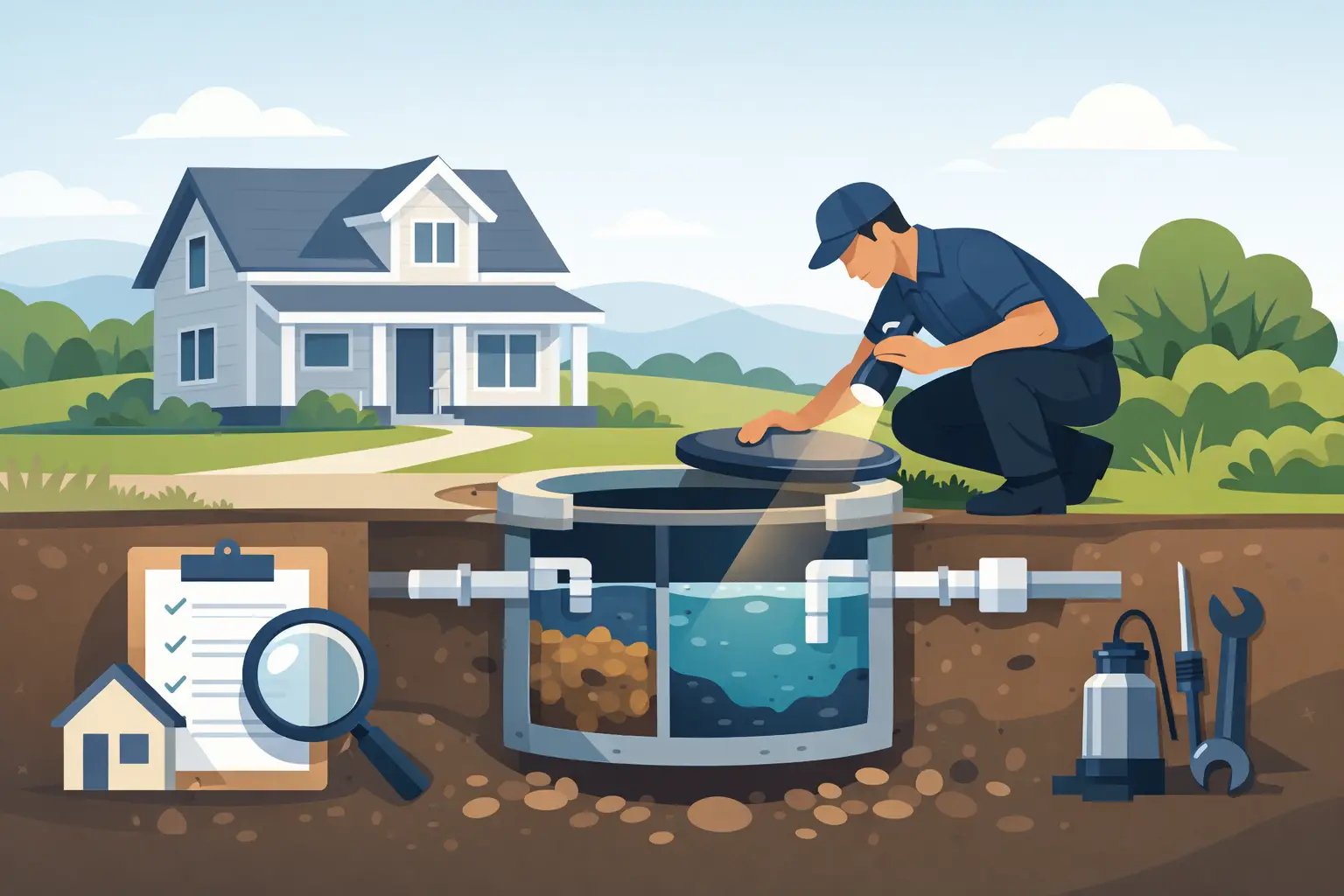
A house can look perfect at showing time and still come with a failing septic system underground. That is why a pre purchase septic inspection matters. If a property is not connected to municipal sewer, the septic system is one of the most expensive and least visible parts of the sale.
For buyers, this is not a box to check for the lender or agent. It is a way to find out whether the system is operating, whether it has been maintained, and whether you are inheriting a repair bill right after closing. For sellers, a proper inspection can prevent last-minute surprises that delay or kill a deal.
What a pre purchase septic inspection should actually tell you
A real septic inspection should go beyond a quick look at the yard or a seller saying the tank was pumped a few years ago. The goal is to assess the working condition of the system as it exists on the day of inspection and identify visible or measurable signs of failure.
That usually starts with locating and opening key components. The inspector should identify the tank, access lids, pump chamber if present, distribution components, and drain field area. If the system has alarms, floats, pumps, or controls, those need to be checked too. A modern pressure or mound system has different risk points than a basic gravity setup, and the inspection needs to match the actual design.
The report should also address whether wastewater is flowing properly, whether the tank level is normal, whether pumps and alarms respond as intended, and whether there are signs of backup, ponding, leakage, root intrusion, or structural damage. In some cases, the biggest issue is not active failure but deferred maintenance. Missing risers, damaged lids, bad electrical controls, or neglected filters can turn into urgent repairs very quickly.
What is included in a pre purchase septic inspection
There is some variation by property, local rules, and system type, but buyers should expect more than a visual walkaround. A useful inspection often includes locating the system, opening accessible components, measuring liquid levels, checking baffles or tees, evaluating pumps and floats, reviewing alarms and control panels, and inspecting the drain field area for surfacing effluent or saturation.
Records matter too. If permits, prior repairs, pumping records, or as-built drawings are available, they can help confirm what was installed and whether the system has been altered over time. That said, paperwork does not replace field inspection. Plenty of systems look fine on paper and fail in real use.
Some inspections also include a loading or flow test where appropriate. That can help reveal how the system responds under use, but it is not always possible or advisable in every situation. Weather, occupancy status, system access, and local standards all affect what can be tested. A good inspector will explain what was inspected, what could not be confirmed, and where the limits are.
The problems buyers most often miss
The most expensive septic problems are usually not obvious during a normal home showing. You may not see standing water if the ground is dry. You may not smell sewage if the house has been vacant. You may not know a pump is failing until the alarm goes off after move-in.
One common issue is an undersized or outdated system serving a home that has been expanded or heavily remodeled. Another is a tank or chamber with structural damage that was buried and forgotten. Electrical problems are also common on systems with pumps, controls, and alarms. A general home inspector may note that a septic system exists, but that is not the same as a specialist evaluating operational condition.
There is also the question of compliance. Some older systems are still functioning but do not meet current standards. That does not always mean immediate replacement, but it can affect future repairs, additions, financing, insurance questions, or planned renovations. Buyers need that information early, not after they take ownership.
Why specialist septic inspection matters
Septic systems are not one trade. They involve wastewater flow, buried infrastructure, pumps, controls, floats, alarms, drainage behavior, and sometimes site and code issues. A contractor who works in this field every day is more likely to recognize failure patterns, improper modifications, and warning signs that others miss.
That matters most on advanced systems. If a property has a pump tank, timed dosing, control panel, alarm circuit, or treatment component, the inspection needs both mechanical and electrical understanding. A basic visual opinion is not enough when the system depends on active components to function properly.
This is where a specialist brings value. A company focused on septic and wastewater infrastructure can evaluate the system as a working system, not just as a buried tank. That difference often determines whether a buyer catches a problem before closing or pays for it after.
Questions to ask before you rely on the report
Not all septic inspections are equal. Before scheduling, ask what type of system the inspector is qualified to inspect and what the inspection includes. Ask whether tanks will be opened, whether pumps and alarms will be tested, whether the drain field will be assessed, and whether you will receive a written report with findings and limitations.
You should also ask what is not included. For example, some inspections do not include pumping, excavation beyond access points, locating abandoned components, or guaranteeing future performance. That is normal. Septic systems are buried and conditions can change. What matters is that the scope is clear and the findings are documented.
If the property has a known issue such as slow drains, high water alarms, wet areas in the yard, or a history of backups, say so up front. Those clues help direct the inspection toward likely failure points.
When repairs are found during a pre purchase septic inspection
Findings do not always mean the deal is dead. Sometimes the issue is routine maintenance, such as a clogged effluent filter or failed alarm. Sometimes it is a more serious repair, such as a bad pump, cracked lid, damaged tank, or compromised drain field. The next step depends on the severity of the problem, the age of the system, and local requirements.
For buyers, the practical question is cost and urgency. Can the issue be repaired quickly? Is the system near the end of its useful life? Is replacement likely if one component fails? Those are not academic questions. They affect negotiation, closing timelines, and whether the property still makes financial sense.
For sellers, it is usually better to deal with septic issues directly than to hope they stay hidden. Once a defect is documented, it becomes part of the transaction. Clear inspection and repair documentation tends to move a sale forward faster than vague assurances.
A pre purchase septic inspection is cheaper than guessing
No inspection can promise a septic system will never fail. Soil conditions change. Usage changes. Older components wear out. But a proper pre purchase septic inspection gives buyers a clear picture of current condition, visible risks, and likely next steps.
That is the point. You are not trying to get perfect certainty. You are trying to avoid buying a property with a hidden wastewater problem that should have been identified before closing.
If you are buying a septic-dependent property, treat the system like the major infrastructure asset it is. Get it inspected by someone who works on septic systems every day, reads the warning signs correctly, and tells you plainly what you are looking at. That is how you protect the deal, the property, and your budget.