
Septic Regulations That Can Stop a Project
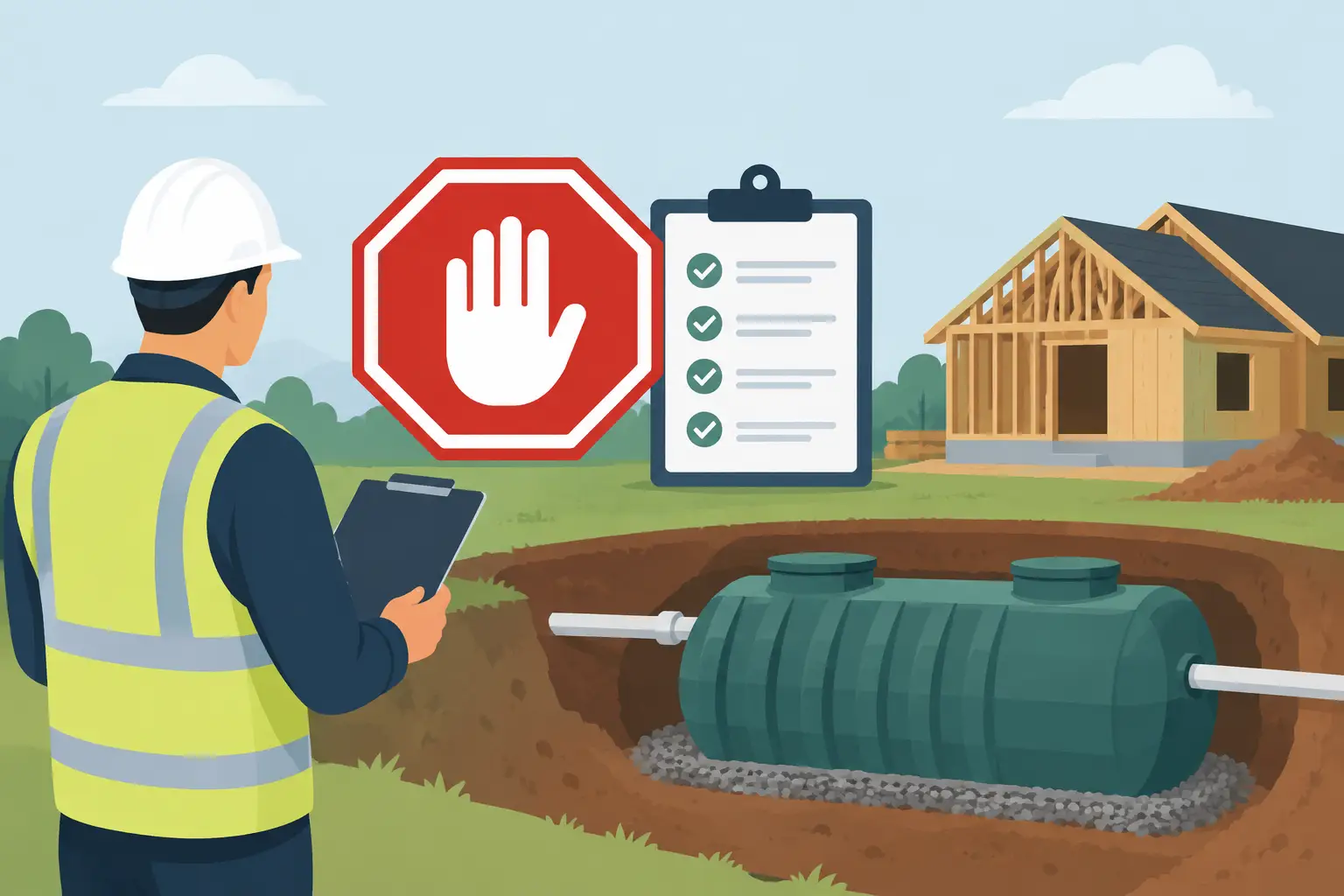
A septic alarm is sounding, sewage is backing up, or a buyer needs an inspection before closing. Those problems are urgent. They are also the moments when septic regulations can determine what happens next. A repair that looks simple may require a permit, an approved design, a licensed installer, or an inspection before the system can be returned to service.
For homeowners and property operators, the practical rule is straightforward: do not assume septic work can be handled like an ordinary plumbing repair. Private wastewater systems protect groundwater, nearby wells, surface water, and public health. Local health departments and environmental agencies regulate them accordingly.
Why Septic Regulations Matter
Septic regulations set the minimum requirements for where a system can be installed, how it is sized, what components are approved, and who can perform the work. They may apply to conventional gravity systems, pump systems, aerobic treatment units, holding tanks, pressure distribution systems, and advanced treatment systems.
The exact rules depend on your state, county, municipality, and site conditions. A rural property may fall under county health department rules, while a commercial property may have additional environmental, building, and operational requirements. Properties near lakes, wetlands, flood zones, or public water sources can face tighter standards.
These rules are not paperwork for paperwork’s sake. An undersized tank, failing drain field, unapproved pump, or improperly wired control panel can create sewage exposure, contaminate groundwater, and cause expensive damage to the property. Compliance protects the system owner as much as the surrounding community.
When a Permit Is Usually Required
A permit is commonly required for a new septic system, a replacement system, a drain field expansion, or a repair that changes system capacity or layout. Renovations can also trigger septic review. Adding bedrooms, converting a seasonal home to full-time occupancy, building an accessory dwelling unit, or increasing commercial use may exceed the capacity of the existing system.
Some component repairs may be handled differently. Replacing a failed effluent pump, repairing a control panel, installing a riser, or replacing an alarm may not always require a full septic permit. But electrical work, changes to pump specifications, tank modifications, and local rules can change that answer quickly.
Never rely on a neighbor’s experience or an old permit file. Requirements change, and the approved system on record may not match what is currently underground. A qualified septic assessment can identify the system type, tank condition, pump equipment, drain field concerns, and likely compliance issues before work begins.
Design Approval Comes Before Installation
For a new installation or major replacement, the permit authority may require a site evaluation and system design. This typically considers soil conditions, groundwater levels, lot size, slope, setbacks, anticipated wastewater flow, and the number of bedrooms or fixtures served.
A failed drain field does not automatically mean a new field can go in beside the old one. The property must have suitable soils and enough room to meet required separation distances. If space is limited or soil conditions are poor, an engineered or advanced treatment solution may be necessary.
This is where projects can slow down. Design, review, and inspection timelines are real factors in any septic replacement plan. A proper diagnosis upfront helps prevent spending money on a temporary repair when the system needs permitted replacement work.
Setbacks, Capacity, and Site Conditions
Most septic regulations include setback requirements from wells, property lines, buildings, water bodies, drainage features, and utility areas. The distances vary by jurisdiction and system type. A tank location that was acceptable decades ago may not meet current standards for a replacement or expansion.
Capacity is another major issue. Residential systems are generally sized around expected wastewater flow, often tied to bedroom count rather than the number of people currently living in the home. Commercial systems may be based on occupancy, employee count, customer use, food service activity, or the specific nature of the business.
That distinction matters during a sale, renovation, or change in business use. A small office converted into a salon, daycare, restaurant, or high-traffic retail space can place a very different load on a septic system. The tank and drain field must be evaluated for the use the property will actually support, not just the use listed years ago.
Inspections Matter in Real Estate and Insurance Work
A visual look at a yard is not a septic inspection. Green grass, no odor, and a flushing toilet do not prove that a system is functioning correctly. Septic failures often develop below ground long before wastewater reaches the surface.
For a real estate transaction, an inspection should identify the tank location and accessible components, assess pumps and alarms where present, check for visible signs of failure, and document findings clearly. Depending on the system and local requirements, this can include tank pumping, component evaluation, and review of available permit records.
Insurance-related inspections may require similar documentation. A written report can establish the condition of the system at the time of inspection and identify existing deficiencies, safety concerns, or maintenance needs. This is especially valuable for older homes, vacant properties, and systems with no reliable service history.
A failed inspection does not always mean the deal is over. It means the parties need clear facts: what is failing, what repairs are allowed, whether permits are required, and whether a replacement area is available if needed.
Maintenance Is Part of Compliance
Some systems have ongoing operating requirements. Pumps, floats, alarms, filters, aerobic treatment components, and control panels need regular attention. Many advanced systems require service contracts, scheduled inspections, monitoring reports, or maintenance records as part of their approval conditions.
Even where a formal maintenance program is not required, regular service is the practical way to avoid a regulated failure. Pumping on a proper schedule, cleaning filters, testing alarms, inspecting electrical connections, and correcting minor issues early can prevent backups and drain field damage.
Do not silence an alarm and assume the problem is resolved. An alarm can indicate a high water level, pump failure, float issue, power loss, blocked discharge line, or control panel malfunction. The system may be one heavy-water-use day away from a backup.
What to Do Before You Repair, Build, or Buy
Start with records, but do not stop there. Request available permits, as-built drawings, maintenance reports, and pumping history. Then have the actual system assessed by a septic specialist who can evaluate the mechanical, electrical, and wastewater components together.
If you are planning a renovation or new build, address septic capacity early in the process. Waiting until construction plans are complete can force costly redesigns. If you are facing an active failure, limit water use, keep people and pets away from ponding wastewater, and call for professional diagnosis immediately.
Aquamatic works exclusively with septic and wastewater systems, including pumps, controls, alarms, tanks, drain fields, inspections, and replacement planning. When regulations, system condition, and urgent repairs intersect, specialized assessment gives you a clearer path forward.
The right next step is not guessing what the rules allow. It is confirming what your system needs, what your local authority requires, and what work will keep the property safe and operating properly.