
Commercial Septic Upgrade Guide for Businesses
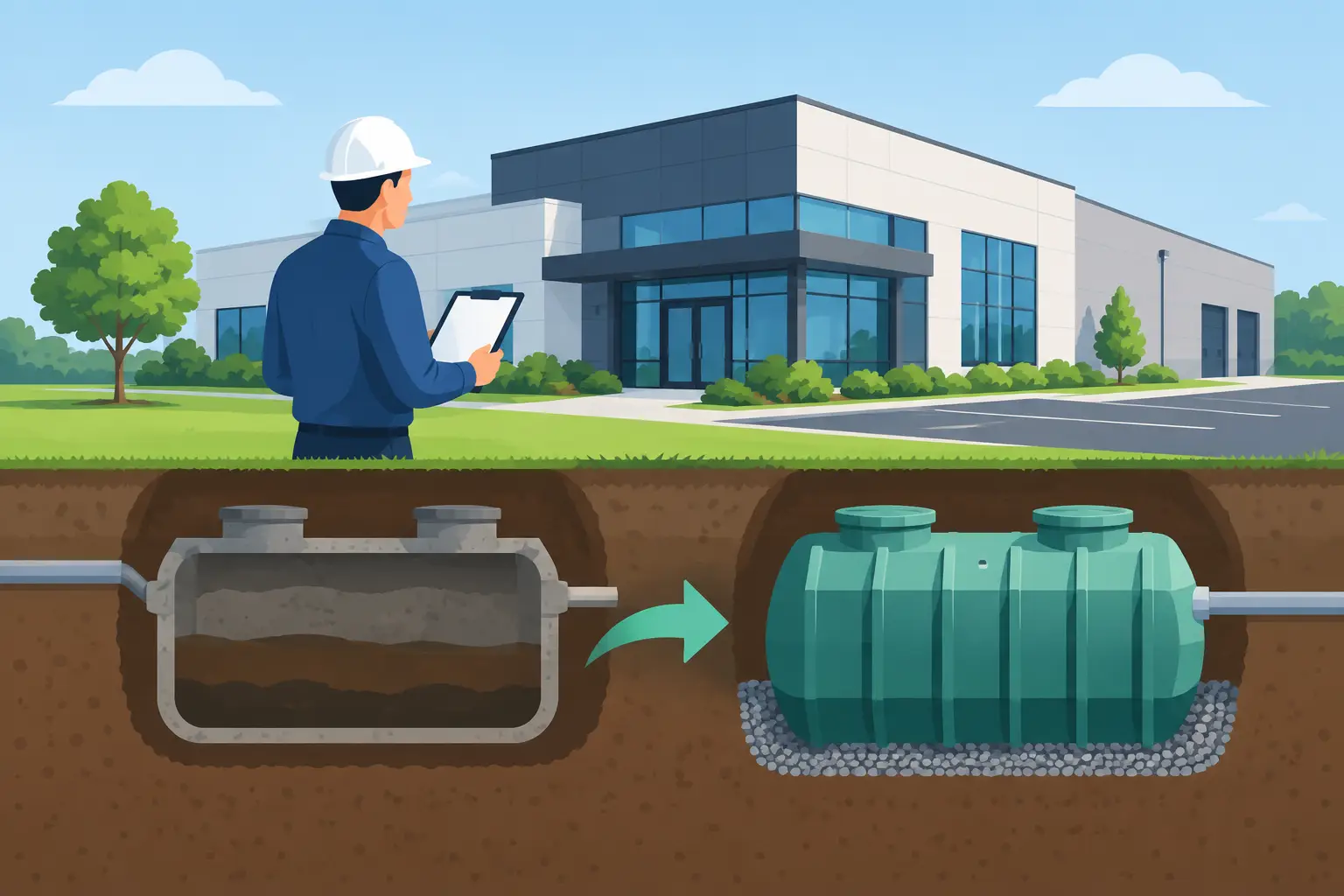
A septic alarm during a full dining room, a backed-up restroom at a job site, or wastewater surfacing near a commercial building is not a minor maintenance issue. It can stop operations, create a health risk, and put the property owner under pressure from customers, staff, regulators, and insurers. This commercial septic upgrade guide explains how to make the right decisions before a failing system becomes a shutdown.
Commercial systems work harder than most owners realize. Higher occupancy, peak water use, commercial kitchens, laundry loads, tenant turnover, and building additions can all push an older system beyond its original design. The correct upgrade is not always a complete replacement. But it does require a clear assessment of the tank, pumps, controls, drain field, loading conditions, and local requirements.
Start With the Reason for the Upgrade
An upgrade should solve a documented problem, not just replace the part that failed last. A pump may burn out because it reached the end of its service life. It may also burn out because the pump basin is undersized, the float settings are wrong, excessive flow is entering the system, or the drain field is no longer accepting effluent.
Start with the symptoms and operating history. Common warning signs include recurring high-water alarms, sewage odors, slow drains across the building, wet or soft ground over the disposal area, backups during busy periods, and pumps that run too often or continuously. A system that appears normal during low occupancy can still fail when the building reaches peak use.
For a commercial property, the questions go beyond whether wastewater is moving today. How many employees, customers, residents, or guests use the facility? Has the building been expanded? Did the property add restrooms, food service, laundry equipment, or a new tenant use? Is future growth planned? These factors determine whether the existing system is still properly sized.
Commercial Septic Upgrade Guide: Assess Before You Build
A proper assessment identifies the condition and capacity of the complete wastewater system. This includes tank size and condition, inlet and outlet components, filters, pump chambers, pumps, float switches, alarms, control panels, electrical connections, force mains, distribution equipment, and the drain field or other treatment area.
The assessment should also review maintenance records, pumping frequency, repair history, water use, and any past inspection reports. If the property has experienced repeated alarms or backups, that history matters. Replacing equipment without identifying the underlying cause can turn a preventable problem into repeated emergency service calls.
A site review may also be needed to evaluate grading, drainage, vehicle traffic, nearby construction, and changes in soil conditions. Heavy vehicles over tanks or drain fields, roof runoff directed toward the disposal area, and surface water infiltration can all compromise septic performance. In some cases, fixing site drainage is part of protecting the septic upgrade.
Permitting requirements vary by location and by the scope of work. A like-for-like pump replacement may be handled differently than a tank replacement, drain field repair, increased building capacity, or a change in property use. Commercial owners should not assume an old permit reflects current use or current code requirements. Confirm the requirements before construction begins.
Match the Upgrade to the Actual Failure
Not every commercial septic problem calls for the same solution. A specialist should recommend work based on diagnosis, not convenience.
Pumps, Floats, and Control Panels
Commercial systems often rely on pumps and controls to move wastewater from a tank or pump chamber to a treatment or disposal area. These components are mechanical and electrical, and both sides must be evaluated together.
A pump upgrade may be needed when the current pump cannot meet the required flow rate or pressure, has become unreliable, or is mismatched to the system. Installing an oversized pump is not automatically better. Excessive flow can disturb downstream treatment and create short cycling problems. The pump must be selected for the system’s design conditions, piping, lift, and control settings.
Control panel upgrades can provide clearer alarm indication, better pump protection, alternating pump operation where applicable, and more dependable monitoring. A high-water alarm should be functional, visible, and tested regularly. An alarm is an early warning device, not a problem to silence and ignore.
Tanks, Risers, and Access Lids
Damaged tanks, deteriorated baffles, leaking lids, and inaccessible service openings make maintenance harder and create avoidable risk. Tank repairs or replacement may be necessary when structural condition, leakage, capacity, or code compliance is a concern.
Risers and secure lids are practical upgrades that pay off over time. They provide safer access for pumping, inspection, and service without unnecessary digging. On a commercial property, that means less disruption to landscaping, parking areas, sidewalks, and daily operations.
Drain Field and Disposal Area Repairs
A drain field cannot be repaired by replacing a pump alone. If wastewater is surfacing, soil is saturated, or the field cannot accept the expected flow, the disposal area needs evaluation. The solution may involve distribution repairs, repair of damaged lines, drainage corrections, flow management, or a properly designed replacement area.
Drain field work is highly site-specific. Soil conditions, setbacks, groundwater, lot layout, reserve area requirements, and local health department rules all affect what can be installed. This is where a quick guess becomes expensive. Design and installation must fit the site and approved use of the property.
Plan for Operations During the Work
A commercial septic upgrade needs an operational plan, especially for occupied buildings. Restaurants, offices, campgrounds, retail sites, multifamily properties, and industrial facilities may not be able to close completely while work is underway.
Schedule excavation, tank access, electrical shutdowns, and pump changeovers around the property’s busiest periods when possible. Establish restroom access plans if service will be interrupted. Protect traffic routes and clearly mark work areas. If wastewater use must be reduced during repairs, communicate that early to managers, tenants, and staff.
The lowest initial price is not always the lowest operating cost. A cheaper component that is poorly matched to the system can lead to more alarms, premature pump failure, added labor, and business disruption. A quality upgrade considers serviceability, replacement part availability, electrical protection, safe access, and expected use over time.
Protect the Investment After Installation
An upgraded system still needs maintenance. Commercial wastewater loading changes with occupancy, business activity, and tenant behavior. Regular inspection and pumping help identify problems before they reach the building or the ground surface.
Maintenance should include checking pumps, floats, alarms, control panels, filters, tank levels, and visible signs of drain field stress. Keep written records of service, repairs, pumping, alarm events, and inspections. These records support future troubleshooting and can be valuable during property sales, insurance claims, or regulatory reviews.
Staff should know the basics: report alarms immediately, avoid flushing wipes and inappropriate materials, limit grease and food waste entering the system, and report slow drains or odors before they escalate. For food-service properties, grease management is especially important. Grease can create blockages and add load that a septic system was not designed to handle.
Aquamatic approaches commercial septic work as a complete wastewater system, not a single broken part. That matters when a failure involves pumps, controls, tanks, piping, and disposal areas working together.
If your commercial septic system is showing repeated alarms, backups, wet ground, odors, or pump problems, do not wait for the next busy day to test it. A documented assessment gives you the information to plan the right upgrade, protect your property, and keep your operation moving.