
How to Clean Septic Filter Screens Safely
A septic filter is a small component with a major job. It catches solids before they reach the outlet line and drain field. When it plugs, wastewater may back up into the home, trigger a high-water alarm, or cause slow drains throughout the building. Knowing how to clean septic filter screens can help prevent a service emergency, but the work needs to be done safely and at the right time.
The filter is usually located in the outlet baffle of the septic tank, not in a pump tank or inside the home. It should never be confused with a pump screen, a grinder pump component, or a tank inlet baffle. If you are not certain which component you are looking at, stop and get a septic professional involved.
Know When a Septic Filter Needs Cleaning
Most effluent filters should be checked as part of regular septic tank maintenance, often when the tank is pumped. The exact interval depends on household use, tank size, the number of occupants, garbage disposal use, and the type of filter installed. A busy commercial property, rental, or large family home may need more frequent service.
Do not wait for a backup if you can avoid it. Common signs of a restricted filter include slow drains in more than one fixture, toilets that gurgle, wastewater rising in a lower-level drain, a septic alarm, or sewage odors near the tank. These symptoms can also point to a full tank, failed pump, blocked sewer line, damaged outlet baffle, or drain field problem. Cleaning a filter will not repair those failures.
If sewage is already backing up indoors, water is standing above the tank, or a pump alarm is active, reduce water use immediately. Do not run laundry, showers, dishwashers, or large water fixtures until the system has been assessed.
How to Clean a Septic Filter Without Creating a Bigger Problem
The safest approach is to clean the effluent filter during a scheduled tank pumping or inspection. The tank is accessible, solids can be managed correctly, and the technician can inspect the baffles, outlet tee, tank condition, and downstream operation at the same time.
Before starting, locate the access riser or tank lid. Never enter a septic tank. Septic tanks can contain toxic gases and low oxygen levels that can incapacitate or kill a person within minutes. Opening a tank also creates a fall hazard. Keep children, pets, and bystanders away from the work area.
Wear protective gloves, eye protection, and clothing you can disinfect or discard. Have a bucket available and use only hand tools recommended by the filter manufacturer. Avoid improvised metal hooks that can crack the outlet tee or damage the filter housing.
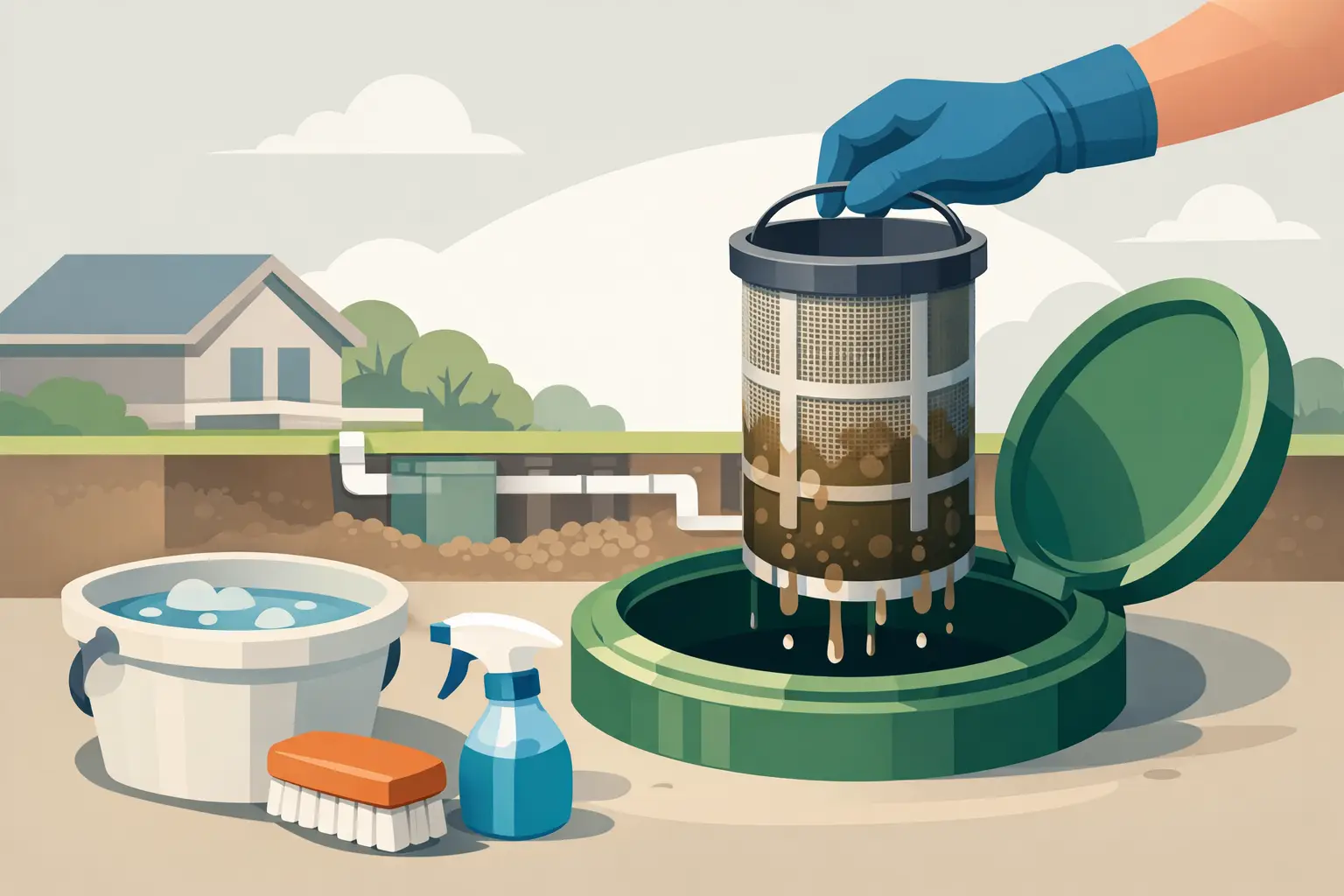
After exposing the outlet-side access, identify the filter handle. It is normally a vertical cartridge or screen inside the outlet baffle. Pull it up slowly and keep it over the open tank whenever possible. Let wastewater drain back into the tank rather than onto the lawn, driveway, or drain field.
Rinse the filter with a garden hose over the tank opening, or use a bucket so the rinse water and collected solids return to the tank. The goal is to remove buildup from the slots or screen without forcing debris into the outlet pipe. Do not clean the filter over a storm drain, ditch, or finished landscaping. Septic waste carries bacteria and other contaminants that must stay within the system for proper treatment.
Do not use a pressure washer. High pressure can crack plastic filter media, deform fine screens, and spread contaminated spray. Do not use bleach, drain cleaner, degreaser, or disinfectants on the filter. Those products can harm the biological process inside the septic tank and do not solve a mechanical blockage.
Once clean, inspect the cartridge for cracked plastic, damaged seals, missing parts, or media that will not come clean. Reinstall it fully and in the correct orientation. A filter that is not seated properly can allow solids to bypass into the drain field or restrict flow at the outlet.
Close and secure the riser or lid when finished. The lid must be properly seated and safe from accidental opening. Then wash your hands and disinfect any tools, footwear, and surfaces that contacted wastewater.
When Cleaning the Filter Is Not Enough
A clean filter should allow wastewater to leave the septic tank normally. If fixtures are still slow, the alarm remains active, or wastewater is backing up after the filter is cleaned, the restriction is likely elsewhere. Continuing to use water can turn a manageable repair into sewage damage inside the building.
A professional assessment can determine whether the problem is a full tank, pump failure, failed float switch, control panel issue, blocked force main, broken baffle, collapsed pipe, or drain field saturation. For pumped systems, the alarm may indicate that the pump tank level is too high. That is not a filter-cleaning issue and may require electrical and mechanical diagnosis.
There is also a trade-off in cleaning a heavily plugged filter without pumping the tank. Restoring flow may move a surge of wastewater toward a stressed drain field. If the tank is overdue for service or the system has been showing failure symptoms, pumping and inspection are usually the better call.
Prevent Repeat Filter Clogs
Effluent filters trap solids that should not be moving through the tank. Regular pumping removes settled sludge and floating scum before they crowd the outlet area. Cleaning the filter without addressing an overloaded tank is only a short-term fix.
Keep wipes, paper towels, feminine hygiene products, dental floss, grease, and food scraps out of drains and toilets. Even products labeled “flushable” can collect in pumps, filters, and sewer lines. Limit garbage disposal use, spread laundry loads over the week, and repair leaking fixtures that send unnecessary water into the system.
A maintenance record also matters. Note the filter service date, tank pumping date, observed sludge level, alarm events, and any repairs. This documentation is useful for homeowners, commercial operators, property sales, and insurance-related inspections.
Can I clean a septic filter myself?
Some homeowners can clean an accessible effluent filter if they understand the system, follow the manufacturer’s instructions, and have no active backup or alarm condition. However, a septic tank contains hazardous gases and contaminated wastewater. If the lid is buried, the filter is damaged, the tank is overdue for pumping, or the system has an alarm, call a septic specialist.
How often should a septic filter be cleaned?
There is no single schedule for every property. Many filters are checked when the septic tank is pumped, commonly every three to five years for a typical residence. High-use properties and advanced treatment systems may require annual or more frequent maintenance. Follow the system designer’s schedule when one is available.
Will a clogged filter damage the drain field?
The filter is designed to protect the drain field by stopping solids. But if it is ignored, wastewater can back up, system components can be stressed, and owners may bypass or remove the filter altogether. A missing or damaged filter allows solids into the drain field, where repairs can become expensive.
A clean filter is good maintenance. A recurring clog, alarm, odor, or backup is a system warning. Treat it that way, limit water use, and have the full septic system checked before a small restriction becomes a wastewater emergency.