
Property Sale Septic Checklist for Sellers
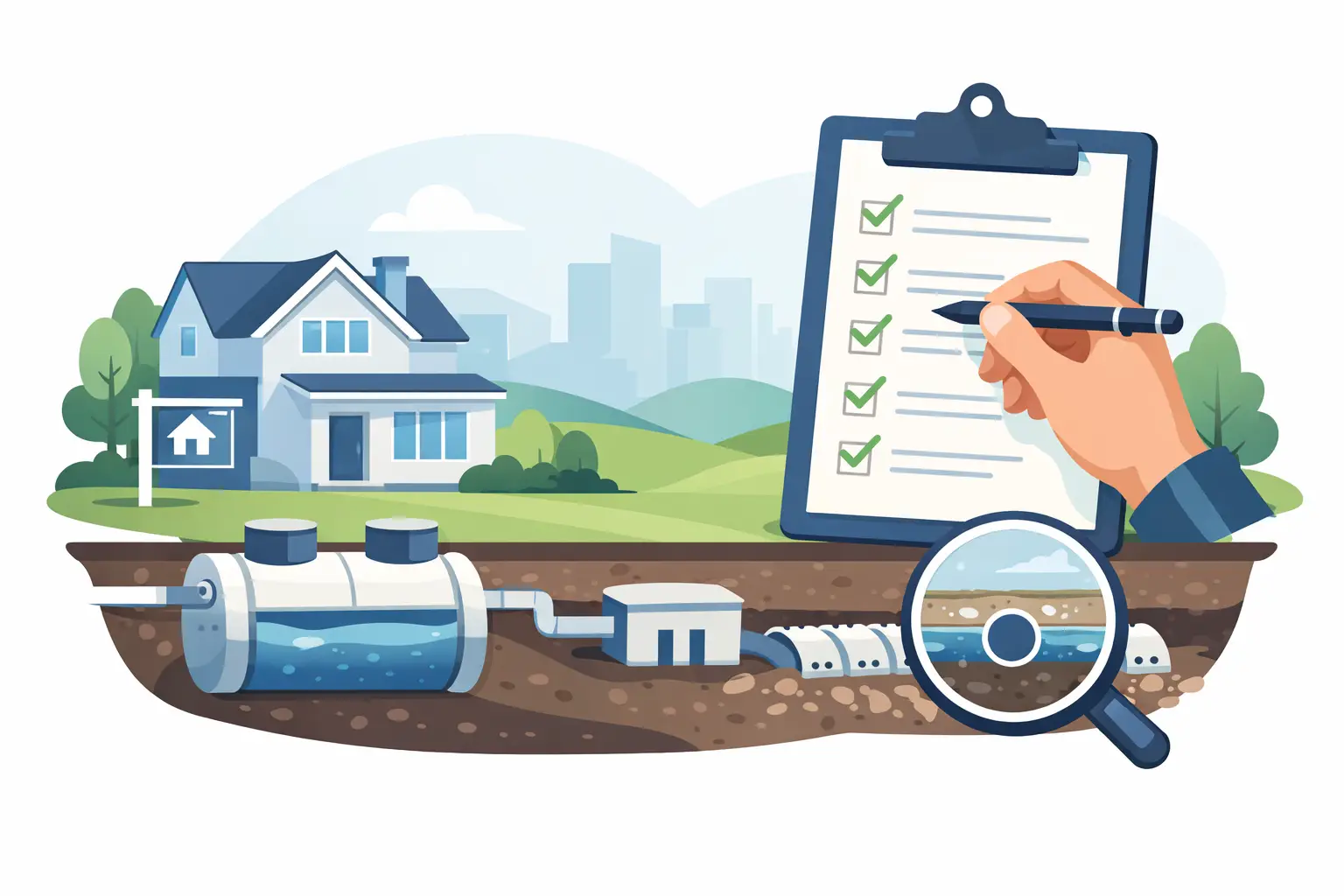
A septic issue can derail a property sale after the buyer has already scheduled inspections, secured financing, and set a closing date. This property sale septic checklist helps sellers identify system risks early, gather the right records, and address failures before they become a negotiation problem.
Start With the System’s Actual Condition
Do not rely on the absence of a backup. Septic systems can appear to be working while a pump is failing, a tank is overdue for service, or a drain field is reaching capacity. Buyers, lenders, and insurers may require more than a quick visual check, particularly for properties with pumps, alarms, advanced treatment components, or commercial wastewater use.
Schedule a professional septic assessment before listing the property, not after accepting an offer. A qualified inspection should identify the tank location and access condition, evaluate pumps and controls where applicable, check alarm operation, and look for signs of drainage failure. The report should clearly state what was inspected, what could not be inspected, and what repairs or maintenance are recommended.
If the system has an alarm, test it. An alarm that is silent because it has been disconnected is not a solution. It can indicate a high-water condition, pump problem, electrical fault, or control panel issue that needs immediate diagnosis.
Property Sale Septic Checklist: Records to Gather
Good records reduce uncertainty. They also help a buyer understand the system they are taking over. Before the property goes on the market, assemble available documents in one place.
- Septic permits, site plans, and as-built drawings
- Pumping, maintenance, and repair invoices
- Inspection reports and written system assessments
- Pump, control panel, alarm, and treatment-unit information
- Warranty documents and service-plan details
- Any correspondence regarding permits, repairs, or code requirements
Missing records do not automatically mean a system is defective. Older homes often have incomplete files. Still, the absence of records can lead buyers to request a more detailed inspection or negotiate for a larger repair allowance. If tank location, drain field location, or system capacity is unknown, identify those details before the buyer’s inspection period begins.
Make the Tank Accessible
A septic inspection cannot be thorough if the tank cannot be located or opened safely. Buried lids, damaged concrete covers, loose access points, and landscaping over the tank all create delays.
Install risers and secure lids when access is difficult. Risers bring the service opening closer to grade and allow future pumping and inspection without extensive digging. They are not required in every situation, but they are often a practical upgrade for a system that has buried access points.
Never ask an inspector to enter a septic tank or open an unsafe lid. Septic tanks contain hazardous gases and are confined spaces. Access work should be handled by trained septic professionals using appropriate equipment and procedures.
Check for the Warning Signs Buyers Notice
Walk the property with a critical eye. Buyers will notice odors, wet ground, slow drains, and alarm panels, especially once they know the property has a septic system. Address visible symptoms rather than trying to explain them away.
Watch for sewage odors near the tank, drain field, or building. Look for ponding water, unusually green strips of grass, soft soil, or wet areas that persist without rain. Inside, note slow fixtures, gurgling drains, toilets that do not flush normally, and wastewater backing up at lower-level fixtures.
These symptoms do not always point to the same repair. A plumbing restriction can resemble a septic problem. A high-water alarm may be caused by a failed pump, float switch, circuit issue, control panel failure, or excessive water entering the system. A specialist diagnosis matters because guessing can lead to unnecessary excavation or a repair that does not solve the cause.
Service Pumps, Alarms, and Control Panels
Many septic-dependent properties use more than a basic gravity system. If the property has a pump tank, lift station, aerobic unit, pressure distribution system, or control panel, confirm that every mechanical and electrical component is operating correctly.
A pump may run but still fail to move enough wastewater. A panel may have power but not respond properly to float inputs. A float can stick, wiring can corrode, and an alarm can be improperly wired or disabled. These failures may not be obvious until water levels rise.
For a property sale, document the condition of the pump and controls, along with the age of major components when known. Pumps and electrical controls have service lives, and buyers may reasonably ask about equipment that is near replacement. A recent repair is not necessarily a negative if it was completed correctly and documented. In many cases, it gives the buyer more confidence than an old, unverified component.
Protect the Drain Field Before Inspection
The drain field is not a storage area, driveway, or construction staging zone. Keep vehicles, heavy equipment, stockpiled materials, and new structures off the field and reserve area. Compaction can damage piping and soil structure, reducing the system’s ability to treat and disperse wastewater.
If the property has had drainage changes, additions, new patios, pools, sheds, or major landscaping, consider whether those changes affect septic components or required setbacks. This is especially relevant when selling a home with recent renovations. A buyer’s inspector may flag work that blocks access, directs roof runoff toward the field, or appears to encroach on the septic area.
Do not pump the tank solely to hide a problem before an inspection. Pumping may be appropriate as part of normal maintenance or a repair plan, but it does not prove that the drain field is functioning. Be transparent about recent pumping and provide the service record.
Know What the Sale Agreement Requires
Septic requirements vary by state, county, municipality, lender, and transaction type. Some areas require a point-of-sale inspection, a pumping record, a transfer-of-ownership form, or repairs before closing. Others place more responsibility on the buyer to investigate the system.
Review local requirements early with your real estate professional and septic contractor. If an inspection identifies a concern, get a written scope of work and estimate from a septic specialist. This gives you practical options: complete the repair before closing, negotiate a credit, place funds in escrow if permitted, or adjust the sale timeline.
The right choice depends on the defect, local rules, seasonal conditions, permit timing, and the buyer’s financing. A minor riser installation is very different from a drain field replacement. Do not promise a repair date until permits, access, weather, materials, and site conditions have been evaluated.
Be Direct About Known Issues
A seller who documents a known septic issue is in a stronger position than one who waits for the buyer to find it. Provide inspection reports, repair invoices, and clear information about what has been corrected. If a recommended repair has not been completed, disclose it through the proper transaction process and obtain professional guidance on the available options.
Avoid temporary fixes that create a bigger problem later. Adding chemicals, repeatedly resetting a breaker, silencing an alarm, or routing water away from a wet area may hide the symptom briefly while leaving the failure in place. Those shortcuts can increase damage, delay closing, and create avoidable disputes.
A property sale is a poor time for surprises. A clear assessment, accessible tank, working equipment, complete records, and prompt repair decisions give everyone a cleaner path to closing. If your system shows an alarm, odor, wet area, backup, or pump concern, have a septic specialist diagnose it before the buyer does.