
Commercial Lift Station Repair Before Backup
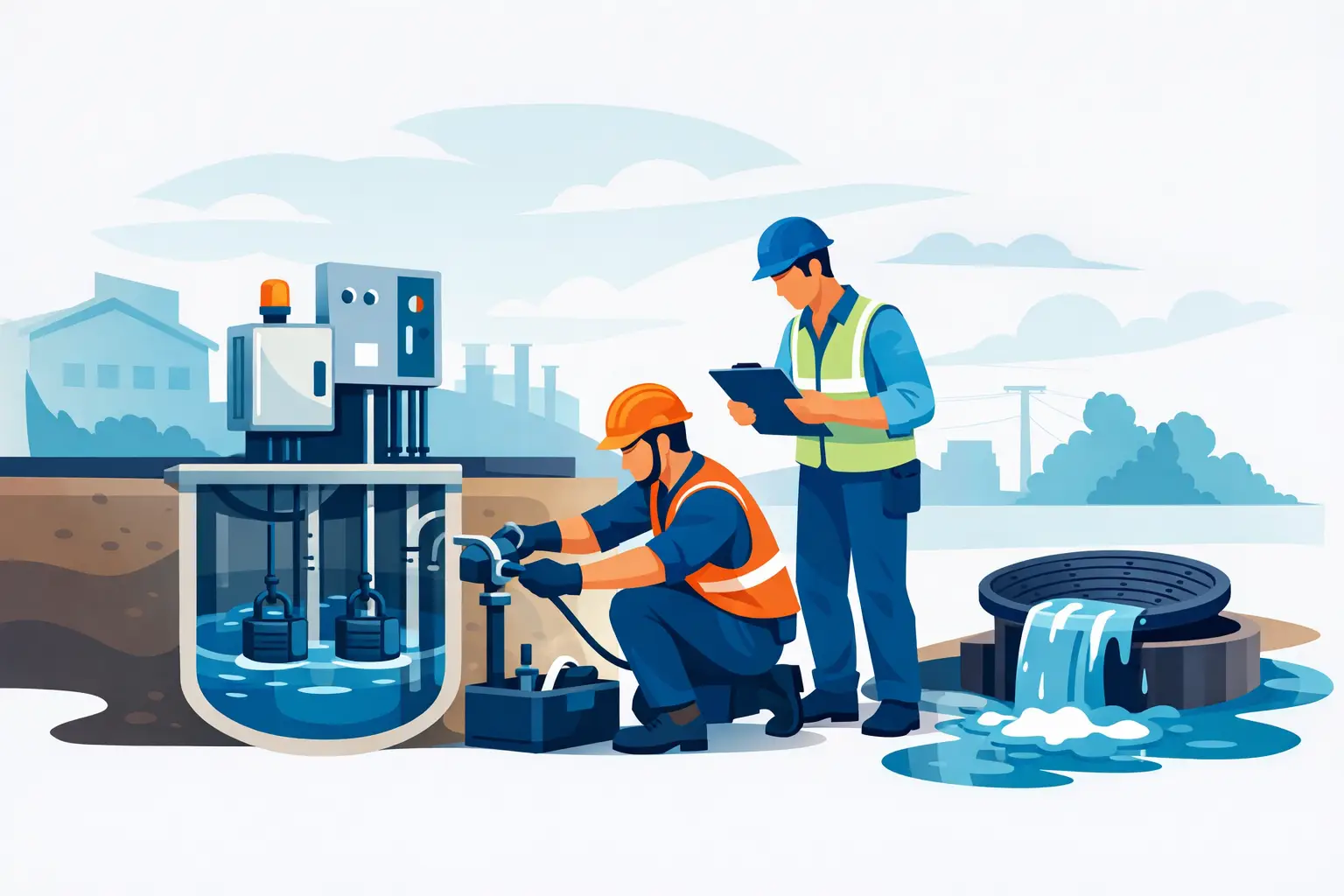
A lift station alarm at a commercial property is not a wait-and-see problem. When pumps stop moving wastewater, the wet well can rise quickly, creating the risk of indoor backups, overflows, odors, health concerns, and interrupted operations. Commercial lift station repair should begin with a specialist diagnosis, not a guess or a quick reset.
Lift stations depend on several components working together: pumps, floats or level sensors, control panels, alarms, valves, discharge piping, and electrical connections. A failure in any one of these areas can stop wastewater movement. The visible symptom may be an alarm, but the actual cause can be mechanical, electrical, hydraulic, or a combination of all three.
When Commercial Lift Station Repair Cannot Wait
A high-water alarm is the most obvious warning, but it is not the only one. A station that runs continuously, cycles too often, makes unusual noise, trips breakers, or produces persistent sewage odors needs prompt attention. So does standing water near the station, slow drains throughout the building, or wastewater backing up through floor drains and fixtures.
Commercial properties often place heavier and less predictable demand on a wastewater system than a home. Restaurants, offices, retail centers, campgrounds, multifamily buildings, and service facilities may send large volumes of water and solids to the station throughout the day. If the lead pump fails when demand is high, the reserve capacity may not be enough to prevent an overflow.
Do not silence an alarm without finding the cause. The alarm is there to tell you that the water level is above its normal operating range. Turning it off may reduce noise, but it does nothing to protect the property or restore pump capacity.
What Fails Inside a Lift Station
A proper repair starts with testing the system from the incoming wastewater level through the discharge line. The pump may be the problem, but replacing a pump without checking the controls, floats, and piping can leave the underlying issue in place.
Pump and Impeller Problems
Rags, wipes, grease, hygiene products, plastic, and other non-flushable materials can clog an impeller or bind a pump. Even pumps designed for solids handling have limits. A pump can also fail from worn seals, bearing damage, overheating, motor failure, or normal age-related wear.
In a duplex station, one pump may be carrying the entire load because the second pump is not operating. That can keep the property functioning for a time, but it removes the backup that protects against a surge or primary pump failure. Both pumps should be tested for run time, amp draw, flow performance, and alternation.
Float Switches and Level Controls
Floats tell the control panel when to start and stop a pump and when to activate an alarm. They can become tangled, coated with debris, damaged, or stuck in one position. A failed stop float can make a pump run too long. A failed start float can prevent it from coming on at all.
Some commercial stations use pressure transducers or other electronic level controls rather than simple mechanical floats. These systems need calibration and inspection as well. The right repair depends on the station design, wastewater characteristics, and the reliability requirements of the property.
Control Panel and Electrical Failures
The control panel is the operating center of the lift station. It manages pump sequencing, overload protection, alarms, hand-off-auto controls, and often a backup pump. Burned contacts, failed relays, corroded terminals, moisture intrusion, tripped overloads, damaged breakers, and improper voltage can all create pump problems.
A pump that will run in hand mode but not in auto mode often points to a control or float issue. A pump that immediately trips a breaker may have a motor or wiring fault. These are not conditions to troubleshoot casually. Lift station panels combine electricity, moisture, and wastewater gases. Qualified service is the safer choice.
Check Valves, Shutoff Valves, and Discharge Piping
A check valve prevents wastewater from flowing backward into the wet well after the pump shuts off. When it leaks or sticks, the pump may short-cycle or lose efficiency. A partially closed valve, blocked discharge line, or damaged force main can also make the pump work harder than it should.
The symptoms can be misleading. A pump may sound like it is operating normally while little or no wastewater is leaving the station. Testing flow and pressure is essential before deciding whether the pump itself needs replacement.
The Right Repair Process Protects Operations
Commercial lift station repair is more than swapping out a failed part. A specialist should first assess the immediate risk of overflow and stabilize the situation. Depending on conditions, that may include activating the backup pump, clearing a blockage, temporarily bypassing flow, or arranging pumping while repairs are completed.
The next step is diagnosis. This includes checking liquid levels, alarm status, pump operation, control settings, float function, amp draw, voltage, discharge performance, and the condition of valves and piping. For a property manager or owner, clear findings matter. You should know what failed, what caused it, what was repaired, and what may need attention next.
Repair options should fit the system rather than forcing a one-size-fits-all solution. A damaged float may need replacement. A worn pump may need rebuilding or replacement. An older panel may be better served by an upgrade that provides improved alarm functions, pump alternation, and better protection against failure. The lowest immediate price is not always the lowest operating cost if it leaves the property with unreliable equipment.
Why General Repairs Can Miss the Real Problem
A plumber may be able to clear a backup, and an electrician may be able to identify a power issue. But a commercial lift station is a wastewater system with mechanical, electrical, and hydraulic components that must operate as one unit. Repairing only the symptom can lead to repeat alarms and another emergency call.
This is where a septic and wastewater specialist makes a difference. Aquamatic diagnoses and repairs the full system, including pumps, control panels, alarms, tanks, valves, and related septic infrastructure. That focused approach helps identify whether a pump failure is truly a pump failure or the result of a control problem, blockage, poor maintenance, or system capacity issue.
Preventing the Next Emergency
Lift stations need routine service before they fail. The appropriate schedule depends on wastewater volume, station size, pump design, site use, and whether the property handles grease, laundry discharge, high solids, or seasonal demand. A lightly used office may need different attention than a busy restaurant or multifamily property.
A maintenance visit should include functional testing, not just a visual check. Pumps should be exercised and checked for proper cycling. Floats and alarms should be tested. The wet well should be inspected for grease, debris, and buildup. Control panels need a review for corrosion, heat damage, loose connections, and signs of overload. Check valves and shutoff valves should be verified, and the property should have a clear record of service and equipment condition.
Property staff also play a role. Keep the station area accessible. Do not stack equipment around the panel or access lid. Report alarms immediately, even if they clear. Watch for recurring drain issues or odors. And make sure employees understand that wipes, rags, grease, and trash do not belong in drains or toilets.
A working lift station is easy to ignore. That changes fast when an alarm sounds or wastewater has nowhere to go. Acting early, documenting repairs, and maintaining the system with a qualified wastewater specialist gives your property the best chance of avoiding a costly shutdown when it matters most.