
Best Sewage Pump Types for Septic Systems
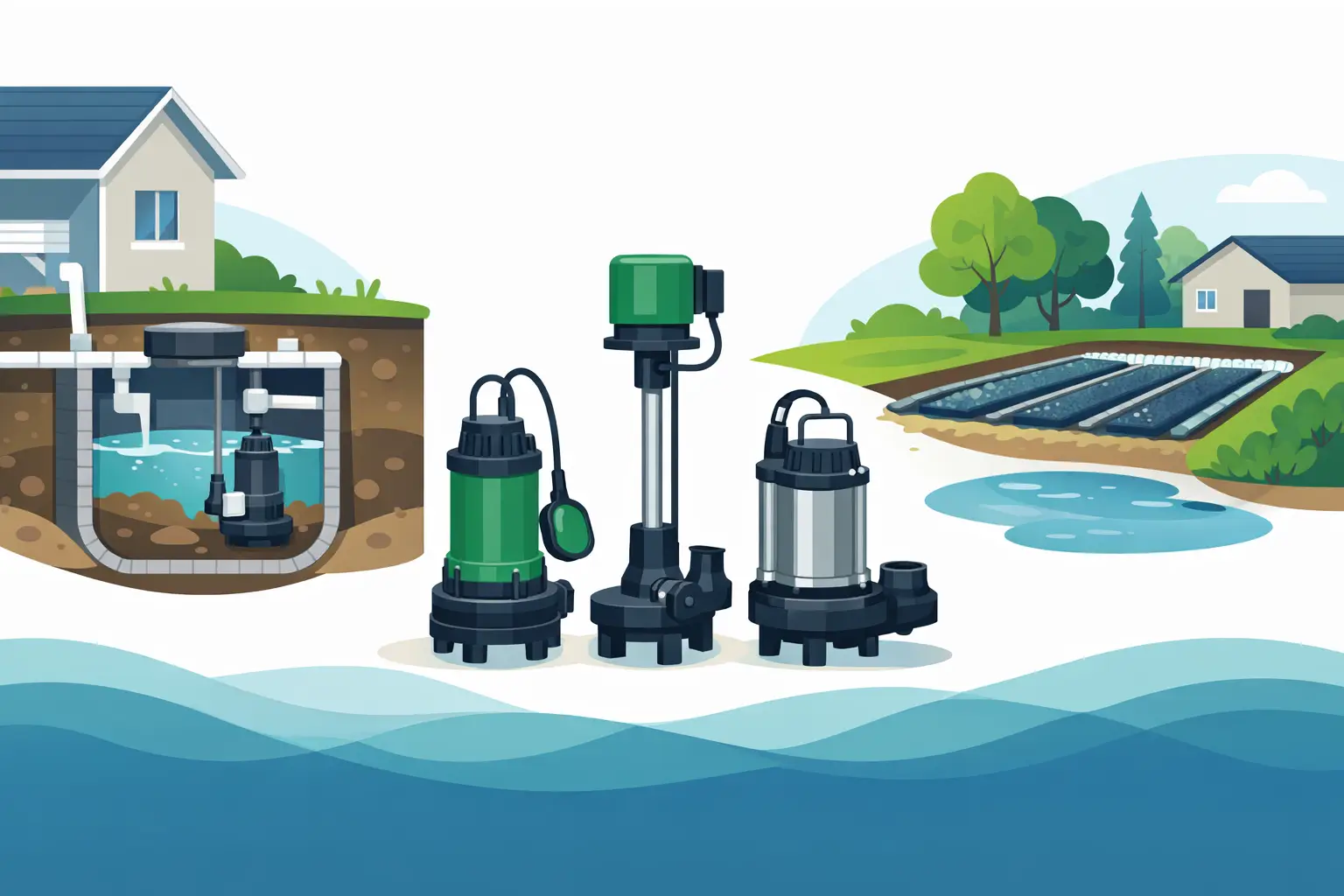
A pump alarm is not the time to guess which replacement belongs in the basin. The best sewage pump types depend on what the system is moving, how far it must travel, the size of the discharge line, and the demands placed on the property. A pump that looks similar on a shelf can be completely wrong for the job.
For septic and wastewater systems, the correct pump protects the tank, drain field, building, and people using the property. The wrong one may clog, short-cycle, overheat, or fail to produce the pressure needed to move wastewater where it needs to go. Selection starts with a proper system assessment, not a guess based on horsepower alone.
Best Sewage Pump Types for Common Applications
Most residential and commercial wastewater systems use one of three pump categories: effluent pumps, sewage ejector pumps, and grinder pumps. Each has a distinct job. Some systems also require high-head or solids-handling equipment designed for demanding commercial or engineered applications.
Effluent pumps
An effluent pump moves clarified liquid from a septic tank or pump tank to a drain field, mound, sand filter, or other secondary treatment area. It is not intended to handle raw sewage, wipes, or large solids. In a properly functioning system, solids remain in the primary septic tank while the pump moves filtered effluent onward.
Effluent pumps are common in pressure-dosed drain fields and systems where the treatment area sits uphill or some distance from the tank. They are usually submersible and installed inside a pump chamber with float switches that control normal operation and high-water alarms.
The key question is not simply, “How many horsepower?” The pump must deliver the required flow at the system’s total dynamic head. That includes vertical lift, pipe friction, fittings, check valves, and required operating pressure at the field. An undersized effluent pump may run continuously without moving enough water. An oversized pump can dose too quickly, strain the field, or cause unnecessary cycling.
Sewage ejector pumps
A sewage ejector pump handles raw wastewater from fixtures located below the sewer or septic tank elevation. This is often found in basement bathrooms, laundry areas, break rooms, or commercial spaces with below-grade plumbing. Unlike an effluent pump, an ejector pump is built to pass solids and toilet waste through a larger discharge opening.
These pumps typically discharge through a sealed basin and use a check valve to prevent wastewater from flowing back into the pit after each cycle. They are a practical solution when gravity drainage is not possible, but the basin, venting, discharge pipe, electrical circuit, and alarm provisions all need to be correct.
A sewage ejector pump is not automatically the right choice for a septic pump tank. If the system is designed to pump filtered effluent to a drain field, installing a raw-sewage ejector pump does not correct the underlying problem. It may mask a failed filter, damaged baffle, improper tank configuration, or blocked line.
Grinder pumps
A grinder pump cuts wastewater solids into a fine slurry before pumping it through a small-diameter pressure line. It is commonly used where a property connects to a low-pressure sewer system or where wastewater must travel a long distance, climb significant elevation, or move through a narrow force main.
Grinder pumps are powerful equipment, but they are not a universal upgrade. They have more moving parts than a standard effluent pump and are particularly vulnerable to items that should never enter a wastewater system. Wipes, feminine products, paper towels, dental floss, grease, and other non-flushable materials can jam the cutting mechanism or overload the motor.
When a grinder pump fails repeatedly, the cause may be usage habits, but it can also be a control issue, undersized piping, a worn check valve, or excessive run time caused by a leak or inflow. Replacing the pump without diagnosing the system can lead to another failure.
High-head and solids-handling pumps
Commercial properties, multifamily buildings, large homes, and specialized septic designs may require pumps with higher pressure capability or greater solids-handling capacity. These are selected for the actual duty point, not just for their maximum published flow. A pump can move a high volume at low lift and perform poorly when the system requires higher pressure.
High-head pumps are often needed for long force mains, steep elevation changes, elevated treatment systems, and engineered dispersal fields. Solids-handling pumps may be used in larger lift stations or applications with more demanding wastewater streams. These installations usually require properly sized controls, duplex or alternating pump arrangements, alarms, isolation valves, and service access.
What Determines the Right Pump
The best pump for one property may be a costly mistake for another. A qualified wastewater technician should evaluate the entire system before recommending a replacement. The critical factors include the wastewater source, tank layout, pump basin volume, pipe diameter, vertical lift, force-main length, discharge location, and electrical supply.
Float configuration matters just as much as the pump itself. Floats determine when the pump turns on, turns off, and triggers the high-water alarm. Poorly placed, tangled, or failed floats can cause flooding even when the pump motor is still functional. Control panels, breakers, relays, pump cords, splice connections, and alarm circuits also need to be checked.
For a septic effluent system, dosing volume is especially important. The pump should deliver a measured dose that gives the drain field time to accept and treat wastewater between cycles. Continuous pumping or very frequent short cycles can point to incorrect float settings, a leaking check valve, groundwater intrusion, plumbing leaks, or a failing drain field.
Warning Signs That Need Prompt Service
A sewage or effluent pump problem rarely improves on its own. If an alarm sounds, reduce water use immediately. Avoid laundry, long showers, dishwasher cycles, and unnecessary flushing until the system is inspected. Continuing to send wastewater into a full pump tank can cause a backup into the building or release untreated wastewater outside.
Call for service if you notice any of the following:
- A red alarm light, audible alarm, or tripped pump breaker
- Sewage odors near the tank, pump basin, or drain field
- Slow drains or wastewater backing up into lower-level fixtures
- Wet ground, ponding water, or unusually green grass around the system
- A pump that runs constantly, cycles rapidly, or makes unusual noise
- Repeated pump failures, especially after recent replacement
Do not enter a septic tank or pump chamber. These spaces can contain dangerous gases and low oxygen levels. Do not bypass an alarm, tie up a float, or replace a breaker with a larger size to keep a pump running. Those shortcuts can create a larger failure and a serious safety hazard.
Replacement Is a System Decision
A failed pump does not always mean the pump was the only problem. Before replacement, the technician should confirm the pump’s amperage draw, inspect the floats and control panel, test the alarm, evaluate the check valve and discharge line, and verify that the tank and field are accepting wastewater as designed.
This is particularly important when a pump has failed more than once. Repeated failures often point to a mismatch between the pump and system, electrical problems, clogging, excessive head pressure, or a drain field issue. Correcting the cause is less expensive than replacing pumps until one appears to work.
Aquamatic approaches pump problems as wastewater-system problems, not just motor replacements. The right equipment, properly installed and tested, gives the property a dependable path for moving and treating wastewater.
If your pump alarm is active or your system shows signs of backup, stop excess water use and arrange a professional assessment promptly. Fast action can prevent a pump issue from becoming a tank overflow, drain field failure, or building cleanup.