
Best Septic Tank Filters for Better System Protection
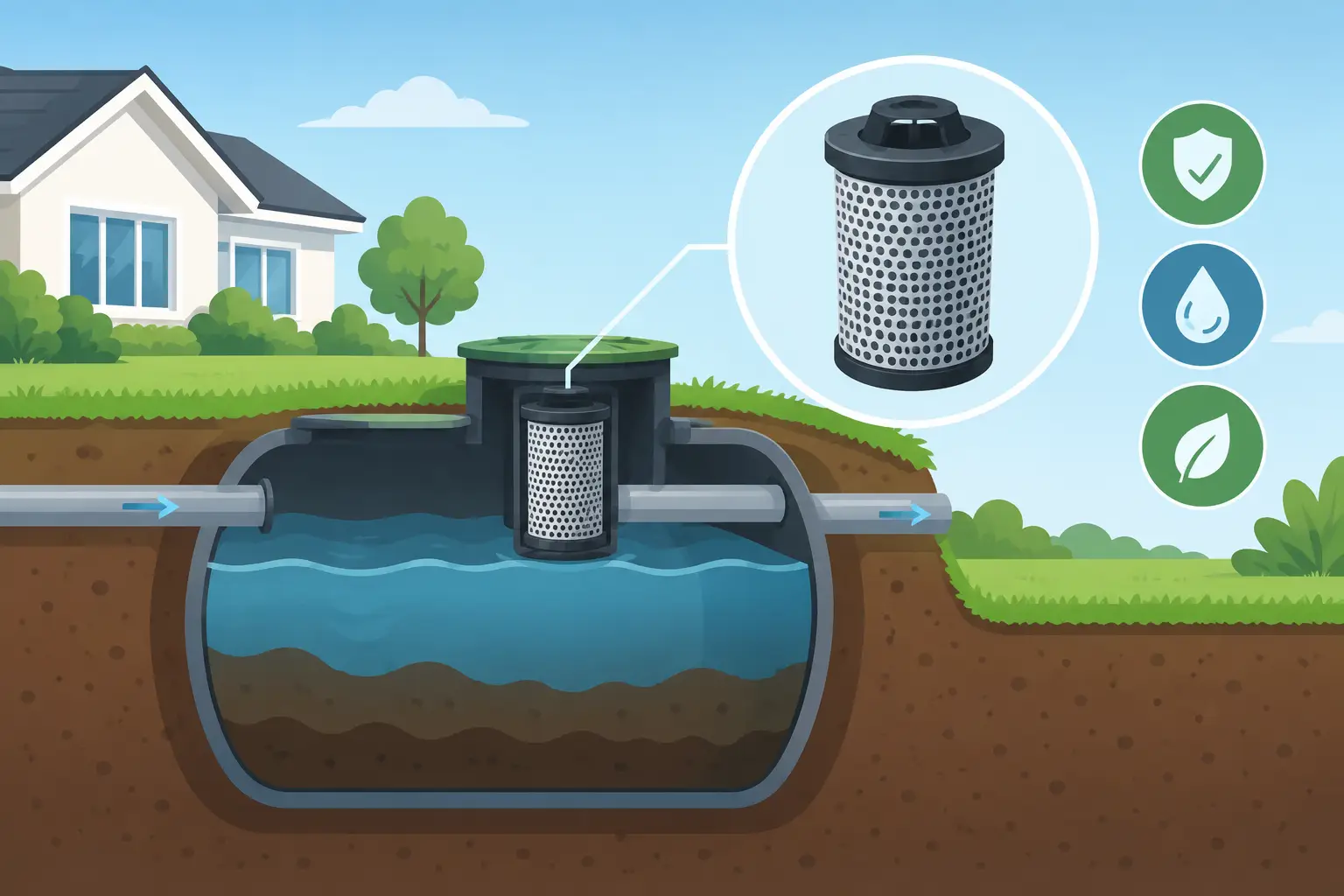
A septic tank filter is a small component with a major job: keep solids from leaving the tank and damaging the next part of the system. The best septic tank filters are not simply the finest mesh available. They are the filters that match your tank outlet, system design, wastewater volume, and maintenance access without creating avoidable backup risk.
For most homes, an effluent filter installed at the septic tank outlet is the right starting point. For pump systems, commercial sites, and advanced treatment systems, filtration may need to be more specific. Choosing the wrong filter, or failing to maintain the right one, can lead to alarms, slow drains, pump damage, drain field loading, and sewage backup.
What a Septic Tank Filter Actually Does
A septic tank separates wastewater into three layers. Scum rises to the top, solids settle at the bottom, and clarified liquid effluent exits through the outlet baffle. An effluent filter sits at that outlet and captures suspended solids before they enter the drain field or pump chamber.
This matters because a drain field is not designed to handle excess solids. When solids reach the field, they can clog soil openings and restrict wastewater absorption. That damage is often gradual, expensive, and difficult to reverse. A filter does not replace pumping the tank, but it adds a critical layer of protection between the tank and the most costly part of the system.
In systems with a pump, filters and screens also protect pump intakes, floats, check valves, and discharge lines. A jammed pump or fouled float can trigger an alarm quickly. A neglected filter can create the same symptoms as a failed pump, which is why a proper diagnosis matters before replacing equipment.
Best Septic Tank Filters by System Type
The best choice depends on where the filter is installed and what it is protecting. There is no single cartridge that fits every septic system.
Outlet Effluent Filters for Gravity Systems
A cartridge-style effluent filter at the tank outlet is the standard choice for many conventional gravity septic systems. These filters fit inside the outlet tee or baffle and use slots or a screened body to prevent larger suspended particles from leaving the tank.
For a typical residence, look for an outlet filter designed for septic effluent, not a general plumbing strainer. It must fit the outlet configuration, commonly a 4-inch pipe, and allow removal through the access riser. A quality filter should have a durable handle, a positive seating arrangement, and a clear service procedure.
Finer filtration can capture more solids, but it also clogs faster. That trade-off matters. A homeowner who has the filter checked during regular pumping may benefit from a finer cartridge. A system with limited access, heavy use, or inconsistent service intervals may be better served by a design that balances protection with dependable flow.
Pump Vault Screens and Intake Filters
A pump chamber handles clarified effluent after it leaves the septic tank. The pump itself needs protection from debris, but a screen placed directly around the pump intake can become a maintenance problem if it is undersized or inaccessible.
For pump systems, the priority is usually proper tank filtration upstream, correct pump vault design, and reliable float operation. A pump screen can help in the right application, especially where debris exposure is higher, but it should not be used to compensate for a missing or clogged tank outlet filter.
If your alarm is sounding, do not assume the pump has failed. A blocked filter, a tripped breaker, a damaged float, a failed control panel component, or a restricted discharge line can all produce a high-water condition. The tank level and electrical controls need to be checked safely by a septic professional.
Filters for Advanced Treatment and Commercial Systems
Aerobic treatment units, recirculating systems, sand filters, commercial kitchens, and high-flow properties may use additional filtration beyond a standard outlet cartridge. These components are selected as part of the complete treatment design, not as an off-the-shelf upgrade.
Commercial systems often see greater flow variation, cleaning products, food waste, or occupancy loads. A filter that works well for a three-bedroom home may restrict flow or require excessive service at a business. In these systems, filter selection should account for the approved design, local code requirements, pumping capacity, and the required maintenance schedule.
What to Look for Before Buying a Filter
Start with the system, not the packaging. The filter must match the tank outlet diameter, baffle style, available access opening, and downstream equipment. If the tank has no accessible riser over the outlet, routine filter cleaning becomes more disruptive and more likely to be skipped.
Material quality matters. Septic filters operate in a corrosive, wet environment and need to withstand repeated removal and cleaning. Avoid brittle components, weak handles, or designs that are difficult to reseat correctly. If the filter does not seat properly after service, solids can bypass it.
Also consider the warning signs your system provides. Some systems have a visible filter indicator or an alarm arrangement that alerts the owner before wastewater backs up into the building. Those features can be useful, but they do not eliminate the need for scheduled service.
A filter should never be selected solely because it claims to be self-cleaning or maintenance-free. No septic filter is maintenance-free. Every filter needs inspection, cleaning, or replacement at intervals based on household use and system condition.
Filter Maintenance Is Where Protection Is Won or Lost
Septic filters are commonly cleaned during routine tank pumping, but some systems need attention more often. Large households, frequent guests, garbage disposal use, laundry-heavy homes, and properties with pump systems can load filters faster.
A clogged effluent filter can cause slow draining fixtures, gurgling, sewage odors, toilets that struggle to flush, or wastewater backup. On pump systems, it can contribute to a rising water level and alarm condition. These symptoms should be treated as a system warning, not a reason to remove the filter and leave it out.
Removing a filter may restore flow temporarily, but it sends solids toward the drain field or pump chamber. That can turn a manageable service call into a much larger repair. The correct response is to have the filter cleaned, inspect the tank level and baffles, and determine why the filter loaded up.
Homeowners should not enter a septic tank or lean into an open tank. Septic gases can be deadly, and tank covers can be unstable. Filter service should be performed from ground level through a secure riser by trained personnel using proper protective equipment.
When a Filter Problem Signals a Bigger Septic Issue
If a filter repeatedly clogs shortly after cleaning, the filter may not be the root cause. The tank may be overdue for pumping, an outlet baffle may be damaged, excessive solids may be entering the system, or the drain field may be restricted and causing the tank level to stay high.
A missing inlet or outlet baffle can allow scum and floating debris to travel where it should not. A broken riser lid can allow surface water into the tank, increasing hydraulic load. In pump systems, a malfunctioning float or control panel can prevent normal discharge and make a clean filter appear to be the issue.
This is why septic work should begin with an assessment, not a guess. A qualified technician can inspect tank condition, filter condition, pump operation, alarms, float settings, electrical controls, and the evidence of drain field stress. Aquamatic approaches septic failures as complete wastewater-system problems, not isolated plumbing calls.
Protect the Filter and the System Behind It
The filter performs best when the rest of the system is used properly. Keep wipes, paper towels, feminine products, grease, coffee grounds, and harsh chemicals out of drains. Spread laundry use across the week when possible. Repair leaking fixtures promptly, because unnecessary water can push solids through the tank before they settle.
Most importantly, keep service access clear. A secure riser and lid over the outlet side of the tank make filter maintenance faster, safer, and less disruptive. If you do not know whether your septic tank has an effluent filter, a system inspection can confirm what is installed and whether it is doing its job.
A clean, correctly sized filter is inexpensive protection for equipment and soil that cost far more to repair. If you are seeing alarms, backups, odors, ponding, or slow drains, have the system checked before a restricted filter becomes a wastewater emergency.